Trim to 1/8 Inch to Snorkel With a Beard
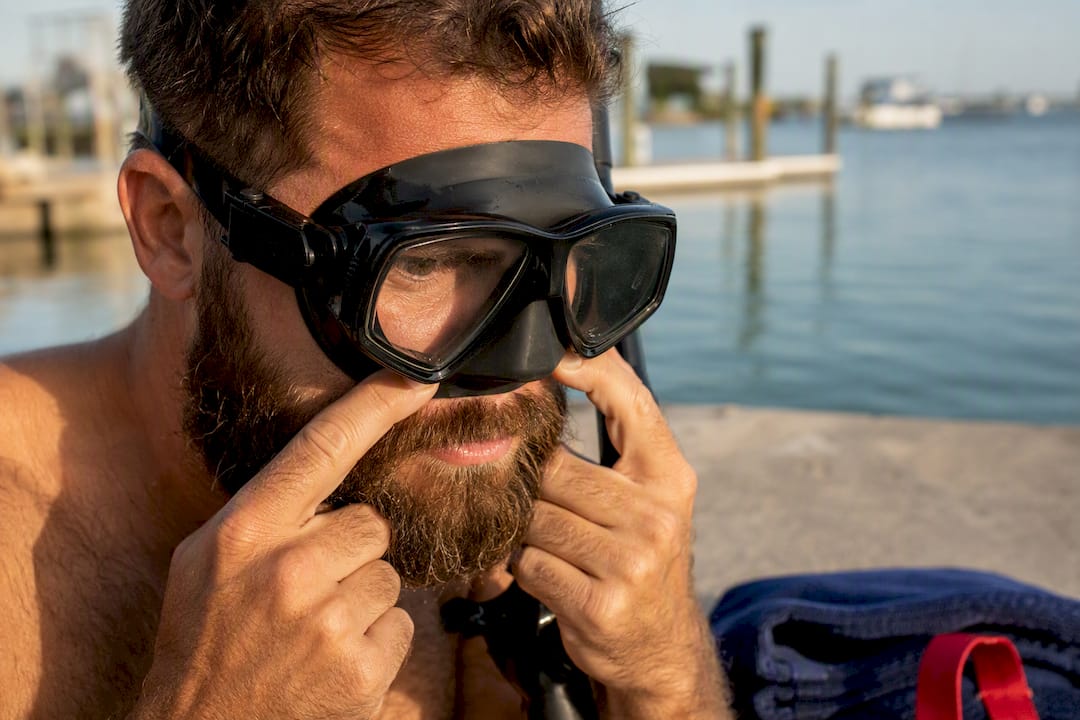
Yes, you can snorkel with a beard, and most bearded snorkelers get a workable seal without shaving. The best first move is trimming the seal line to short stubble, then choosing between a beard-friendly traditional mask, swim goggles with a nose clip, or a full-face mask if your beard is light. Silicone grease, a mask seal stick, an exercise band, or a dive hood can close small gaps. Whatever combination you pick, test it on land before you trust it in open water.
TL;DR:
A trim of about an eighth of an inch along the mask seal line significantly improves seal performance for most beards.
Testing the mask on land with dry and wet suction tests is essential before snorkeling, as leaks are easier to fix onshore.
Goggle and nose clip combinations work best for mustache-only leaks, while full-face masks are better suited for lighter beards.
Seal sticks, silicone grease, or a dive hood can enhance fit without needing to switch gear or shave completely.
For heavy beards or persistent leaks, a trim and a different mask style are more effective than product tricks alone.
Table of Contents
Which snorkel mask beard combination actually holds a seal?
A perfect lab-grade seal is unlikely once you have real beard density, but a workable one is realistic for almost everyone. The right choice depends on where your facial hair actually causes leaks, not just how much of it you have.
Traditional two-piece masks rest against the cheeks and upper lip, so mustache hair is usually the problem area. Newer designs with double-skirt or feathered silicone edges tend to handle uneven surfaces better than older single-skirt models.
Swim goggles paired with a separate nose clip skip the mustache leak entirely since goggles only seal around the eye socket. This is often the fastest fix for guys whose only issue is upper-lip hair.
Full-face masks seal around the whole face perimeter instead of pressing directly into beard hair, which helps with light stubble but often struggles against thick jaw growth.
A light trim along the seal line beats switching gear entirely when the beard is short to medium. Swapping equipment is the better move once growth is dense enough that no amount of grease closes the gap.
A quick way to decide: light stubble, try a full-face mask or a traditional mask with a seal stick first. Mustache-only trouble, try goggles and a nose clip, or trim just under the nose. Bushy, well-established beards, plan on a trim or a dive hood rather than fighting the hair with product alone.
How do you test a snorkel mask fit before you get in the water?
Test the seal on dry land first. It takes two minutes and saves you from finding out about a leak fifty yards offshore.
Dry suction test: Hold the mask to your face without the strap. Inhale gently through your nose and hold for three to five seconds. If it stays put without your hands, you have a decent starting seal.
Wet check: Dampen your beard, put the mask on with the strap, and dunk your face in shallow water. Watch for bubbles or water creeping in at the mustache, chin, or cheek. That’s your leak map.
Micro-adjust: Shift the mask two or three millimeters up, down, or sideways and retest. Sometimes the seal that failed at one position works fine an inch over.
Try what’s on hand: Before you trim anything or switch masks, test a seal stick or a quick beard band wrap. Small changes often solve what feels like a bigger problem.
Pro Tip: Do the wet check in shallow water near the boat, not once you’re already swimming toward the reef. It’s much easier to swap masks or grab a seal stick while you’re still standing.
How much beard should you trim for a better seal?
You don’t need a clean shave. You need the hair gone from a narrow strip where the mask skirt actually touches skin, and the research on tight-fitting mask seals gives a real number to work from.
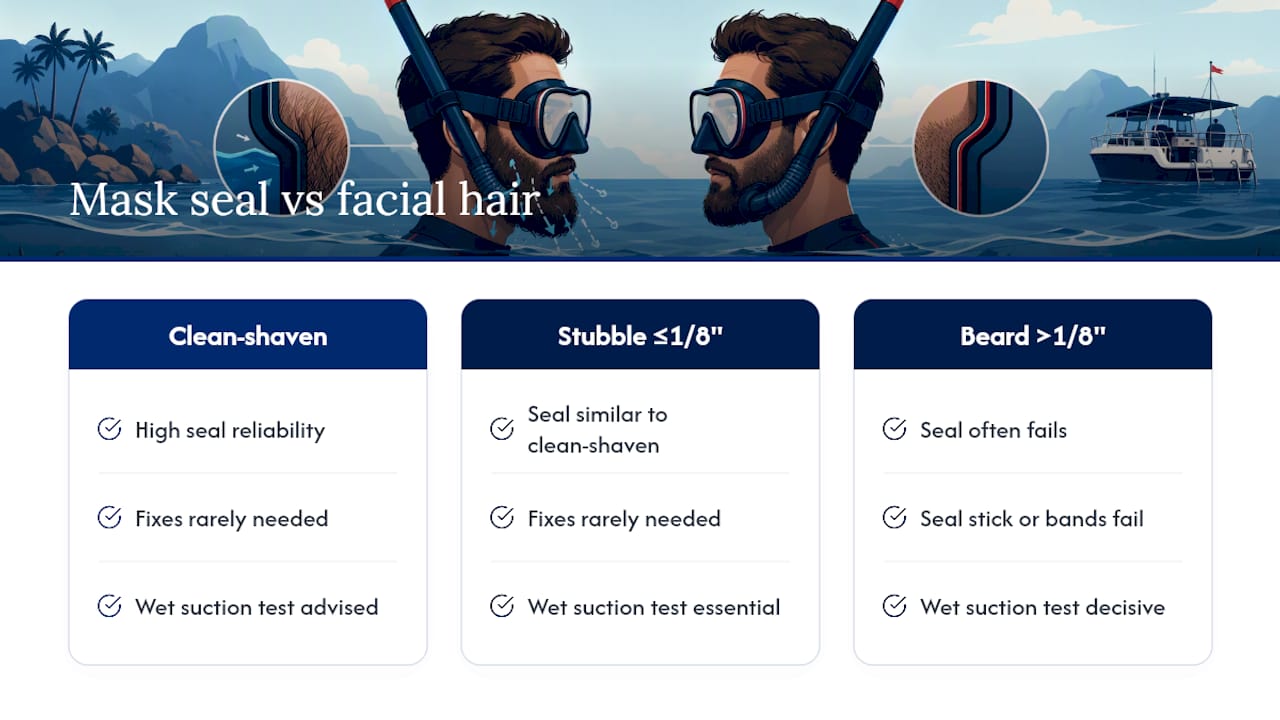
A fit study on facial hair and mask leakage found that stubble trimmed to roughly 0.063 to 0.125 inches performed close to a clean-shaven seal, while leakage climbed sharply once hair grew past that range. That’s a useful target: trim to somewhere around an eighth of an inch or shorter along the sealing band, and you’re working with numbers that hold up in controlled testing, not guesswork.
Where to trim matters more than how much you remove overall:
Focus on a narrow band directly under the nose and along the exact line where the mask skirt sits.
Leave the rest of the beard alone. You’re not shaving your identity away, just clearing a half-inch-wide track.
Trim a little, retest with the dry suction check, then trim more only if needed. Small, repeated adjustments beat one aggressive pass.
What gear actually helps a beard get a better seal?
A handful of low-cost tools close most of the gap between “close enough” and “watertight,” and they’re worth packing regardless of which mask you land on.
Food-grade silicone grease or a mask seal stick, rubbed lightly along the skirt edge before donning, fills in gaps around individual hairs. Use a thin layer. More product doesn’t seal better, it just makes a mess.
An exercise or beard band wrapped flat against the jaw, tucked under the mask skirt, compresses the beard enough to improve contact. A 2021 study on beard length and mask filtration found this kind of band measurably improved fit for bearded test subjects, though results varied by beard thickness.
A dive hood covers the jawline entirely and pairs well with a mask that has a shorter lower skirt, since the hood does the sealing work the beard can’t.
Avoid petroleum jelly on silicone skirts. Petroleum breaks down silicone over time, and most practical snorkel guides for bearded users recommend silicone-based products instead.
Pro Tip: Don’t overtighten the strap to compensate for a bad seal. It just distorts the skirt shape and often makes the leak worse. A mask with a working purge valve lets you clear small leaks with one sharp breath instead.
Should you use a full-face snorkel mask with a beard?
Full-face masks seal around the entire face perimeter rather than pressing skirt material directly against beard hair, which is why they sometimes outperform traditional masks for lighter beards. Heavy growth at the jawline is a different story. Coverage there is wider, and testing on full-face masks with facial hair shows mixed results once the beard gets thick.
Favor models with a wide perimeter skirt and soft, high-quality silicone.
Check for a working purge system so minor leaks clear easily.
Full-face masks are built for surface snorkeling, not freediving. Equalizing pressure and controlling airflow gets harder underwater, so treat them as a recreational, surface-only tool.
Always run the dry and wet fit tests before committing to one for a trip.
What does respirator research tell us about snorkel mask safety?
Industrial respirator studies aren’t a perfect match for recreational snorkeling, but they’re the clearest data we have on how facial hair affects a seal, and the numbers are stark.
One older workplace study found bearded workers had a median fit factor of just 12 with half-mask respirators, compared to 2,950 for clean-shaven workers, a difference measured in hundreds of fold, not percentages.
A snorkel mask doesn’t need that level of protection. It needs to keep out enough water that you can clear it with a breath and keep going. A small trickle at the mustache that purges easily is a nuisance. Continuous flooding, or a leak you can’t clear in rough water, is not. If your dry suction test fails on land, don’t push it into chop or current.
Field tips from an experienced snorkeling guide
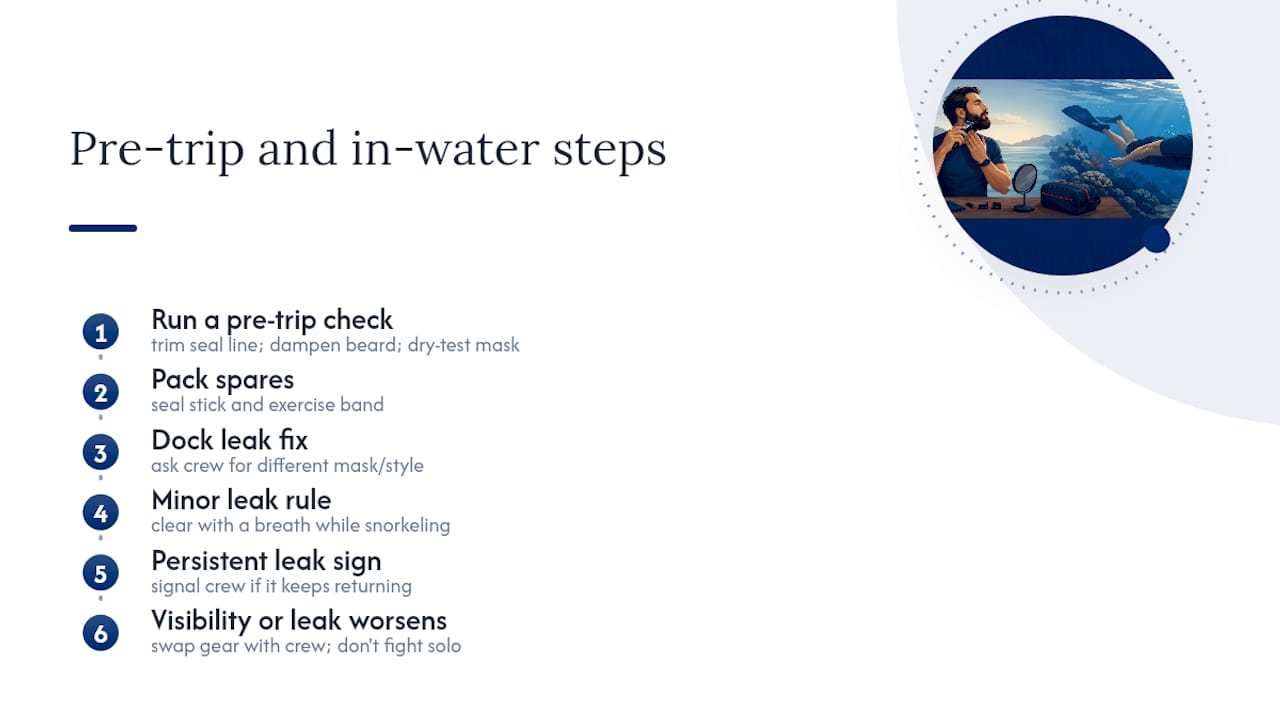
Run through this before every trip: trim the seal line, dampen the beard, dry-test the mask, and pack a seal stick and an exercise band in your bag. If something still leaks at the dock, ask the crew for a different mask size or style before you’re in the water. Once you’re snorkeling, a small leak you can clear with a breath is normal. If it keeps returning or visibility drops, signal the crew and swap gear rather than fighting it solo.
What most guides get wrong about snorkeling with a beard
Most advice on this topic treats a beard like a problem with one fix. It isn’t. The fit research backs a much narrower point: stubble trimmed to roughly an eighth of an inch or less performs close to clean-shaven, and that’s a real, testable target, not a vague suggestion to “trim it up a bit.” Past that threshold, no amount of seal stick or band wrapping fully compensates, and pretending otherwise just sets people up for a leaky first ten minutes in the water.
The bigger gap in most beard-and-mask articles is that they treat gear selection and fit testing as separate steps. They aren’t. A traditional mask that leaks on one guy will seal fine on another with the identical beard length, because jaw shape, skirt design, and how you dampen the hair before donning all shift the outcome. That’s why the dry suction test matters more than any single product recommendation.
If you only do one thing differently after reading this, make it the wet check at the dock, not a new purchase. Most bearded snorkelers already own something that works. They just never tested it before jumping in.
— Justin
Prefer to skip the gear fiddling entirely?
If trimming and testing masks sounds like more prep than you want on a beach day, a guided trip solves it for you. Pcbprestige runs private, captain-guided Shell Island snorkeling and dolphin tours in Panama City Beach on a 26-foot boat, with all snorkel gear included, and the crew can offer alternate mask styles on the spot for guests with beards or mustaches.

Because these tours are fully private charters for small groups, guests have extra time to try a mask, adjust it, and swap if it doesn’t seal, in calm water known well to the captain. If you want to ask about beard-friendly gear options ahead of time, book your private tour and mention it when you reserve.
Sources
Recommended
Comments