Avoid BUI While Boating in Florida: 0.08% BAC, Penalties, Captain Fix

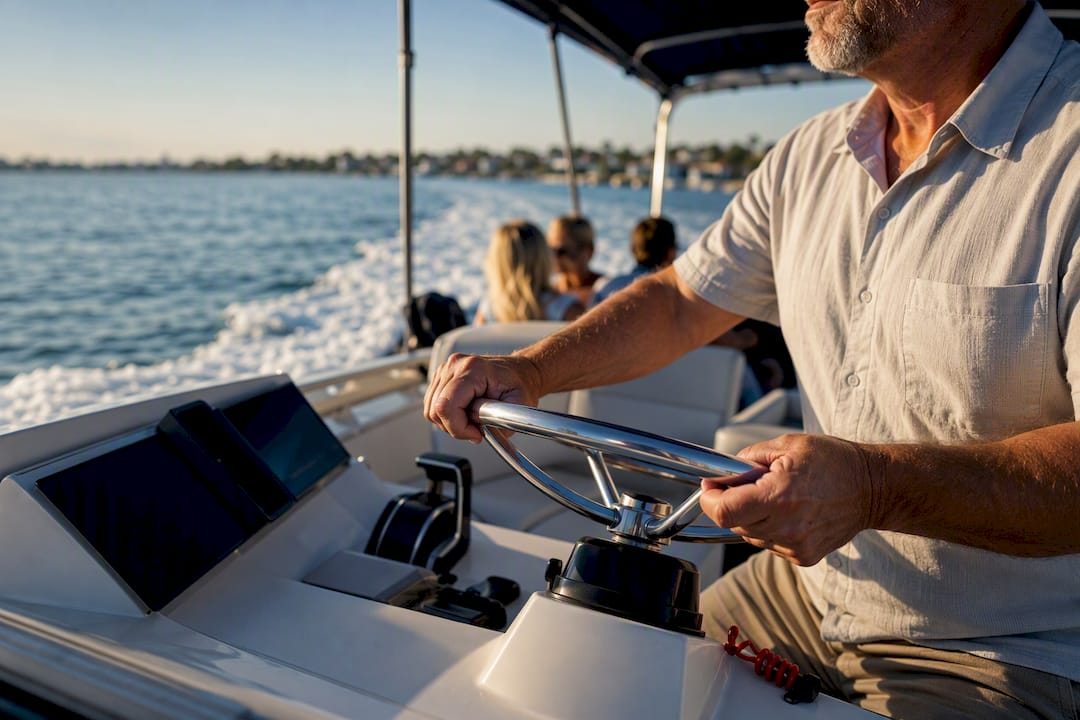
Yes, adult passengers can drink on a Florida boat. There’s no statewide open-container ban for vessels. The catch is the person driving: an operator whose normal faculties are impaired, or whose blood alcohol hits 0.08% (0.02% if they’re under 21), commits Boating Under the Influence under Florida Statute 327.35. If your group plans to drink, designate a sober operator or hire a licensed captain before you leave the dock.
TL;DR:
Operating a boat with a blood alcohol content of 0.08% or higher (0.02% if under 21) constitutes boating under the influence in Florida, regardless of passenger drinking.
Passengers can legally drink alcohol on Florida boats, but the operator must remain sober; open containers near the helm can influence impairment assessments.
Officers can stop and inspect boats without probable cause, and impairment can be proven through observation alone, without a breath test.
Convictions for BUI can result in fines, jail time, vessel impoundment, and long-term criminal and insurance consequences, especially with higher BAC levels or repeat offenses.
Hiring a licensed captain ensures the vessel is operated sober, eliminating the operator impairment risk completely on private charter trips.
Table of Contents
What Florida Boating Regulations Actually Say About Alcohol
Florida’s BUI law reads a lot like the state’s DUI statute, and that’s intentional. Florida Statute 327.35 gives prosecutors three separate ways to prove a boater was impaired, and they only need one.
Impaired normal faculties. The state can convict based on observed behavior alone, such as slurred speech, poor balance, erratic steering, or slow reaction time. No breath test is required.
Blood alcohol at or above 0.08 grams per 100 milliliters. This is the standard adult threshold, identical to Florida’s drunk driving law.
Breath alcohol at or above 0.08 grams per 210 liters. Same legal effect as the blood standard, just measured differently.
There’s a separate, stricter line for younger boaters. Operators under 21 are legally impaired at just 0.02%, a fraction of the adult threshold. The Legislature built the law this way on purpose, and the practical message is blunt: don’t assume you’re fine just because you feel fine. Florida boating regulations treat the person behind the wheel of a boat the same way they treat the person behind the wheel of a car, and the Florida Fish and Wildlife Conservation Commission enforces it accordingly, on rivers, lakes, and coastal waters alike.
Can Passengers Drink While the Boat Is Underway?
Passengers can drink. Florida has no law banning open containers on recreational vessels, which is one of the biggest differences between boating and driving in this state. A cooler of beer or a round of cocktails for your guests is completely legal, as long as nobody drinking is also operating the boat.
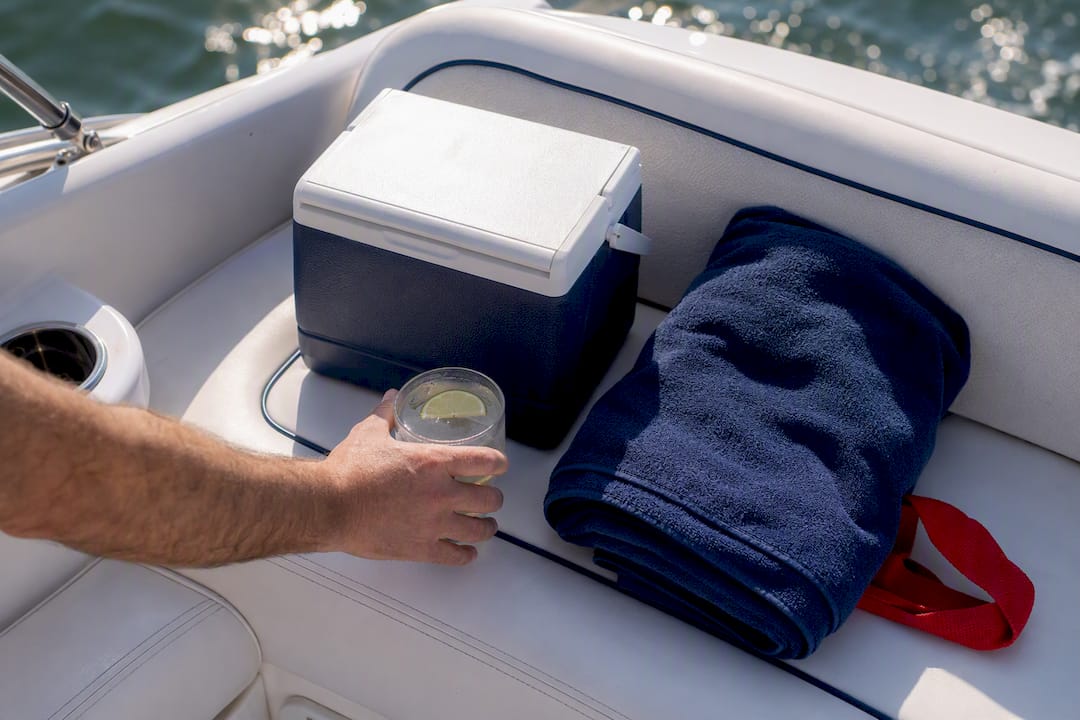
Where this gets people in trouble is assuming that rule protects the operator too. It doesn’t, and passenger drinking can actually work against an operator during a stop. If an officer boards a vessel and sees open containers near the helm, or smells alcohol on the person steering, that becomes part of the impairment picture even before a breath test happens. The safest practice is simple: whoever is actually running the boat stays sober, full stop, regardless of what everyone else on deck is doing.
A few container habits reduce both legal and physical risk:
Skip glass bottles entirely. Cans and plastic cups handle a rocking deck far better and won’t shatter near bare feet.
Keep coolers latched and away from the helm area, not loose on the floor where they slide during wake or turns.
Pack out every can and wrapper. Littering on Florida waterways carries its own fines separate from any alcohol issue.
Pro Tip: Keep the cooler in the stern, away from the driver’s seat. It’s a small habit, but it visually signals to any officer who boards that the operator isn’t the one drinking.
How Officers Actually Test and Prove Impairment on the Water
Both the FWC and the U.S. Coast Guard have authority to stop and board a vessel for a safety or compliance check, without needing probable cause the way a police officer would on a highway. That alone surprises a lot of boaters. A routine safety inspection can turn into a BUI investigation fast if an officer notices signs of impairment once aboard.
Here’s roughly how a stop tends to unfold:
Initial contact and observation. The officer checks required safety gear (life jackets, fire extinguisher, navigation lights) and talks to the operator, watching for slurred speech, bloodshot eyes, or the smell of alcohol.
Field sobriety evaluation. On the water, this might mean balance checks, following an object with the eyes, or reciting information, adapted for a rocking deck rather than solid ground.
Chemical testing. If the officer suspects impairment, a breath or blood test measures BAC against the 0.08% adult threshold (0.02% under 21), per FWC boating regulations.
Arrest and custody decision. If arrested, state law requires the person be held until their BAC drops below 0.05% or until their normal faculties are no longer impaired, whichever the officer determines applies.
The 0.08% figure is a legal line, not a safety guarantee. Officers can charge BUI at lower readings if observed behavior shows impairment, so treating 0.08% as a target to stay under, rather than a genuine safe limit, is a mistake a lot of boaters make.
What a BUI Conviction Actually Costs You
A first BUI conviction in Florida typically brings fines, possible jail time, and probation, with the exact numbers depending on prior record and the specifics of the stop. The penalties escalate sharply from there.
Aggravating factors matter. A BAC of 0.15% or higher, or a minor aboard the vessel at the time of the offense, triggers enhanced penalties beyond the base BUI charge.
Repeat offenses compound quickly. Second and third convictions carry longer mandatory minimums, higher fines, and longer license or vessel-operation restrictions.
Collateral consequences follow you home. Vessel impoundment, mandatory substance-education programs, a criminal record, and higher insurance premiums typically outlast the court date itself.
Alcohol remains a leading known contributing factor in recreational boating deaths in Florida, and heat, sun, and wave motion all intensify its effects faster than most people expect on land.
The immediate consequences hit before any of the long-term ones. An arrest at the dock often means the vessel gets seized on the spot, your day ends in handcuffs instead of at the marina bar, and your name enters the system the same afternoon.
When Enforcement Ramps Up: Holidays and Patrol Patterns
Enforcement isn’t spread evenly across the calendar. FWC and the Coast Guard coordinate Operation Dry Water, a nationwide push concentrated around peak boating weekends, and Florida waterways see some of the heaviest participation in the country given how much of the state’s recreation happens on the water.
Holiday weekends draw extra patrols. Independence Day and Memorial Day weekend consistently see the highest concentration of BUI stops, tied directly to Operation Dry Water scheduling.
Popular waterways get more attention. Busy bays, inlets, and island anchorages near tourist destinations see a heavier patrol presence than quiet backwater creeks.
The math is simple. More boats plus more officers plus more alcohol on deck equals a much higher chance of getting stopped compared to a random Tuesday afternoon.
If your group is heading out on a major holiday, assume there’s an officer nearby, because there probably is. Booking a sober captain for those specific weekends is the single easiest way to remove the risk entirely.
How to Drink Responsibly on a Florida Boat
None of this means you have to leave the cooler at home. It means putting a little structure around the day so nobody ends up explaining themselves to an FWC officer.
Pick your operator before anyone opens a drink. Decide who’s driving for the day and have that person commit to water, soda, or nothing stronger until the boat is back on the trailer.
Rotate carefully if you must. If multiple people might take a turn at the helm, track who’s had what, and treat 0.08% as the outer legal edge, not a target.
Consider skipping the decision entirely. Booking a private, licensed-captain tour removes the whole question. The person running the boat is a professional whose job is to stay sober, so your group can actually relax.
A short pre-departure checklist covers most of the physical risk that alcohol makes worse:
No glass on deck, especially near planned swim or snorkel stops.
Coolers secured, not sliding loose when the boat turns.
Sunscreen and water for every guest, since sun and heat accelerate alcohol’s effects faster than most people expect.
Life jackets accessible and worn during any swim or snorkel break, not just stored under a seat.
Clear rules set upfront if minors are aboard, since alcohol and kids on the same small deck is a combination worth planning around, not improvising.
Pro Tip: If your group includes both drinkers and swimmers, build in a “dry window” before any snorkel stop. Nobody should be in open water within an hour of a drink, regardless of how experienced a swimmer they are.
Why a Licensed Captain Solves the Whole Problem
Hiring a licensed captain doesn’t just add convenience. It removes the operator-sobriety question from your day entirely, because a professional captain’s job is to stay sober and hold legal responsibility for how the vessel is run, start to finish.
Private charters built around this model tend to share a few features that matter here:
A captain who never drinks while working, removing any BUI exposure for the trip.
Small guest limits, often six or fewer, so the person running the boat can actually watch everyone aboard.
A pre-departure safety briefing covering life jackets, swim stops, and what to do if conditions change.
Snorkel gear and safety equipment included and checked before departure, not assembled last minute.
For a group that wants to have a few drinks, relax, and watch dolphins without anyone needing to think about BAC math, that structure does the legal thinking for you.
The Real Gap in Most Boating-Alcohol Advice
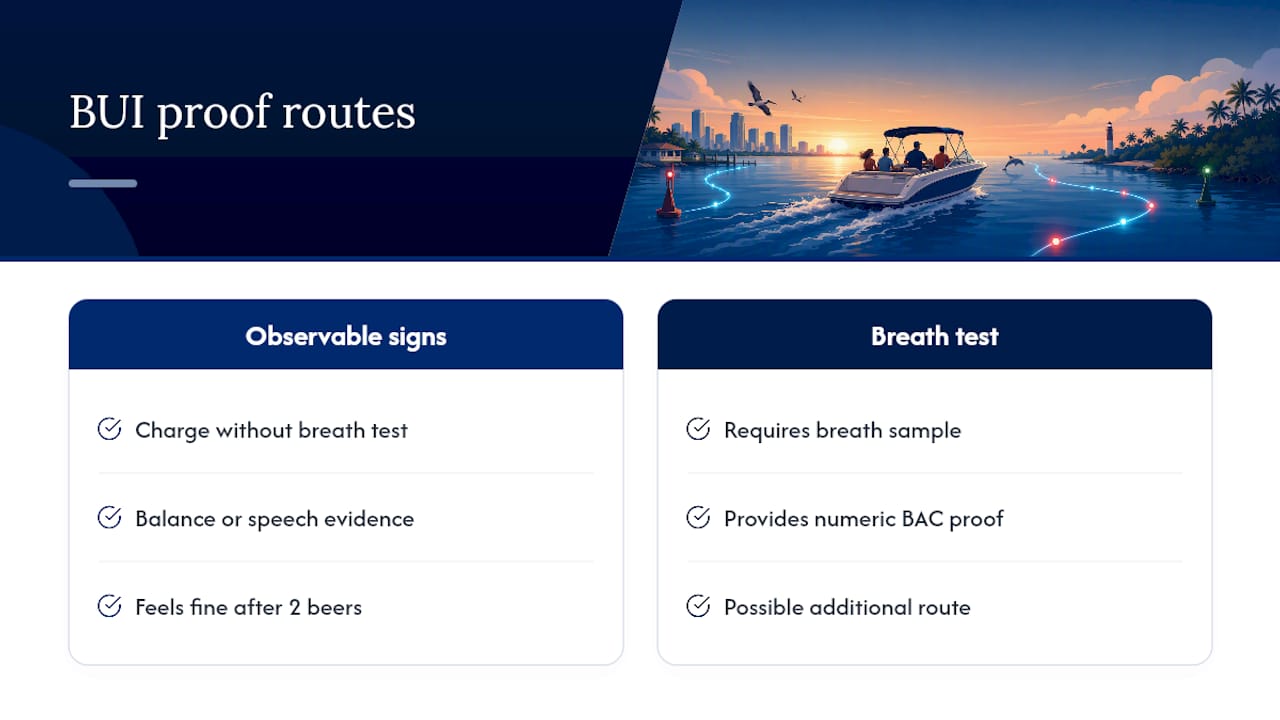
Most articles on this topic stop at “know the law and don’t drink and drive,” which is true but incomplete. The bigger issue is that most boaters genuinely don’t understand how low the bar is for a BUI charge. Florida’s normal-faculties standard means an officer doesn’t need a breath test at all if your balance or speech gives you away, and that catches people who feel perfectly fine after two beers in the sun.
The conventional advice to “designate a driver” also undersells how easy that commitment is to break on the water. Land-based designated drivers rarely swap seats mid-trip. Boaters do it constantly, handing the wheel to whoever’s closest when someone wants to swim or fish. That informality is exactly how a sober plan falls apart by hour three.
What actually works is removing the temptation entirely by putting a professional in the operator’s seat. It’s not about distrust of your own group. It’s about acknowledging that heat, sun, and a full day on the water erode judgment faster than anyone accounts for at 10 a.m. when the cooler is still full of ice.
— Justin
A Private Charter Lets Your Group Drink Without Anyone Driving Sober-Adjacent
A practical alternative to figuring out who’s staying sober on your boat day is booking a private tour with a licensed local captain who handles the vessel so your group can relax.

Every trip is private, capped at six guests, and run by a captain who knows St. Andrews Bay and the waters around Shell Island well enough to find dolphins without crowding them. Whether you want a 2-hour sunset run with drinks in hand as the sky changes color, or a full 3-hour dolphin and snorkeling trip with gear included, nobody in your group has to sit out the fun to keep the boat legal. If you’re planning a bachelorette weekend or a family outing where a few adults want to drink, a private charter sidesteps the whole operator question by design, not by luck.
This isn’t legal advice, just a straightforward way to remove the risk. Check open dates and book a private tour directly through Pcbprestige.
Where These Rules Come From
The legal standards in this article come straight from primary sources, not secondhand summaries.
Florida Statute 327.35, the statute defining BUI, BAC thresholds, and custody rules.
FWC Boating Regulations, covering enforcement authority and testing procedures.
FWC’s Operation Dry Water page, detailing holiday enforcement campaigns.
Herald Tribune’s explainer on Florida BUI penalties, for real-world penalty context.
This article is general information, not a substitute for advice from a qualified lawyer. Consult a qualified legal professional about your own circumstances before acting on anything here.
Sources
FAQ
Can You Drink Alcohol While Boating in Florida?
Adult passengers can drink alcohol on a recreational boat in Florida, since there’s no statewide open-container ban for vessels. The operator, however, cannot be impaired or at/above the 0.08% BAC threshold (0.02% if under 21) under Florida Statute 327.35.
Can I Drink Beer While on a Boat?
Yes, as a passenger you can drink beer or any alcoholic beverage on a Florida boat. The person actually operating the vessel needs to stay under the legal impairment threshold, so the safest approach is to have someone else, or a licensed captain, run the boat.
What Is the New Boating Law in Florida?
Florida’s core BUI framework under Statute 327.35 hasn’t fundamentally changed; it still defines impairment through normal-faculties testing or BAC/breath thresholds of 0.08% (0.02% under 21). Enforcement emphasis, including coordinated campaigns like Operation Dry Water, continues to expand around major holiday weekends.
What States Can You Drink on a Boat?
Most U.S. states, including Florida, allow passengers to drink alcohol aboard a recreational vessel as long as the operator is not impaired, though a handful of states and many local jurisdictions impose stricter open-container rules. Always check state-specific boating statutes and local waterway ordinances before assuming the same rule applies everywhere.
Is Hiring a Licensed Captain a Way to Avoid BUI Risk?
Booking a private tour with a licensed captain means a sober professional operates the vessel, which removes the operator-impairment question for your group entirely. Services like Pcbprestige’s private dolphin and snorkeling tours are built around exactly this arrangement for guests who want to relax without anyone needing to stay sober behind the wheel.
Recommended
Comments