Where to See Manatees in Panama City Beach, Florida
- PCB Prestige

- Aug 9
- 9 min read
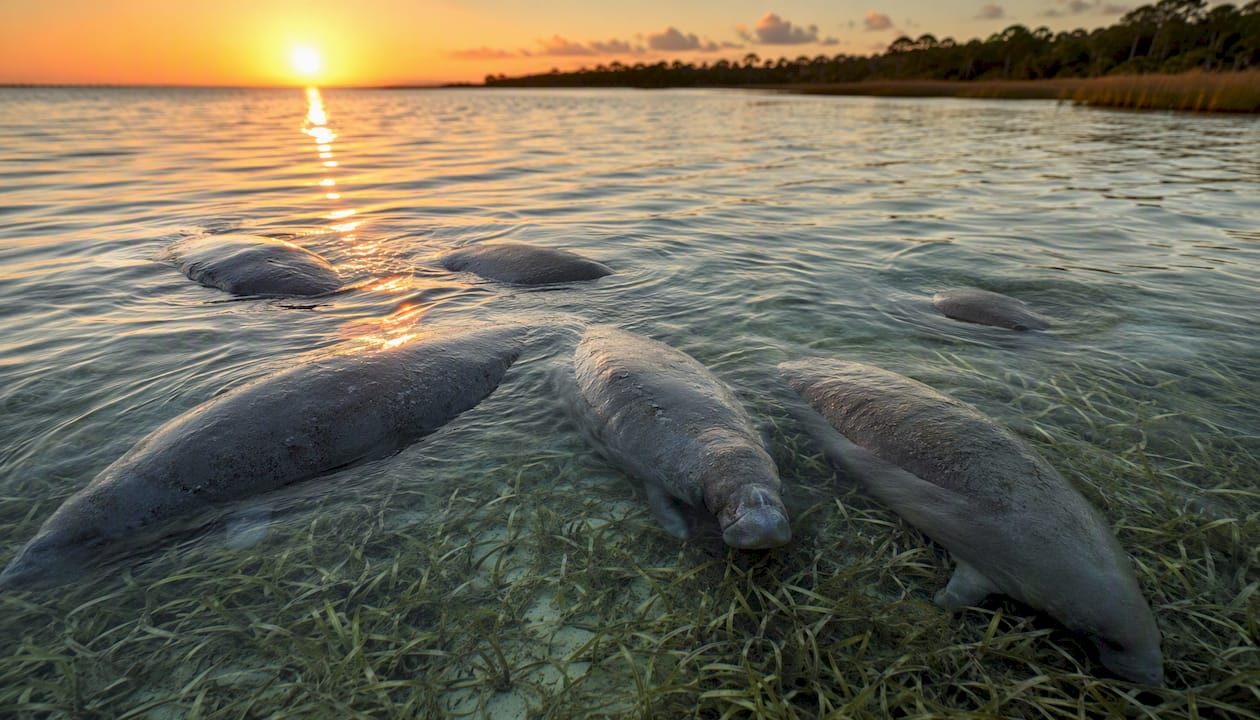
The most reliable spots to find manatees in Panama City Beach are Watson Bayou, St. Andrews State Park near Russell-Fields Pier, Shell Island’s shoreline, Panama City Beach Conservation Park, Camp Helen State Park, and the broader waters of St. Andrews Bay. Sightings climb sharply from April through June as water temperatures rise and manatees spread out from winter refuges into coastal bayous and nearshore Gulf waters.
Three things you can do right now:
Check Watson Bayou first. Local news and recent drone footage confirm it’s the single most consistent spot in Bay County.
Follow WMBB and the Panama City News Herald on social media for same-day sighting alerts before you drive out.
Keep your distance the moment you spot one. Federal law protects manatees, and getting too close carries real penalties.
Pro Tip: Go early on a calm morning and watch for a slow, circular ripple at the surface or a blunt snout breaking the water to breathe. That’s your signal before you ever see the body.
Key Takeaways
Watson Bayou is the most consistent manatee spot in Bay County, with peak sightings from April through June when warm water draws animals north from winter refuges.
Point | Details |
Best local spots | Watson Bayou, St. Andrews State Park, Shell Island bay side, Camp Helen, and St. Andrews Bay grass flats |
Peak timing | April through June; calm mornings on a rising tide give the best daily odds |
What to look for | Slow surface ripples, a blunt snout breaking water, or sediment disturbance in shallow grass flats |
Legal must-dos | Never touch, chase, or feed manatees; call FWC at 1-888-404-FWCC for injured animals |
Private tour advantage | Pcbprestige’s captain-guided charters cover multiple hotspots in one 2–3 hour outing with ethical, crowd-free viewing |
Table of Contents
Best spots for manatees in Panama City Beach
Panama City Beach sits along a stretch of coastline that gives manatees exactly what they need: warm, shallow water, protected bayous, and seagrass beds. Here’s where to focus your time.
Watson Bayou
Watson Bayou is the top local hotspot, full stop. Local reports document herds including mother-and-calf pairs appearing here in spring and early summer, and a 2023 sighting drew significant public attention. The bayou’s calm, sheltered water and shallow edges make it ideal for manatee feeding. Park along the bayou’s public access points near downtown Panama City and scan the surface from the bank.
St. Andrews State Park and Russell-Fields Pier
St. Andrews State Park offers both shoreline access and a boat launch, giving you flexibility. The pier and nearshore Gulf waters have produced documented sightings of manatees swimming close enough to film from the pier deck. The park’s lagoon side tends to be calmer and more productive than the open Gulf face. Arrive early on weekdays to avoid crowds that can push animals away from the shoreline.
Panama City Beach Conservation Park
This preserve sits inland from the beach and includes wetland boardwalks and freshwater areas that occasionally attract manatees during warm months. Bay County Audubon resources list it among the coastal wetland sites worth checking for marine and estuarine wildlife. The boardwalk trails give you elevated sightlines over shallow water, which helps spot large animals below the surface.
Camp Helen State Park
Camp Helen sits at the eastern edge of Panama City Beach where Lake Powell meets the Gulf. The lake’s brackish, shallow water and the narrow pass connecting it to the Gulf create a natural corridor manatees use during warmer months. The park’s trails run along the water’s edge, making it easy to scan from shore without disturbing the habitat.
Shell Island shoreline
Shell Island’s undeveloped shoreline and the shallow grass flats on its bay side attract manatees feeding on seagrass. You need a boat to reach it, which naturally keeps crowds lower than at public piers. The official PCB visitor blog notes that manatees appear among the island’s marine life, though sightings are less predictable here than in the bayous.
St. Andrews Bay
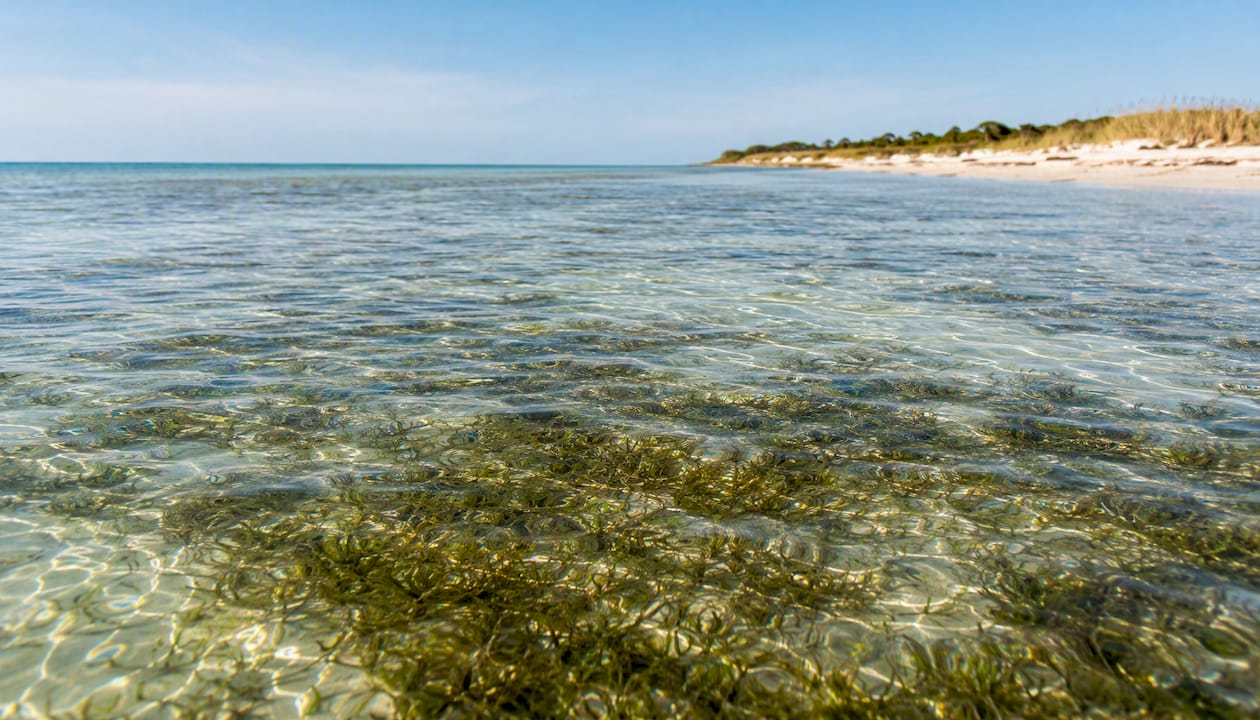
The broader bay system connects all of these spots and serves as the main travel corridor for manatees moving between feeding areas. Slow-moving boats on the bay often encounter manatees near the surface, particularly in the shallower grass flats on the bay’s northern edges. A GPS tip: the grass flats north of the Hathaway Bridge are worth a slow pass on any warm morning.
When are manatees most likely to appear?
April through June is the peak window for manatee sightings in Panama City Beach, with the best daily odds on calm mornings during or just after high tide when current is minimal and animals feed more actively in shallow areas.
The biology behind this is straightforward. Manatees are warm-water animals that cannot tolerate water below about 68°F for extended periods. During winter, they concentrate at natural springs and warm-water outflows across Florida, places like Blue Spring State Park where water stays a constant 72°F year-round. As Gulf and bay temperatures climb through March and April, manatees disperse northward and westward along the coast, reaching the Panhandle in meaningful numbers by late April.
Month | Sighting likelihood in PCB | Notes |
January–February | Very low | Animals concentrated at warm-water refuges farther south |
March | Low to moderate | Early arrivals possible on warm spells |
April–June | High | Peak dispersal window; Watson Bayou most active |
July–September | Moderate to high | Consistent presence; heat keeps animals in shaded bayous |
October–November | Declining | Animals begin moving south as water cools |
December | Very low | Most have left for winter refuges |
Local news sighting reports follow this pattern closely. The mypanhandle.com coverage of Watson Bayou sightings clusters in spring and early summer, which aligns with what Visit Florida’s seasonal guidance describes for the broader Florida coast.
How to improve your odds of a sighting
Boat-based viewing consistently outperforms shore watching for one simple reason: you can cover more water quietly and position yourself near productive habitat without the noise and movement that comes with a crowded public bank.
Method | Sighting likelihood | Crowd level | Accessibility | Compliance risk |
Shore/bank watching | Low to moderate | High at known spots | Easy, free | Low |
Public pier | Low to moderate | High when word spreads | Easy, free | Low |
Private boat (self-guided) | Moderate | Low | Requires boat/launch | Moderate if rules unknown |
Guided private charter | High | Very low | Fully managed | Very low |
What to look for on the water:
A slow, circular surface disturbance with no wind chop, often 3–6 feet across
A blunt, whiskered snout breaking the surface every 3–5 minutes to breathe
Feeding ripples in shallow grass flats, where the animal stirs up sediment
A broad, paddle-shaped tail just below the surface in clear water
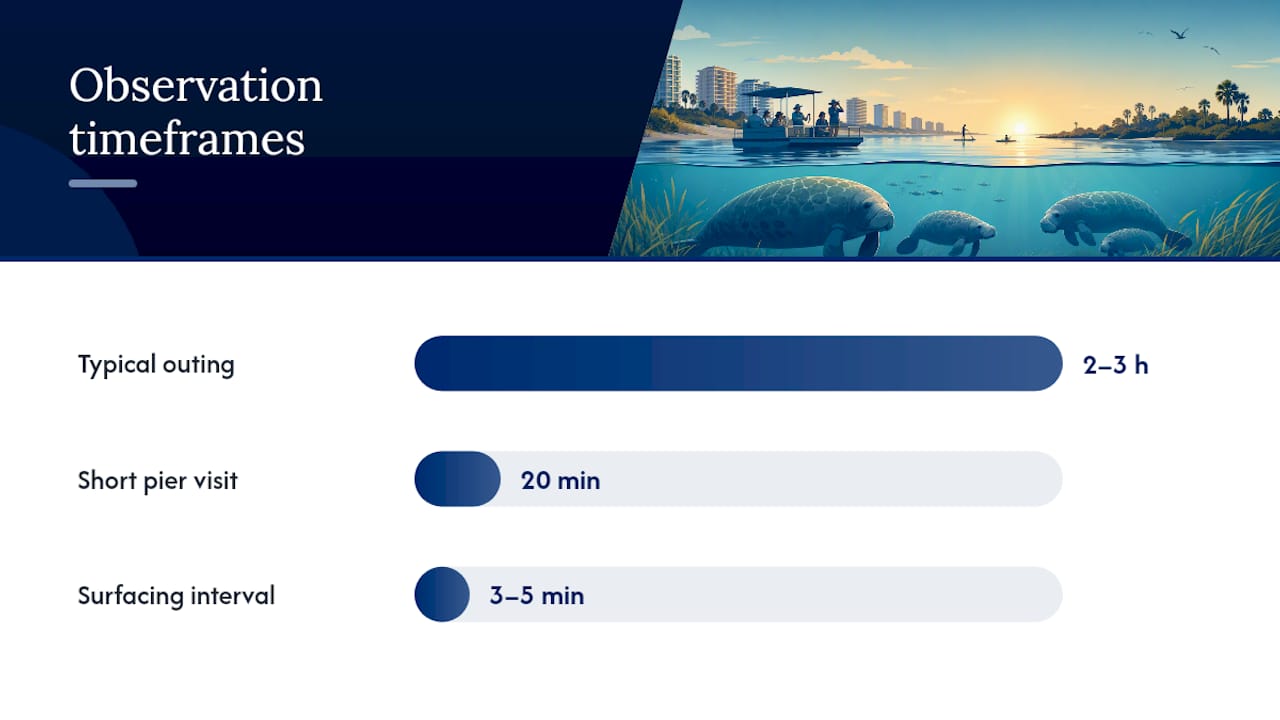
Polarized sunglasses cut surface glare dramatically and let you see into the water column from a boat or elevated pier. Binoculars help from shore. For a typical outing, plan 2–3 hours on the water. A short pier visit might yield a sighting in 20 minutes or nothing at all. A private charter gives a captain the flexibility to move between Watson Bayou, the bay grass flats, and Shell Island based on where animals have been seen recently.
Pro Tip: When you spot a manatee from a boat, cut the engine and drift. Manatees are curious and will sometimes approach a quiet, stationary boat on their own. Running the engine toward them almost always sends them down.
Rules, safety, and what to do if you find an injured manatee
Touching, chasing, or swimming with manatees is illegal under both federal and Florida state law. The U.S. Fish and Wildlife Service classifies manatees as a protected species under the Marine Mammal Protection Act and the Endangered Species Act, and the Florida Fish and Wildlife Conservation Commission (FWC) enforces state-level protections that mirror and reinforce those federal rules.
What you must do:
Stay at least a boat-length away from any manatee you encounter
Reduce engine speed to idle or slow speed in posted manatee protection zones
Let manatees approach you, never the reverse
Report any sighting of an injured, entangled, or distressed animal immediately
What is prohibited:
Touching, petting, or feeding manatees
Cornering an animal against a dock, bank, or boat
Separating a mother from a calf
Riding or holding onto a manatee
If you spot an injured or entangled manatee, follow these steps:
Secure your boat at a safe distance and do not approach the animal further.
Note the exact location (GPS coordinates or a landmark), the time, and the animal’s behavior.
Call the FWC Wildlife Alert Hotline at 1-888-404-FWCC (3922). This line operates 24 hours a day.
If the animal appears in immediate danger, you can also call the U.S. Coast Guard on Channel 16.
Stay nearby if safe to do so and keep other boats away until responders arrive.
Boating speed zones in St. Andrews Bay and surrounding waterways are posted and enforced. Violations carry fines and can result in federal charges when a protected species is involved. The PCB marine life guide covers ethical viewing practices in more detail for anyone planning a water-based outing.
Where to check for current sightings before you go
Real-time sighting information is scattered across a few sources, and knowing which to check first saves a wasted trip.
WMBB News 13 and Panama City News Herald: Both outlets post manatee sighting stories quickly when local reports come in. Search their sites or follow their Facebook pages for the most recent coverage.
FWC sighting database: The Florida Fish and Wildlife Conservation Commission maintains a public reporting portal where verified sightings are logged. It’s more reliable than social media but updates less frequently.
Local Facebook groups: Groups like “Panama City Beach Community” and similar Bay County pages often carry photos and location tags within hours of a sighting. Treat these as leads, not confirmed reports. Check for a photo, a timestamp, and a named location before acting on them.
Drone footage and local TV: Recent coverage, including 2026 drone footage of a manatee and calf in Watson Bayou, shows that local media is actively tracking Bay County sightings heading into summer.
For a same-day trip, check the News Herald and WMBB Facebook pages first, then cross-reference with any FWC reports. If you see a social post with no photo and no specific location, it’s not worth driving across town for.
Why manatees favor bayous, piers, and Shell Island
Manatees gravitate to sheltered, warm, shallow water with abundant seagrass, and Panama City Beach’s geography delivers all three. Watson Bayou, the grass flats of St. Andrews Bay, and Shell Island’s bay-side shallows are productive feeding grounds, not random stops.
Water temperature is the primary driver. Manatees digest food slowly and rely on warm water to maintain body temperature. Bayous heat up faster than open Gulf water in spring, which is why Watson Bayou sees animals before the open coast does. Freshwater inflows from storm drains and small creeks also attract manatees, who drink fresh water regularly and will linger near outflows.
Seagrass is the food source. St. Andrews Bay supports seagrass beds that provide the bulk of a manatee’s diet during its time in Panhandle waters. Shell Island’s bay side sits directly over some of these beds, which explains why animals feeding there are often spotted from boats passing through the channel.
Piers and docks create a secondary draw: the pilings attract small fish, which attract larger fish, which stir up the kind of bottom activity that manatees investigate. A manatee near Russell-Fields Pier is likely following that food chain into shallow water, not specifically seeking out the structure.
Pro Tip: Look for dark, slightly murky patches in otherwise clear shallow water near grass flats. That turbidity often means a large animal has been grazing recently. Slow down and scan the edges.
A local captain’s perspective on manatee watching
The mornings that produce the best manatee encounters share a few things: glassy water, no wind, and a rising tide pushing warm, shallow water over the grass flats. Those conditions don’t happen every day, but when they do, the bay tells you where to look.
Private charters make a real difference here. When a sighting goes public at a pier or a bayou bank, shore crowds build fast and the animals move off. A private boat lets you position quietly, cut the engine at the right moment, and give guests a calm, unhurried encounter rather than a rushed look from 50 feet away. On a typical 2–3 hour outing, a knowledgeable captain can cover Watson Bayou, the bay grass flats, and Shell Island’s bay side in a single trip, adjusting the route based on what the water and recent reports are showing.
Book with enough lead time to pick your date based on weather and tide. A calm morning on a rising tide in May beats a windy afternoon in July every time. Flexible scheduling matters more than most people realize when you’re chasing a wild animal.
For a broader look at what Florida Panhandle tours can cover, regional operators offer useful context on what to expect from different excursion styles.
See manatees responsibly with Pcbprestige
A private, captain-guided tour on Pcbprestige’s 26-foot powerboat puts you in the right places at the right time, without the shore crowds that push animals away.
What that looks like in practice:
Fully private charter for up to 6 guests, so no strangers sharing your sighting
Licensed local captain who knows Watson Bayou, the bay grass flats, and Shell Island’s productive shallows
Flexible itinerary adjusted in real time based on current sighting reports and water conditions
Ethical wildlife practices built into every outing, including engine-off drifting near animals
On-board comfort with a bathroom and all snorkel gear included for a full 2–3 hour trip
Pcbprestige runs private dolphin and snorkeling tours that cover the same waters where manatees appear, giving you a realistic shot at a calm, legal, memorable encounter. Ready to pick your date? Book your private charter and let the captain handle the rest.
Sources
Recommended
Comments