NOAA's 50 Yards Rule Debunks Wild Dolphin Swim Myths
- PCB Prestige

- 10 minutes ago
- 6 min read
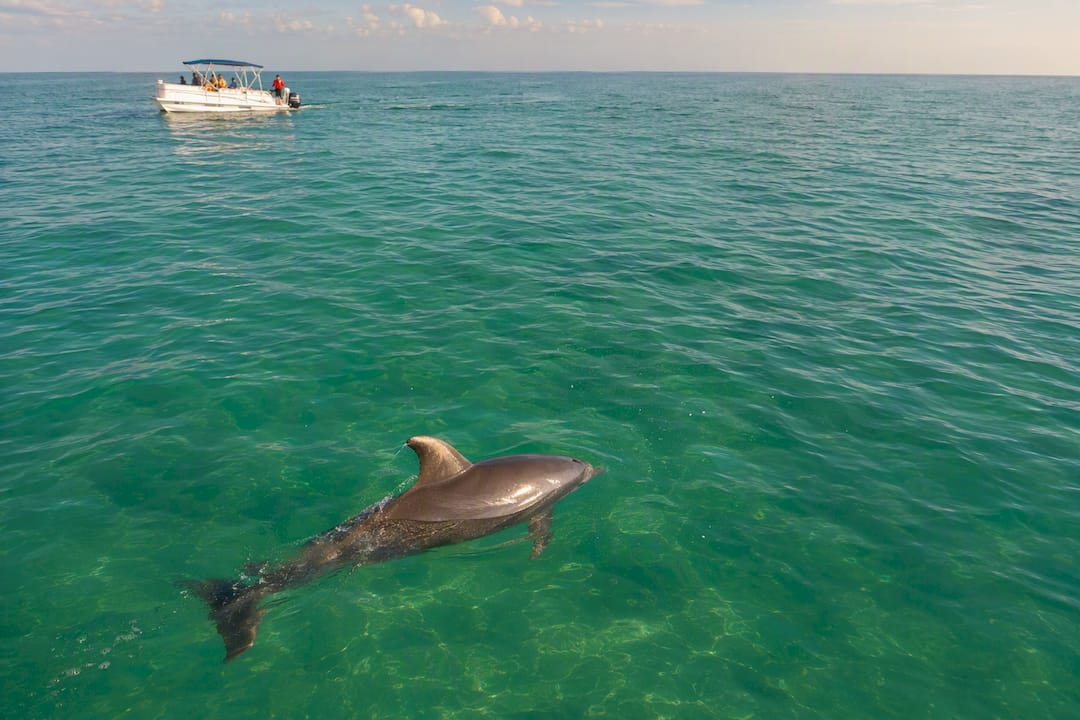
Most of what people believe about swimming with wild dolphins is wrong, and the biggest wild dolphin swim myths center on the idea that dolphins want humans in the water with them. NOAA Fisheries recommends staying at least 50 yards away from wild dolphins for good reason: close contact can disrupt feeding, resting, and social behavior, and it puts swimmers at real risk. The sections below debunk the specific claims and show what safer, legal viewing actually looks like.
TL;DR:
Disturbance and avoidance behaviors increase in dolphins exposed to swim-with tourism, leading to potential population-level impacts.
Approaching within 50 yards is illegal and can cause stress, habitat disruption, or injury, especially during resting or nursing periods.
Responsible viewing involves maintaining a minimum distance, avoiding feeding, and choosing shore or boat-based observation over in-water encounters.
Most wild dolphins do not seek human interaction; their tolerance is often a sign of habituation to previous disturbances, not friendliness.
Private, captain-led tours with strict no-chase policies offer the safest, most ethical way to see dolphins without harming them.
Table of Contents
Common Wild Dolphin Swim Myths, Debunked
Dolphin swimming misconceptions tend to spread because a handful of dramatic stories get repeated for decades while the far more common outcomes, disturbance, avoidance, and occasional aggression, rarely make headlines. Here is what the record actually shows.
Myth: Dolphins always rescue swimmers in trouble. A few well-documented incidents exist, but they get repeated because they’re rare and dramatic, not because they represent typical behavior. Selective reporting makes exceptions look like the rule.
Myth: Dolphins “smile” because they’re happy. That upturned mouth is fixed jaw anatomy, not an expression. As the Wild Dolphin Project points out, a dolphin can be stressed, defensive, or actively signaling aggression while its face looks exactly the same as when it’s relaxed.
Myth: Wild dolphins enjoy swimming with people. Most wild populations avoid sustained human contact, and the ones that don’t avoid it are often habituated individuals whose behavior has already been altered by repeated exposure. That’s a warning sign, not proof of friendliness.
Myth: Feeding dolphins helps them. Provisioning breaks down natural wariness, trains dolphins to beg near boats, and has led to documented injuries to both animals and people from propeller strikes and bites.
Myth: Swim-with encounters are harmless fun with an educational bonus. World Animal Protection has cataloged how industry marketing routinely overstates the welfare and educational value of these encounters while downplaying the stress they cause.
Myth: Dolphins have mystical healing powers. There’s no credible scientific basis for dolphin assisted healing claims beyond the general benefit of being outdoors near water, which you can get without touching a wild animal.
The pattern across every myth is the same: humans project intention and emotion onto animal behavior we don’t fully understand, then build tourism marketing around that projection.
What the Science and Government Guidance Actually Say
NOAA Fisheries defines harassment under the Marine Mammal Protection Act broadly enough to cover most in-water approaches, not just obvious harm. Chasing, surrounding, or attempting to touch a wild dolphin can qualify, and violations carry civil and criminal penalties, including fines and potential jail time. The 50 yard rule isn’t a suggestion; it’s the baseline NOAA uses to define lawful distance.
The strongest evidence against in-water contact comes from Hawaii’s spinner dolphins, a population NOAA studied closely because tourists routinely swam into their resting bays. The agency found that even quiet, non-chasing human presence disrupted rest cycles that spinner dolphins depend on after nights spent hunting offshore. That finding led directly to a formal 50-yard approach limit for the species.
Passive floating near a resting pod still counts as disturbance. Spinner dolphins that can’t complete rest cycles show measurable impacts on reproduction and habitat use over time, not just in a single encounter.
A literature review of human-dolphin interaction research found increased whistle rates and shifting group cohesion in dolphins exposed to frequent swim-with tourism, changes that can carry population-level consequences when unmanaged. Dr. Denise Herzing of the Wild Dolphin Project has spent decades arguing against treating friendliness as a species trait; she notes that subtle displacement signals, like a perpendicular pass or a sudden direction change, get misread as playful when they’re actually a dolphin asking for space.
How to Watch Dolphins Without Harming Them
Responsible viewing isn’t complicated, but it does require discipline, especially when a dolphin surfaces closer than you expected.
Hold 50 yards (150 feet). That’s NOAA’s minimum for wild dolphins, and it’s the same standard adopted by voluntary programs like Dolphin SMART.
Never feed them. Feeding is illegal and it’s the single biggest driver of the dangerous conditioning cycle described above.
Approach slowly, parallel to their path. Cutting across a pod’s direction of travel, especially one with calves, counts as harassment even without contact.
If a dolphin approaches you, stay still and let it leave on its own. Do not reach for it, swim toward it, or corral it against a boat or shoreline.
Choose boat or shore based viewing over in-water swim programs. You see the same animals without the disturbance.
Pro Tip: Keep your camera on a zoom lens instead of a waterproof case. You’ll get better photos from a legal distance than you ever would trying to close the gap.
How an Ethical Private Tour Actually Runs
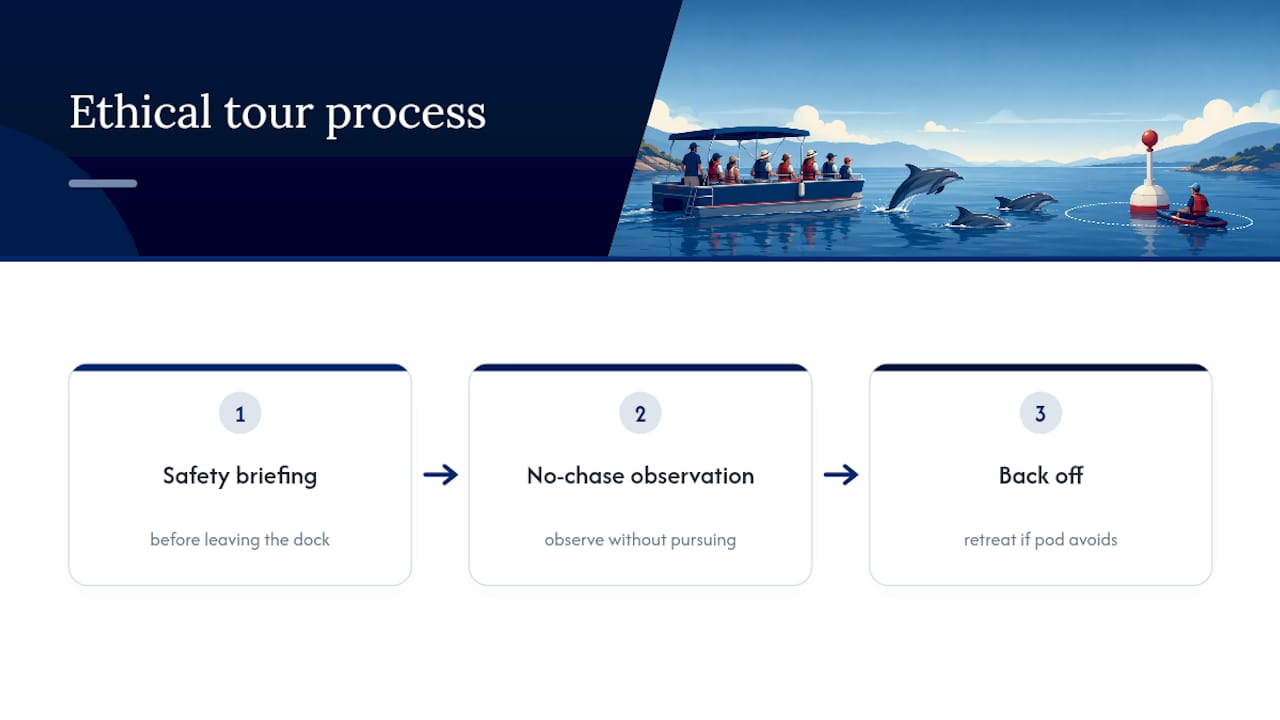
Pcbprestige runs every dolphin trip on a private 26-foot powerboat with a licensed local captain, never a crowded group boat competing for the same sighting. Guests get a safety briefing before leaving the dock, a strict no-chase policy on the water, and a captain trained to read dolphin behavior and back off the moment a pod shows signs of avoidance. That’s the difference between watching dolphins in their own habitat and pressuring them into one you created.
What Actually Matters Here
The gap between what dolphin swim tourism promises and what the research shows is wider than most travelers realize. Marketing sells connection; the data mostly shows disturbance, avoidance, and occasional aggression from animals that never asked for the interaction. If you take one thing from the NOAA record, it’s that “the dolphin came to me” is not the same as “the dolphin wanted this.”
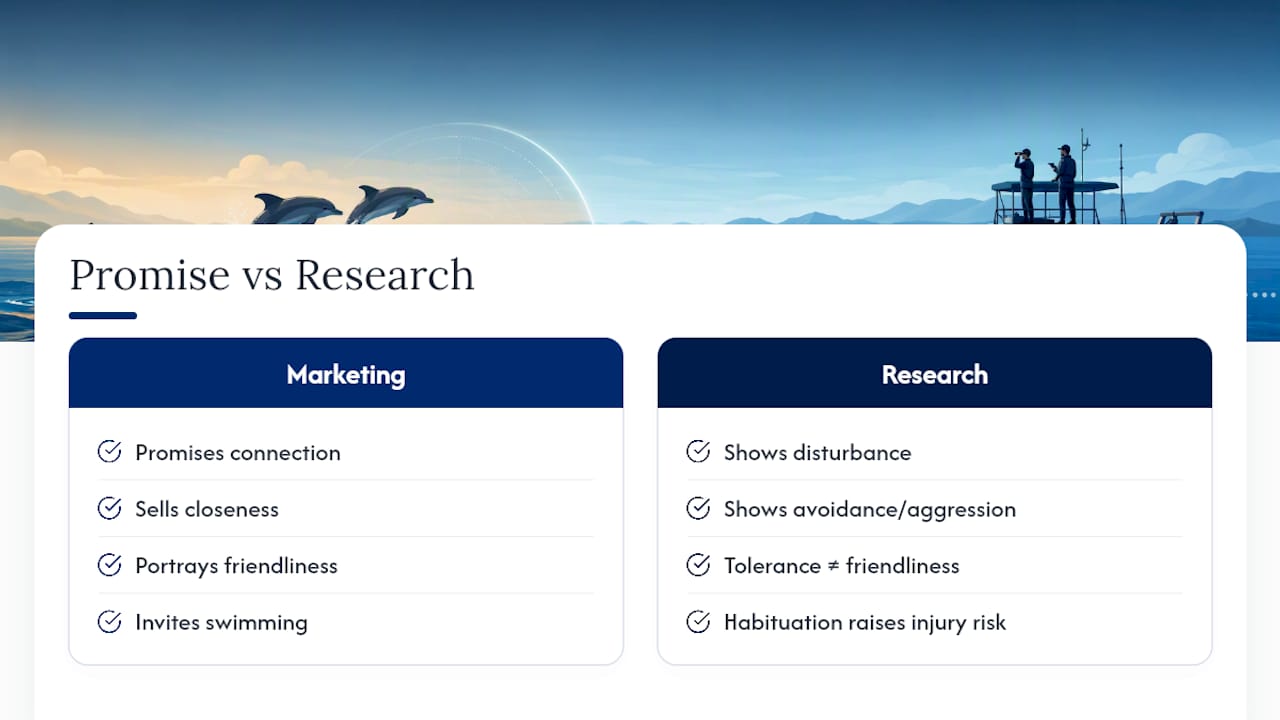
Where I think most safety guides undersell the point is habituation. A dolphin that tolerates human contact isn’t happier or friendlier; it’s often an animal whose natural wariness has already broken down, which usually means it’s more vulnerable to boat strikes and injury, not less. Treat a “friendly” wild dolphin as a red flag, not a bonus.
Prioritize distance over closeness. A good sighting from 50 yards, where the animal never changes its behavior because of you, beats any story you’d tell about swimming next to one.
— Justin
A Responsible Option: Private, Captain-Led Dolphin Tours
Pcbprestige runs small, private charters instead of the crowded group boats where operators often push closer than NOAA guidelines allow just to keep a full deck of strangers satisfied. With a maximum of six guests aboard, your captain can slow down, reroute, or back off the moment a pod shows any sign of stress, decisions that get harder to make on a boat carrying thirty people who all paid to see a dolphin up close.

Every trip includes snorkel gear, calm water access around Shell Island, and a licensed captain who knows the difference between a curious dolphin and one that wants space. If you’d rather watch dolphins the way NOAA actually recommends, from a respectful distance, on a boat that won’t chase, check available dates on the private dolphin tour page or go straight to booking online for your group.
Where to Read the Original Guidance
The claims above come straight from primary sources, not secondhand summaries. NOAA Fisheries publishes both the general wild dolphin viewing guidelines and the spinner dolphin rest disruption findings that shaped the 50-yard rule. For the behavioral research, the human-dolphin interaction literature review covers vocalization and social changes in detail, while the Wild Dolphin Project and World Animal Protection offer sharper takes on the myths the tourism industry keeps repeating.
Sources
Recommended
Comments