Live vs Dead Sand Dollars in Florida: What Beachgoers Must Know
You cannot legally pocket a live sand dollar in Florida without a recreational saltwater fishing license, and in some counties you cannot take one at all. The Florida Fish and Wildlife Conservation Commission (FWC) classifies a living sand dollar as saltwater fish under state law, while an empty test, the bleached shell you find washed up, generally isn’t regulated the same way. Local rules in Lee and Manatee counties, plus outright bans in state parks and wildlife refuges, can override that baseline.
TL;DR:
Collecting live sand dollars in Florida requires a saltwater fishing license, and some counties like Lee prohibit harvest altogether.
State laws define a sand dollar as a fish only when it is alive; dead, bleached shells are not regulated the same way.
County restrictions, such as in Lee and Manatee counties, may impose stricter rules or bans on collecting sand dollars than state law.
Federally protected areas like state parks, Everglades National Park, and wildlife refuges outlaw removing shells, regardless of whether they are alive or dead.
Enforcement often involves citations with modest fines, and accurate identification of live versus dead sand dollars is key to avoiding violations.
Table of Contents
Sand Dollar Laws in Florida: What the Statutes Actually Say
The legal distinction hinges on one word: alive. Under Florida Statutes section 379.101(34), a living echinoderm, the biological group that includes sand dollars, sea urchins, and starfish, counts as saltwater fish. A nonliving test, the skeletal shell left behind after the animal dies, does not.
That single distinction drives everything else. Take a live sand dollar off the sand and put it in your bucket, and you’re legally fishing. Florida generally requires a recreational saltwater fishing license to do that, the same license you’d need to cast a line off a pier. Pick up a dead, bleached test and you’re just beachcombing.
FWC’s own guidance backs this framework and lays out the specific exceptions by county, which matters more than any blanket statewide number. Before you collect anything, these are the sources worth bookmarking:
FWC’s recreational sea shell collecting page, which covers live organism limits by region
The Florida Statutes definition at 379.101(34), the actual live-versus-dead legal test
Florida Administrative Code Chapter 68B-27, which contains the rule-level language agencies use to interpret marine life restrictions
Your specific county’s marine life ordinance page, since local rules frequently tighten the state baseline
FWC has said its intent isn’t to stop people from enjoying the beach, but to keep sensitive populations from being depleted in high-traffic areas. That’s worth remembering the next time a rule feels arbitrary. It usually isn’t.
Do Lee and Manatee Counties Have Different Rules?
Yes, and the difference is significant enough to change your entire beach trip if you’re not paying attention. State statute sets the floor, but counties can and do build stricter walls on top of it.
Lee County, home to Fort Myers Beach and Sanibel, prohibits harvesting live shellfish outright. There’s no bag limit to work around here; live collection simply isn’t permitted, full stop, according to FWC’s county guidance.
Manatee County, which includes Anna Maria Island, takes a middle path.
A few practical notes worth keeping in mind:
These county rules apply regardless of whether you have a saltwater fishing license.
Some older regulation summaries cite a general “two per person” rule as if it applied statewide. It doesn’t. That’s a Manatee-specific limit that gets misremembered and repeated elsewhere, according to a detailed legal review of the statute.
City ordinances can stack on top of county rules, so a posted sign on the beach itself sometimes carries more real-world weight than the county code. Read it before you touch anything.
Where You Can Never Take Sand Dollars, Dead or Alive
Managed public lands throw out the live-versus-dead test entirely. In these areas, the condition of the specimen doesn’t matter. Location does.
Florida State Parks operate under no-take rules that generally cover all natural materials, shells included, whether occupied or empty.
Everglades National Park enforces federal collecting restrictions under National Park Service regulations that bar removal of natural objects.
J.N. “Ding” Darling National Wildlife Refuge on Sanibel Island bans collecting shells, sand dollars, and sea life of any kind, living or not.
Ten Thousand Islands National Wildlife Refuge follows the same federal no-take standard.
The legal basis usually traces back to park compendium rules or Code of Federal Regulations citations governing that specific unit. A bleached, empty test that would be perfectly legal to pocket on an open public beach becomes a federal violation the moment you’re standing inside one of these boundaries.
What Happens If You Get Caught Taking Live Sand Dollars?
Enforcement in Florida usually starts with a citation, not handcuffs. Violations of marine life collection rules typically get classified as a noncriminal or misdemeanor infraction, with fines that community legal guides commonly describe as modest but potentially significant, depending on the specific statute or local code.
Who actually writes the ticket varies by location:
FWC officers patrol beaches and waterways statewide and have authority to enforce saltwater fishing and marine life rules.
Park rangers handle violations inside state parks, national parks, and wildlife refuges.
Local law enforcement sometimes gets involved when a city or county ordinance is the one being broken.
Pro Tip: If a ranger or officer approaches you about something in your bucket, put it down gently, keep it in seawater if possible, and let them make the call. Arguing your case rarely goes better than just complying.
How to Tell If a Sand Dollar Is Alive
This is where most well-meaning beachgoers get it wrong, not out of malice but because a live sand dollar and a dead one can look deceptively similar at first glance. A few reliable signs separate the two:
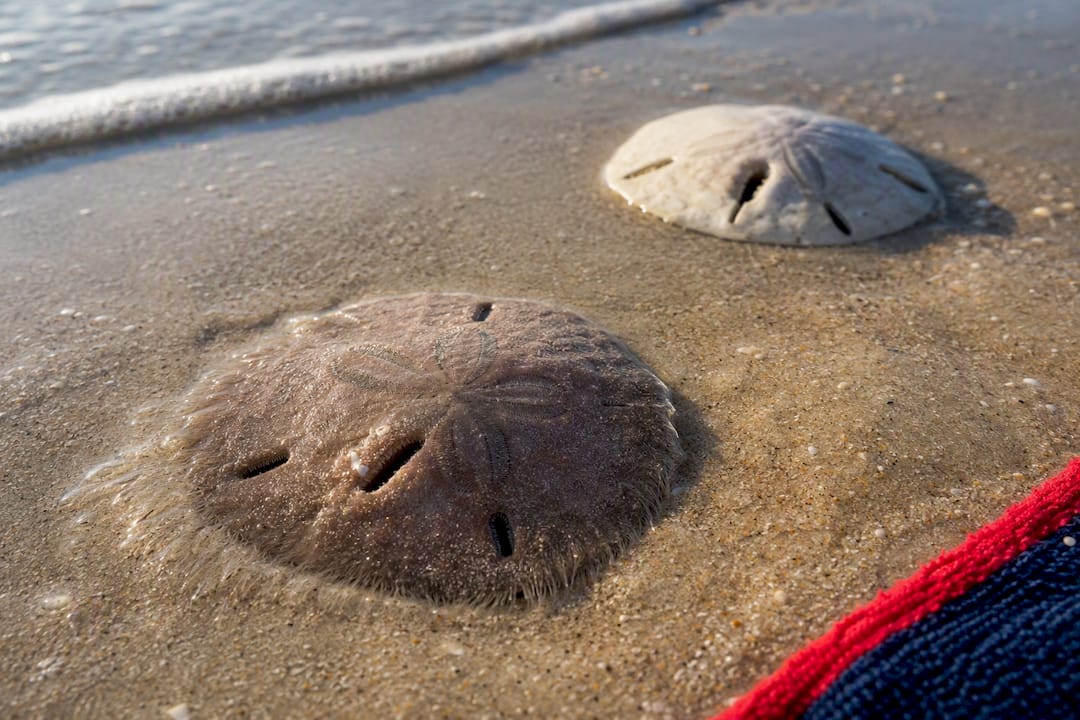
Color. Live sand dollars are typically dark purple, greenish brown, or grayish, covered in a fuzzy layer of tiny spines. Dead tests bleach out to a stark, chalky white in the sun.
Texture. Living ones feel soft and slightly velvety from thousands of tiny tube feet and spines. Empty tests feel hard, brittle, and smooth.
Movement. If you hold one in a bit of seawater and it tries to burrow or the spines move, it’s alive. A dead test does nothing.
Smell. Living tissue inside a sand dollar or urchin can carry a faint marine odor if damaged. A dry test has none.
If you genuinely can’t tell, the conservation-minded move is to leave it exactly where you found it. Snap a photo, note the spot, and walk away. That habit protects you legally and protects the animal, since local guidance from tour operators and shell experts consistently points to “when in doubt, don’t” as the safest rule for casual collectors who can’t reliably make the call.
Can You Bring Sand Dollars Home on a Plane?
Federal travel rules and state collecting rules are two entirely separate conversations, and mixing them up is an easy mistake. The TSA permits clean, dry shells in both carry-on and checked luggage. Their concern is breakage during screening, not legality of possession.
That said, TSA clearance means nothing if you took the specimen somewhere collecting was already illegal. A shell removed from Ding Darling refuge is still a federal violation regardless of how smoothly it makes it through airport security. A few practical steps if you collected legally from an open public beach:
Rinse the shell in fresh water and let it dry fully before packing to avoid odor or mold.
Wrap it in something rigid like a small box or sock to prevent crushing in checked luggage.
Double check your airline’s specific policy, since individual carriers occasionally add their own restrictions beyond TSA’s baseline.
Why Local Operators Set Stricter Rules Than the Law Requires
Most of the confusion around this topic comes from people assuming one statewide rule covers every beach, when in practice it’s a patchwork of statute, county ordinance, and park-specific policy stacked on top of each other. That patchwork is exactly why Pcbprestige runs an “empty shells only” policy on every tour, no exceptions, even in places where state law might technically allow more.
It’s a simple standard to explain to a curious kid on the boat, and it’s a defensible one if a ranger ever asks. Guests get to see live sand dollars, urchins, and other marine life exactly where they belong, in the water, without anyone needing to memorize a statute number. If you want more on identifying what you’re seeing near Shell Island, the local marine life patterns are worth a look before your trip. And if you’re ever unsure whether something is fair game to touch or take, the easiest move is asking whoever is standing next to you with local authority, a tour captain or a park ranger, before you act.
— Justin
See Sand Dollars Without Breaking a Single Rule
There’s an easier way to experience Florida’s marine life than memorizing county ordinances and hoping you read the beach signage correctly. Pcbprestige runs private, captain-guided tours out of Panama City Beach where you get to watch sand dollars, dolphins, and other wildlife in their natural habitat with zero legal guesswork, because nothing leaves the water.
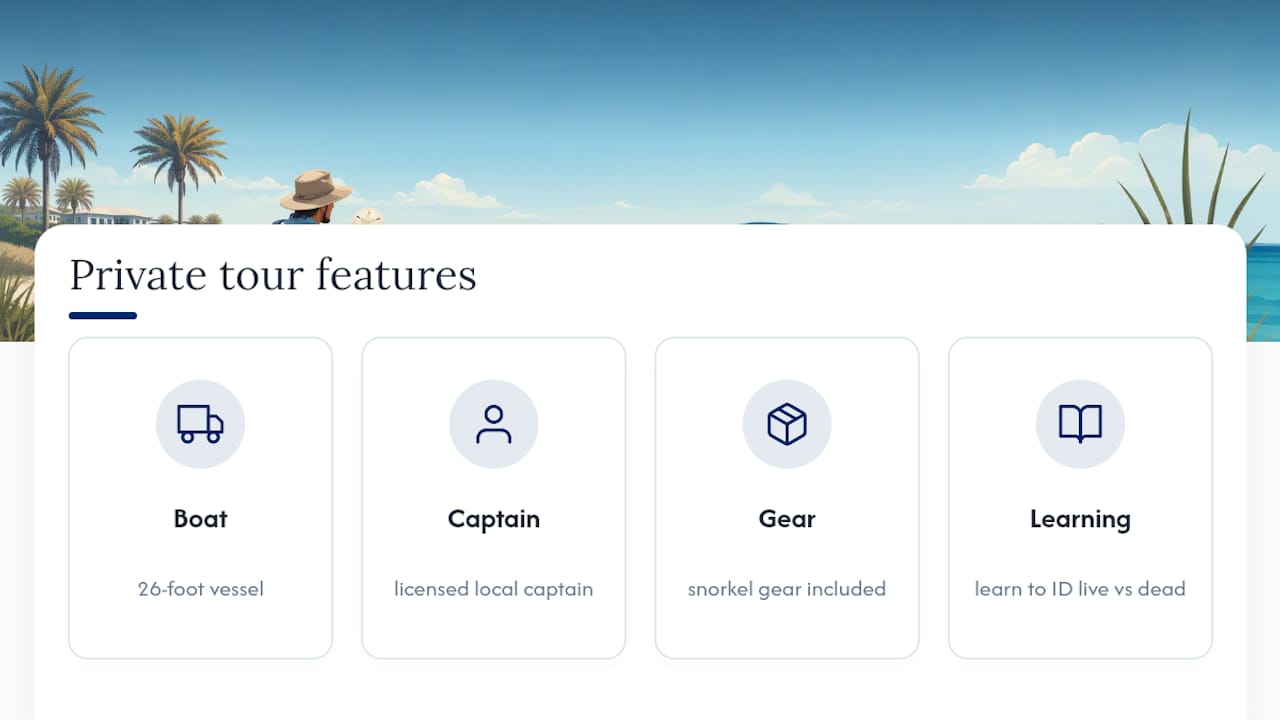
Every trip runs on a 26-foot boat with a licensed local captain who knows exactly where marine life is active that week and which areas are protected. Snorkel gear is included, the boat is private to your group, and the pace flexes around families with young kids or anyone who just wants to slow down and look. It’s the kind of outing where you learn to spot a live sand dollar from a dead test firsthand, from someone who does this daily, instead of guessing on your own.
If that sounds like your kind of afternoon, book a private dolphin and snorkeling tour and pick a date that works for your group.
Where to Verify the Rules Before You Collect Anything
Regulations shift, and county interpretations occasionally change faster than search results do. Before you pick anything up, check FWC’s sea shell collecting page, your county’s marine life ordinance page, and, if you’re anywhere near a park or refuge boundary, that unit’s specific compendium rules. When traveling elsewhere along the Gulf Coast, resources like this Orange Beach snorkeling guide cover regional beach safety worth reviewing too. When in doubt, ask whoever manages that specific stretch of sand.
Sources
Recommended
Comments