Brown Water Panama City Beach: What Beachgoers Need to Know
- PCB Prestige

- 16 hours ago
- 4 min read
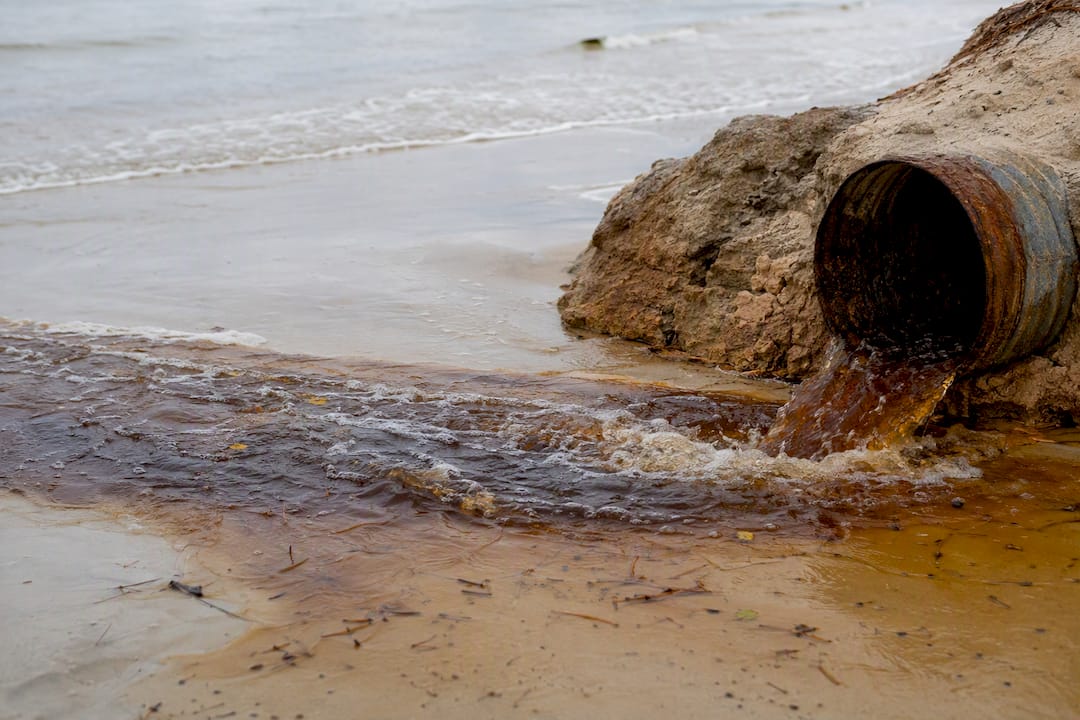
That brown, tea-colored water lapping at your feet is almost always tannin-stained fresh water from spring-fed lakes, not sewage or oil, and it’s usually safe to swim in. The City of Panama City Beach points to roughly 10 spring-fed bodies of water along the coastline that periodically discharge onto the beach. Before you wade in, though, check current conditions with the Florida Department of Health’s Healthy Beaches Program and Bay County DOH.
Here’s the quick version:
Brown water = tannins and organic matter, not pollution, according to the city.
Bacteria levels, not color, determine real safety.
The Florida Healthy Beaches Program rates enterococci bacteria as Good (0 to 35 CFU/100mL), Moderate (36 to 70), or Poor (71 and above), issuing advisories once consecutive samples top 70.
Always check the Bay County DOH advisory page for the specific stretch of sand you’re headed to.
Key Takeaways
Brown water at Panama City Beach is normally harmless tannin runoff from spring-fed lakes, but bacteria levels, not color, determine whether it’s actually safe to swim.
Point | Details |
Cause is natural | About 10 spring-fed lakes discharge tannin-stained fresh water through beach outfalls, mainly after heavy rain. |
Color isn’t the safety test | Enterococci bacteria levels, tracked by Florida DOH, determine real risk, not water clarity. |
Simple avoidance works | Walk a few hundred yards from any visible outfall to reach clear water, or wait 72 hours after heavy rain. |
City is actively managing it | Officials maintain outfalls and plan to extend pipes, like at Lullwater Lake, to reduce visible discoloration. |
Table of Contents
Why Panama City Beach Water Turns Brown
The discoloration traces back to spring-fed lakes tucked behind the dunes. When those lakes fill from heavy rain, they discharge through outfall pipes running beneath Front Beach Road, and that dark, tannin-rich water spills onto the sand. The city has been explicit that this is fresh water, not sewage, and the color comes from decomposing leaves and organic matter, the same stuff that stains sweet tea. Lullwater Lake is one of the more visible sources locals point to after a big storm.
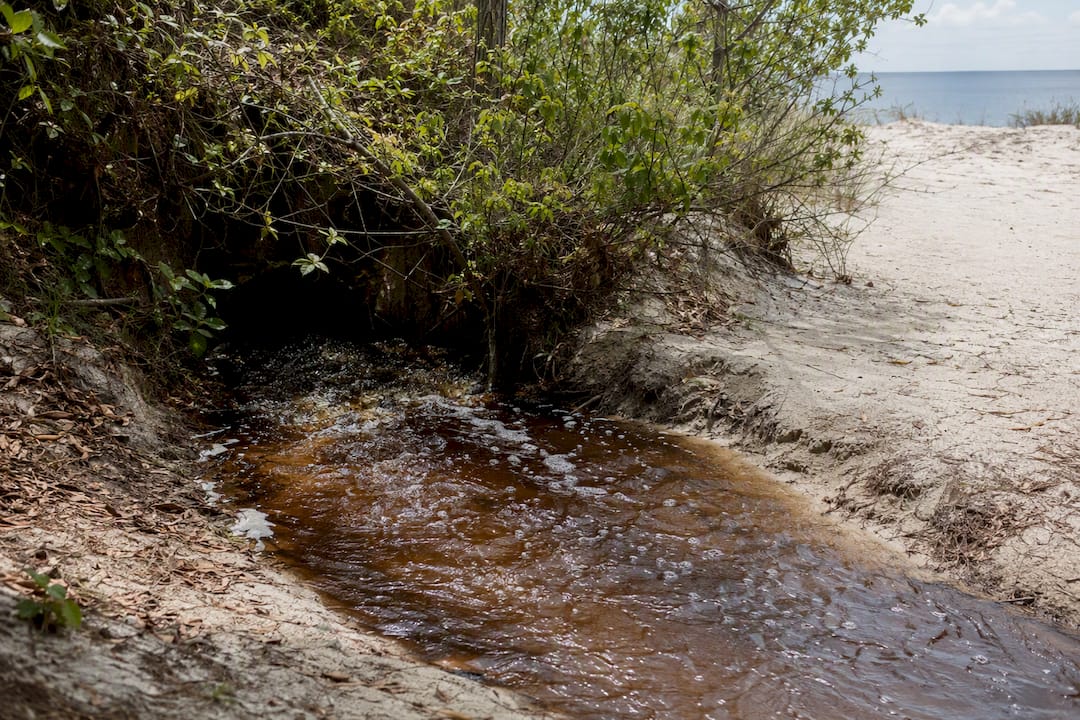
Timing matters. The murkiest water usually shows up within a day or two of heavy rainfall, right around the outfall pipes, and tide and surf conditions can push the plume farther down the beach or clear it out fast. Walk a couple hundred yards in either direction and you’ll typically hit clear emerald water again, since these outfalls are localized point sources rather than a beach-wide event.
A Local’s Take on When to Swim and When to Wait
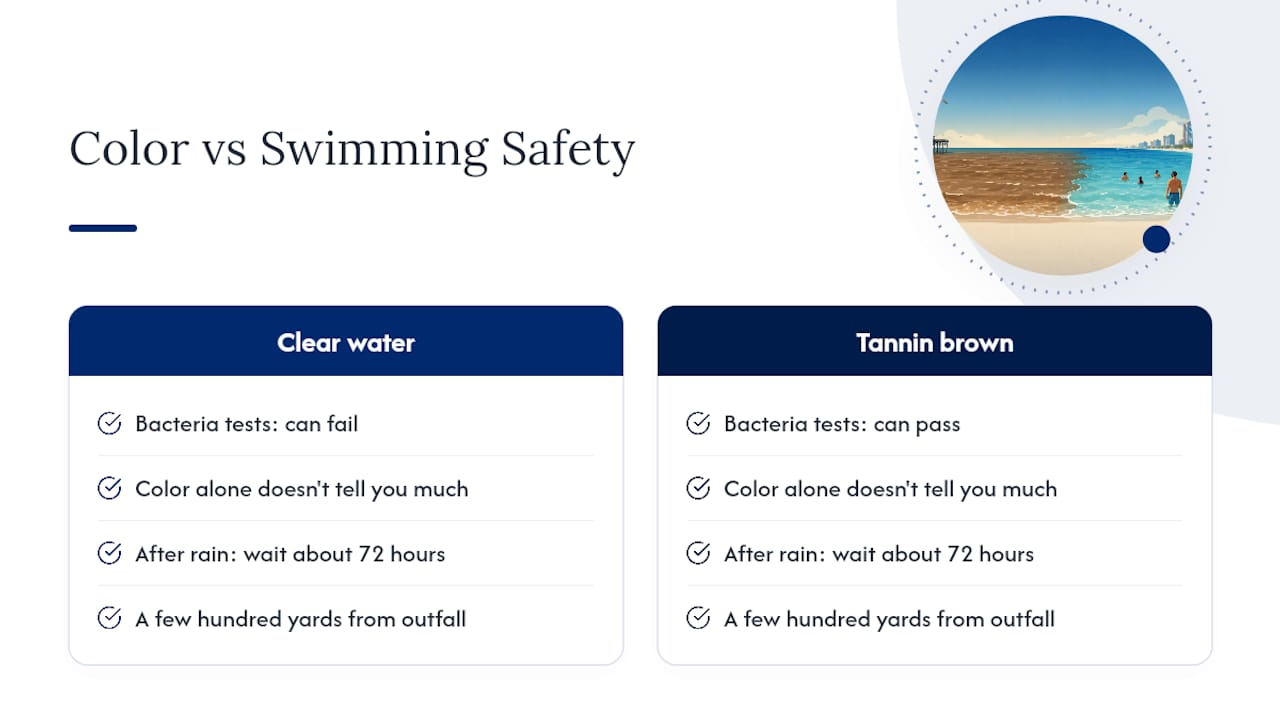
I’d tell any visitor the same thing a longtime local guide would: color alone doesn’t tell you much. Clear water can fail a bacteria test, and tannin-stained water can come back clean. Walk a few hundred yards from any visible outfall and you’re generally in the clear, literally. After a heavy rain, giving it about 72 hours before swimming near runoff areas is a smart, conservative habit, since DOH sampling is routine, not continuous, and a spike can happen between test dates.
This is part of why offshore trips stay appealing even on a brown-water day. A private boat tour heads well past any shoreline outfall, into open Gulf water around Shell Island where snorkeling conditions stay consistent regardless of what’s happening on the beach that morning. It’s also worth knowing the city isn’t ignoring the issue: crews maintain outfalls like the one at Lullwater Lake, and planned engineering work aims to extend outfall pipes farther from shore, cutting down the visible channel over time. If you’d rather sidestep the guesswork on rip currents entirely, it helps to read up on rip current safety before you plan your beach days around the tides.
Curious how coastal runoff shows up elsewhere along the Panhandle? The dynamics aren’t unique to Panama City Beach, as this explainer on the Destin waterway lays out for visitors asking similar questions a few exits down the coast.
Where to Check Current Water Quality
Before heading out, check these sources for the latest conditions:
City of Panama City Beach explains what causes brown water and how outfalls are maintained.
The Florida Healthy Beaches Program publishes enterococci thresholds and sampling schedules statewide.
Bay County DOH posts site-specific swim advisories for local sampling points like Laguna Beach and Carl Gray Park.
Frequently Asked Questions
Is brown water at Panama City Beach safe for swimming? Usually, yes. The city attributes it to tannin-stained fresh water from spring-fed lakes, not sewage, but you should still check the current Bay County DOH advisory before swimming, since bacteria levels are the real safety measure, not color.
Why is the water brown near Front Beach Road? Outfall pipes beneath Front Beach Road carry discharge from inland spring-fed lakes, including Lullwater Lake, especially after heavy rainfall. The dark tint comes from tannins in decomposing leaves and organic matter.
How long does brown water usually last? It depends on rainfall and tides, but discoloration near outfalls often clears within a day or two once the lake drains and surf action disperses the plume.
Are there clear water alternatives nearby? Walking a few hundred yards from any visible outfall typically gets you back to clear water. Heading offshore on a snorkeling trip near Shell Island sidesteps the issue entirely.
Is Panama City Beach safe for families despite brown water events? Generally yes. Brown water is a cosmetic, weather-driven event rather than an ongoing hazard. Families should still check DOH advisories and follow posted flags for rip currents and bacteria levels on any given day.
This article is general information, not a substitute for advice from a qualified doctor. Consult a qualified healthcare professional about your own circumstances before acting on anything here.
Sources
Recommended
Comments