Can You Swim With Wild Dolphins in Florida?
- PCB Prestige

- 3 days ago
- 9 min read
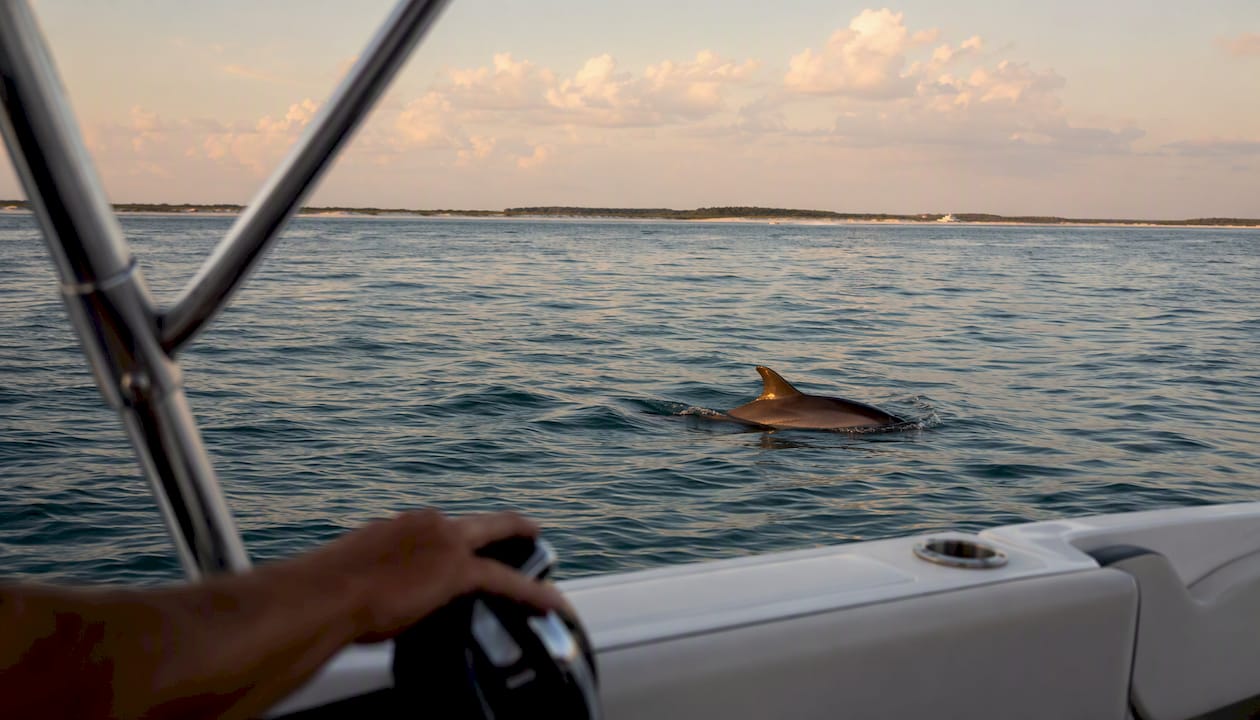
No. Swimming with, touching, or approaching wild dolphins in Florida is illegal under the federal Marine Mammal Protection Act (MMPA), and both NOAA Fisheries and the Florida Fish and Wildlife Conservation Commission (FWC) actively enforce it. Dolphins in the wild don’t choose to interact with people the way trained animals in a facility do, and any human attempt to trigger contact, from chasing a pod to tossing bait, counts as harassment in the eyes of federal law.
Here’s the quick version:
Don’t: chase, touch, feed, or corner wild dolphins, even if they swim close to your boat or kayak.
Do: watch quietly from a respectful distance and let the animals set the terms of any encounter.
Do: book a licensed, ethics-minded charter if you want a genuinely close, legal experience.
Key Takeaways
Swimming with wild dolphins in Florida is federally illegal under the MMPA, and the only legal path to a close encounter is a licensed facility program or a respectful, observation-only boat tour.
Point | Details |
Legal verdict | Touching or swimming with wild dolphins violates the MMPA and can trigger civil fines up to $11,000. |
Dual enforcement | Both NOAA Fisheries and Florida’s FWC actively patrol and cite violations in state waters. |
Best viewing windows | Spring, fall, and early morning or late afternoon produce the most consistent sightings. |
Vet your operator | Confirm licensing, insurance, and a published wildlife distance policy before booking any tour. |
Ethical local choice | Pcbprestige offers private, captain-guided dolphin watching and Shell Island snorkeling built around respectful viewing distances. |
Table of Contents
Why Swimming With Wild Dolphins Is Illegal and Who Enforces It
What Are the Legal Alternatives to Swimming With Wild Dolphins?
What Does a Private Ethical Dolphin Tour Actually Look Like?
What Counts as Dolphin Harassment, and How Do You Stay Safe?
An Ethical Local Option: PCB Prestige Private Dolphin and Snorkel Tours
Why Swimming With Wild Dolphins Is Illegal and Who Enforces It
The MMPA makes it a federal offense to feed, touch, swim with, or otherwise harass any wild marine mammal in U.S. waters, and Florida is not an exception carved out for tourists on vacation. NOAA Fisheries is the primary federal enforcer, but Florida adds a second layer most visitors don’t expect.
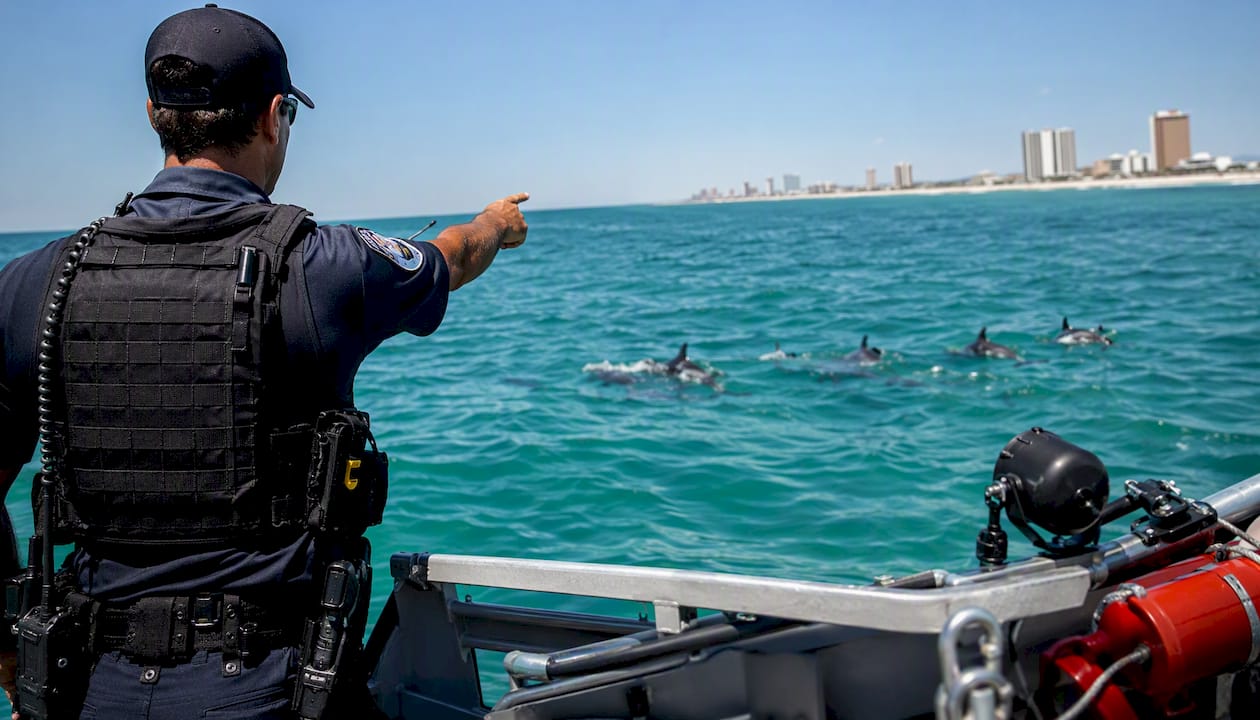
The Florida Fish and Wildlife Conservation Commission has its own statutory authority to patrol state waters and assist NOAA on marine mammal cases, and Florida Statute 370.12 gives state wildlife officers standing to act independently. That dual enforcement structure is why legal analysts flag Florida as something of a hotspot for citations compared to other coastal states.
The penalties are not symbolic:
Civil fines can reach up to $11,000 per incident under NOAA’s enforcement guidelines.
Criminal violations can carry additional fines and potential imprisonment.
Sanctuary zones and local ordinances can stack extra penalties on top of federal fines in certain areas.
There’s also a definitional trap worth knowing about. Marine conservation experts point out that dolphins can’t consent to human contact, so any action that changes a dolphin’s natural behavior, even something as innocent as paddling toward one for a photo, can legally qualify as harassment. Intent doesn’t matter much here. Outcome does.
Where and When Can You Reliably See Dolphins in Florida?
You don’t need to break the law to see dolphins up close in Florida. The state has some of the most consistent wild dolphin activity in the country, and knowing where to look beats hoping for luck.
Gulf Coast (Panama City Beach and St. Andrews Bay): Bottlenose dolphins are resident here year-round, often trailing shrimp boats or riding boat wakes near the pass. Sarasota area: home to one of the longest-running wild dolphin research populations in the world, making sightings from tour boats routine. Florida Keys: clear water and shallow flats make dolphins easy to spot from boats, though pods here move across a wide range. Atlantic Coast (from Jacksonville down to the Space Coast): frequent sightings near inlets and estuaries, especially at dawn.
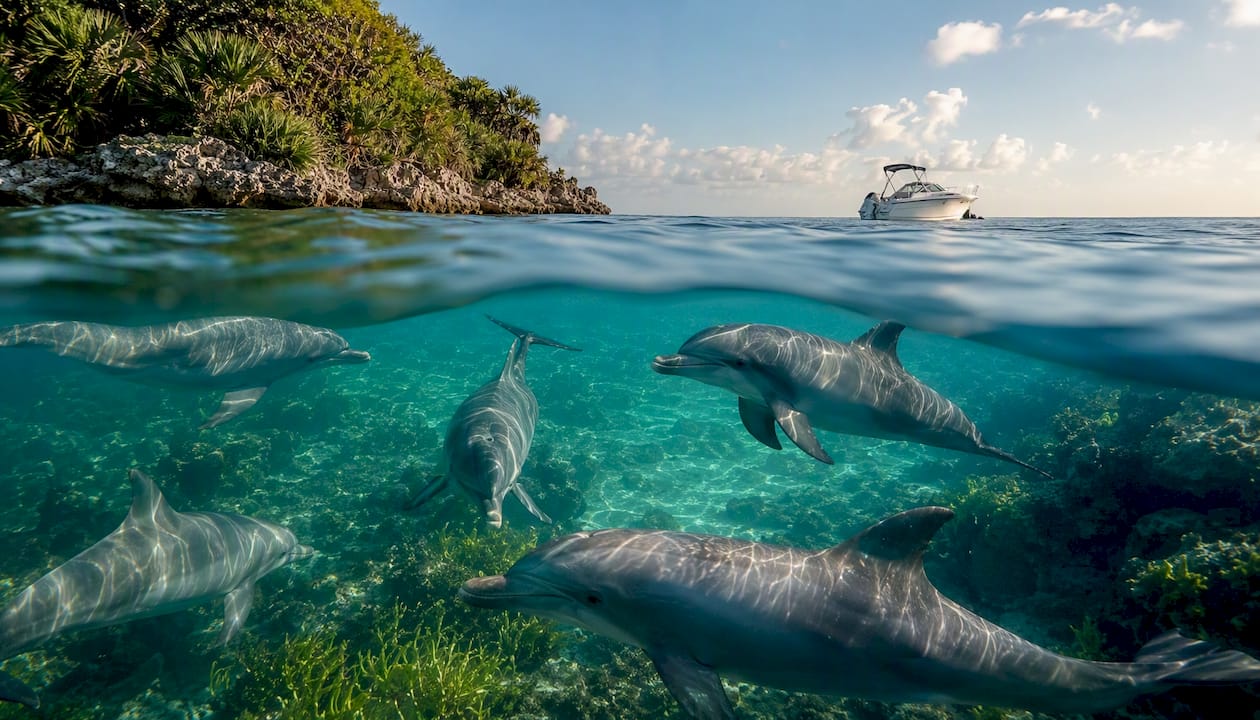
Travel guides that track sighting patterns across the state note that most reliable encounters happen at specific inlets, passes, and grass flats rather than open water, since dolphins concentrate where baitfish do.
Seasonal timing that actually matters:
Spring and fall tend to bring the most consistent activity as water temperatures moderate.
Early morning and late afternoon outperform midday, when boat traffic and heat push dolphins into deeper channels.
Calm, low-wind days make it far easier to spot dorsal fins from any vantage point.
Pro Tip: A slow-moving boat with a patient captain will out-sight a fast one nearly every time. Dolphins react to speed and noise, so operators who idle through known feeding areas tend to produce better, longer sightings than those racing from spot to spot.
What Are the Legal Alternatives to Swimming With Wild Dolphins?
If the goal is a close, memorable dolphin experience, you have two legitimate paths, and they are not the same thing.
Regulated facility programs are supervised, licensed swim-with-dolphins experiences at accredited marine parks, where trained dolphins interact with guests under strict welfare protocols. Wild dolphin-watching tours are observation-only experiences on the water, where guests may see dolphins swim, jump, or ride a bow wake, but no one enters the water to touch or chase them.
Realistic, legal options include:
Licensed marine park swim programs that operate under federal permits and animal welfare oversight, as seen at facilities like The Florida Aquarium.
Private guided boat tours focused on quiet observation rather than pursuit.
Snorkeling at sandbars or grass flats near Shell Island, where dolphins sometimes pass by naturally.
Decide whether you want guaranteed contact (a licensed facility) or a wild, unscripted sighting (a guided tour).
Research the operator’s stated wildlife policy before booking either option.
The ethics case here is simple: chasing wild dolphins stresses the animals, disrupts feeding and nursing behavior, and increases the odds of a dangerous encounter for both species. Choosing the alternative isn’t a compromise. It’s the only version of the experience that doesn’t come with a fine attached.
How Do You Choose a Responsible Dolphin Tour Operator?
Not every company marketing a “dolphin tour” is operating within the law, so a little vetting before you book saves you from an unethical or even illegal experience.
Checklist before booking:
Confirm the vessel carries proper insurance and local operating permits.
Ask whether the captain holds a valid U.S. Coast Guard license.
Check that the operator has a stated, published wildlife approach policy.
Questions worth asking directly:
“What’s your policy if dolphins approach the boat?”
“How close do you get, and what’s your minimum distance rule?”
“How many guests are typically on board during a tour?”
Red flags that should end the conversation immediately:
Marketing language promising you’ll “swim with wild dolphins.”
Any guarantee of physical interaction or touching.
Operators who feed dolphins to draw them toward the boat.
If an operator advertises guaranteed contact with wild animals, that’s not a selling point. It’s a warning that they don’t understand, or don’t care about, federal law.
What Does a Private Ethical Dolphin Tour Actually Look Like?
A well-run private charter follows a fairly predictable rhythm, and knowing it ahead of time makes the day less stressful.
Meet your captain at the dock and go over a short safety briefing.
Transit out toward known feeding grounds or passes.
Slow down and search calmly, watching for fins, bird activity, and surface disturbance.
Spend time observing from a respectful distance, adjusting position as dolphins move.
Head back, often with a stop to snorkel a calm, shallow area along the way.
Private charters in Panama City Beach typically run in the range of a couple hundred dollars up to several hundred, depending on trip length and group size, while shared group tours usually cost less per person but trade away privacy and flexibility.
Pack and prepare for:
Reef-safe sunscreen, a hat, and polarized sunglasses.
Water and light snacks, since trips often run two to three hours.
Motion-sickness medication taken in advance if you’re prone to seasickness.
A camera with a zoom lens rather than a phone, since dolphins keep their distance by design.
What Counts as Dolphin Harassment, and How Do You Stay Safe?
The safety picture cuts both ways here: dolphins can hurt you, and you can hurt them, often without meaning to.
Do:
Stay at least 50 yards away and let the dolphin choose whether to approach.
Cut your engine to idle if dolphins swim near your boat.
Report illegal interactions you witness to FWC or NOAA with location and time details.
Don’t:
Chase a pod with your boat, kayak, or paddleboard.
Feed dolphins or toss food to draw them closer.
Enter the water specifically to swim toward one.
Safety Warning: Wild dolphins are strong, unpredictable animals capable of causing real injury with a bite or a tail strike, and they can carry bacteria and parasites transmissible to humans through contact with skin, saliva, or open wounds.
Pro Tip: If a dolphin approaches your boat on its own, the correct response is to do nothing dramatic. No reaching, no splashing, no chasing. Let it observe and move on at its own pace.
An Ethical Local Option: PCB Prestige Private Dolphin and Snorkel Tours
If you want a close, memorable dolphin encounter in Panama City Beach without crossing a legal or ethical line, Pcbprestige runs private, captain-guided charters built around exactly that balance. Every trip is aboard a 26-foot powerboat with an onboard bathroom, and the boat is reserved exclusively for your group, not shared with strangers.
What you get:
A private charter capped at your own group, up to six guests, with no mixing with other parties.
A licensed local captain who reads dolphin behavior and adjusts course to avoid pursuit or disturbance.
Shell Island snorkeling stops in calm, shallow water rich with marine life, with all gear included.
Flexible options including 2 hour and 3 hour trips, plus a sunset cruise for a different kind of golden-hour viewing.
It’s a format that suits families with kids, couples wanting a quieter outing, or small groups who don’t want to share a boat rail with 20 other tourists.
Why Ethical Viewing Matters for Dolphin Health
Wild dolphin populations along the Gulf Coast are studied closely because their health tells us a lot about the water we all swim in. Every unauthorized chase or feeding attempt adds stress to animals already dealing with boat traffic, habitat pressure, and pollution. Watching quietly instead of pursuing isn’t a lesser experience. It’s the version that respects what these animals actually need to keep thriving in these waters for the next generation of visitors to see.
Book an Ethical Private Tour in Panama City Beach
Skip the guesswork of vetting random operators and book a trip built around ethical viewing from the start. Pcbprestige gives you a private boat, a captain who knows the local pods and passes, and a route planned to maximize sightings without ever chasing an animal.
Here’s what’s included: a fully private charter for your group only, a licensed captain, all snorkel gear for your Shell Island stop, and flexible scheduling around your vacation days. One honest note: wildlife sightings are never guaranteed on any tour, wild or otherwise, since dolphins move on their own schedule, not ours.
Ready to lock in a date? Book your private tour online or fill out the trip planning form to customize your itinerary before you arrive.
Frequently Asked Questions
Can you touch dolphins in Florida if they swim up to your boat? No. Touching a wild dolphin is illegal under the MMPA even if the animal approaches you first, since the law focuses on the outcome of the interaction, not who initiated it.
Is it illegal to swim near dolphins, or only to touch them? Swimming toward or with wild dolphins to force an interaction is illegal, even without physical contact, because it counts as harassment under federal guidance from NOAA.
Are there any legal wild dolphin swim programs in Florida? No wild dolphin swim programs are legal in Florida. Legal swim-with-dolphins experiences only exist at licensed, regulated facilities using trained animals under federal oversight.
What should I do if I see someone harassing a wild dolphin? Note the location, time, and vessel description, then report it to FWC or NOAA Fisheries, both of which accept tips on marine mammal harassment incidents.
Is Panama City Beach a good place to see wild dolphins? Yes. St. Andrews Bay and the waters around Shell Island support resident bottlenose dolphin pods, making guided boat tours in Panama City Beach a reliable way to spot them respectfully.
This article is general information, not a substitute for advice from a qualified lawyer. Consult a qualified legal professional about your own circumstances before acting on anything here.
Sources
Recommended
Comments