Panama City Beach Jellyfish: Heed Purple Flags, Know First Aid

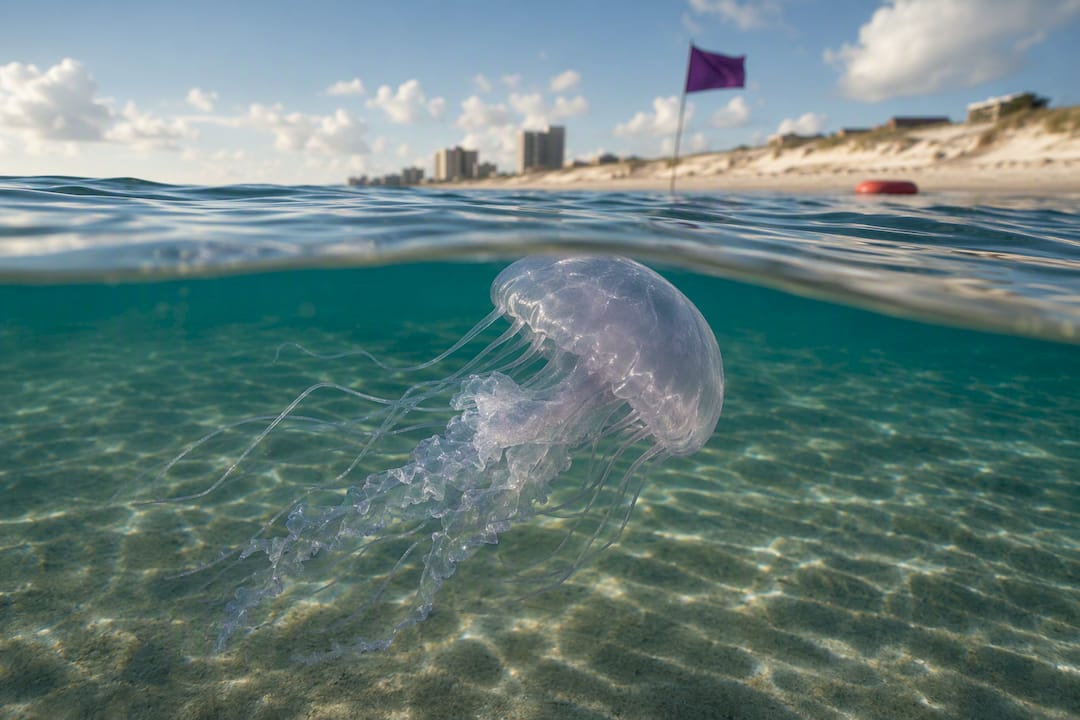
Jellyfish are likely at some point during a summer visit to Panama City Beach, but “season” is the wrong word. Presence swings week to week with wind and current. Before you swim, check the beach’s flag warnings and ask the lifeguard on duty what’s been spotted that morning. Cross-check a live map like Meduseo the night before.
TL;DR:
Jellyfish presence in Panama City Beach varies week to week and depends heavily on wind, currents, and weather conditions, not a fixed season.
The most common jellyfish are sea nettles, which cause mild stings, while Portuguese man-of-war produce more severe stings requiring caution.
Purple flags indicate caution for marine life, urging swimmers to ask lifeguards about current conditions and avoid deep water if jellyfish are active.
Wearing rash guards or full-body wetsuits significantly reduces the risk of stings, especially during active sightings, and swimming near lifeguards is safer.
Prompt sting treatment involves seawater rinsing, hot water soaking, and avoiding remedies like urine, with updates best checked via live maps, flag status, and lifeguard advice.
Table of Contents
When Is Jellyfish Season in Panama City Beach?
Sightings tend to climb from late spring through summer and can stretch into early fall, but there’s no fixed calendar window you can circle and trust. Jellyfish don’t swim against currents so much as ride them, and the Gulf’s eddies, wind direction, and passing storm systems decide where they end up on any given day.
A stretch of onshore wind can push a swarm right up to the sand overnight. A shift to offshore breezes can clear the same beach by the next afternoon. Local officials tie jellyfish presence directly to currents and wind patterns, which is why “peak season” advice only gets you so far.
The smarter move is checking conditions for your actual dates instead of trusting a general summer rule. A calm, glassy morning with light onshore wind is a reasonable moment to expect more jellyfish near shore than a choppy day with wind blowing offshore.
Which Jellyfish Show Up Most in Panama City Beach Waters?
Three creatures account for most encounters, and they’re not equally dangerous. Sea nettles cause the sting most swimmers describe, a sharp, splinter-like burn that’s uncomfortable but usually resolves without medical care. Portuguese man-of-war, technically a colonial organism rather than a true jellyfish, delivers a more severe sting that’s occasionally reported in Gulf waters and warrants closer attention. Thimble jellyfish larvae cause seabather’s eruption, an itchy rash that forms under swimsuits where larvae get trapped against skin, distinct from a direct sting.
Severity depends on the species and the swimmer. Kids and people with sensitive skin often react more strongly to the same sting an adult barely notices.
One detail catches people off guard: a jellyfish washed up on the sand isn’t dead in any way that matters to your skin. Its stinging cells can still fire even after the animal is out of the water, so never pick one up, even out of curiosity.
What Does a Purple Flag Mean at Panama City Beach?
Panama City Beach flies a purple flag beneath the day’s primary color flag to warn of dangerous marine life, jellyfish and Portuguese man-of-war included. Local news outlets have reported purple flags flying during recent jellyfish events in Bay County.
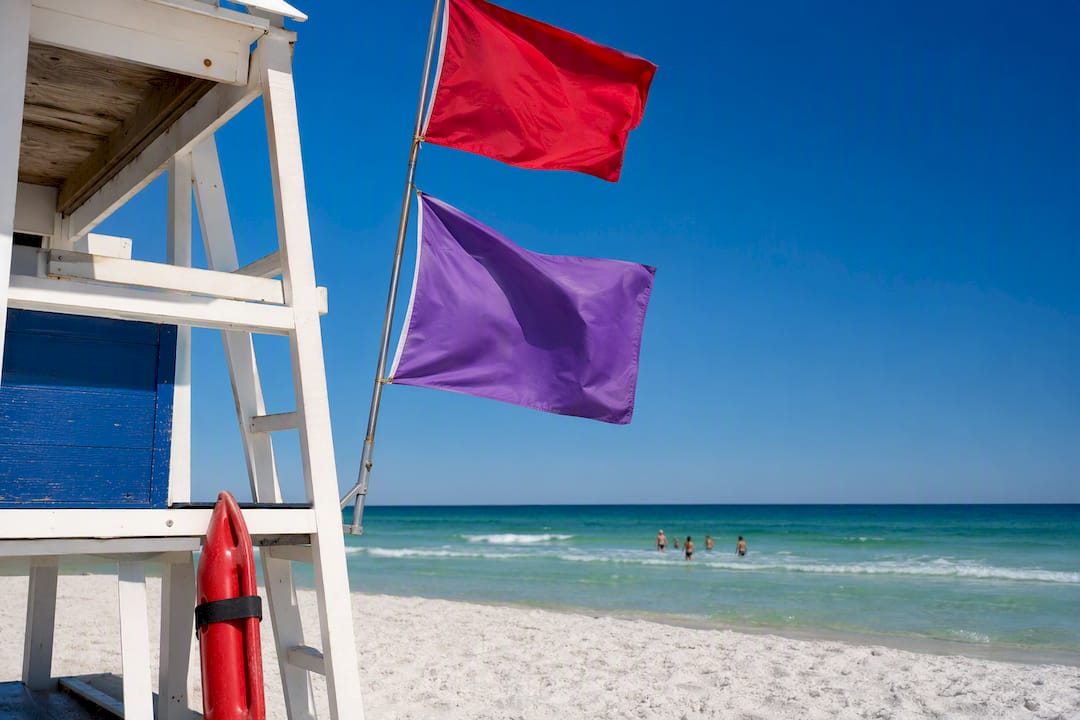
Seeing purple doesn’t mean the water is closed. It means caution: ask the lifeguard what’s active that day, skip deep swimming if you can avoid it, and keep young kids in supervised, shallow wading rather than letting them explore on their own.
How to Reduce Your Chances of Getting Stung
A thin layer of fabric between you and a tentacle makes a real difference. UF/IFAS recommends rash guards, dive skins, or full exposure suits during active sightings, and the protection holds up in independent research on protective swimwear too. Apply sunscreen underneath the fabric, not over it, so it doesn’t wash off during your swim.
Beyond clothing, a few habits matter:
Swim within sight of a lifeguard and skip beach days flagged purple if you’re risk-averse.
Keep kids in ankle-to-knee water where you can watch them the whole time.
Wade in slowly and scan the water instead of diving straight in.
Pack a small kit before you head out: tweezers, a bottle of seawater or a plan to grab some at the shoreline, a thermos for hot water, and your phone charged with the local beach safety line saved.
Pro Tip: Snorkeling for the first time with kids? A short guided session with someone watching conditions beats an unsupervised swim, especially on days you’re not sure what’s in the water. Qbic Travel’s guide for non-swimmers has good tips on easing nervous beginners in gradually.
What to Do If You Get Stung
Move fast but stay calm. Most stings look worse than they are.
Get out of the water and remove any visible tentacles with tweezers or a gloved hand, never bare fingers.
Rinse the area with seawater, not fresh water, which can trigger remaining stinging cells to fire again.
Soak the sting in water heated to 110–113°F (43–45°C) for 20 to 45 minutes, or as long as it takes for pain to ease.
Apply hydrocortisone cream for lingering irritation, and take an oral antihistamine if a delayed rash shows up hours later.
Head to an emergency room or call 911 if you notice trouble breathing, chest pain, widespread swelling, or a sting that covers a large area of skin.
Skip the urine myth entirely. Clinical reviews confirm it does nothing helpful and can make the pain worse. Vinegar works for some tropical box jellyfish species but is not the right call for a Portuguese man-of-war sting, so don’t assume one remedy covers every creature you might encounter. For a full walkthrough with more detail, There is a dedicated sting treatment guide worth bookmarking before your trip.
Where to Check Jellyfish Reports Before You Swim
Meduseo’s live map shows current sightings and water temperature for Panama City, and it’s a solid first stop the night before your beach day. Local news stations cover purple-flag events as they happen, which is worth a quick search if you’re arriving during an active bloom.
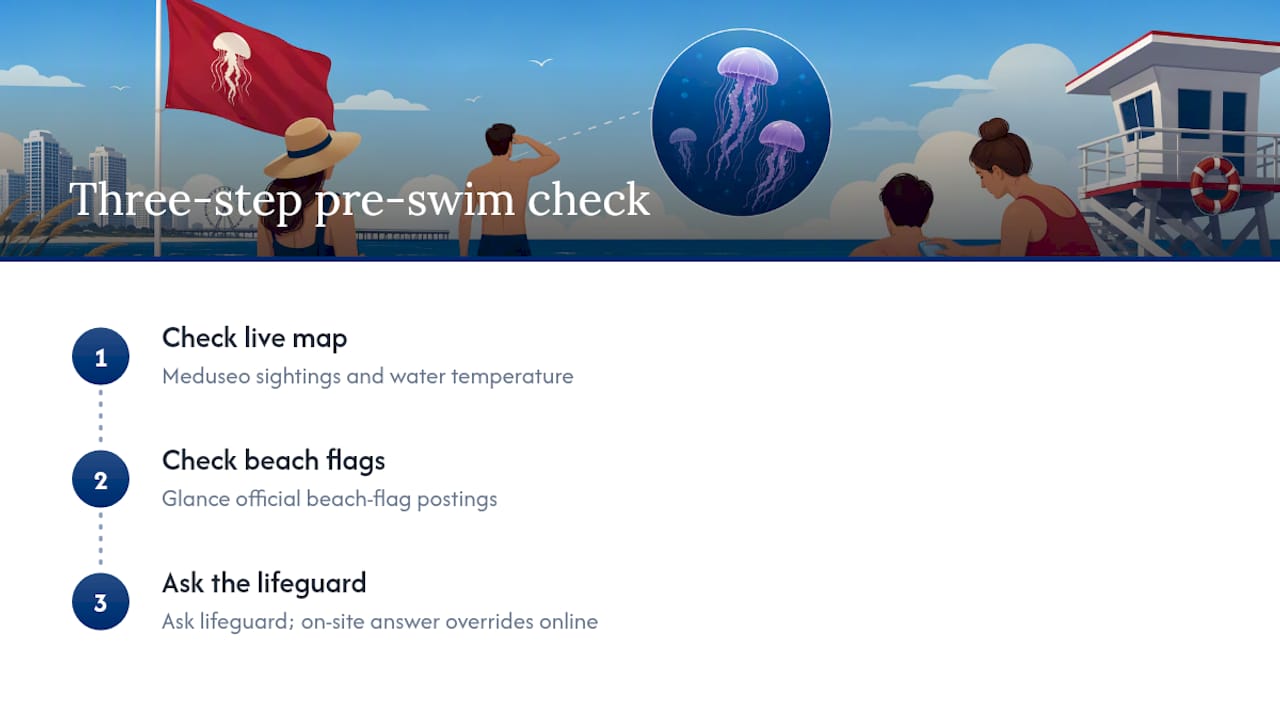
The most reliable source is still the flag flying over the beach that morning and the lifeguard standing under it. Run through this three-step check before you get in the water: look at the live map, glance at official beach flag postings, then ask the lifeguard directly what’s been reported that day. Conditions can change between your online check and your arrival, so the on-site answer always wins.
A Local Operator’s View on Jellyfish and the Water
Working these waters day after day teaches you the pattern fast: jellyfish don’t hit every beach evenly, and a captain who knows the local coastline can usually find calmer, clearer water even when other spots are seeing more activity. Route selection matters as much as the calendar. A private tour lets the captain make real-time calls, shifting to a sheltered cove or a different stretch near Shell Island if conditions change mid-trip. That flexibility is something a set beach spot can’t offer you. Families get to enjoy dolphins and snorkeling without gambling on a fixed patch of sand.
— Justin
A Private Tour Beats Guessing at Beach Conditions
Rather than checking flags and hoping your stretch of sand stays clear, a local licensed captain can help find calm, jellyfish-light water for you. Trips may offer private charters on a boat suitable for families and small groups seeking dolphin watching and Shell Island snorkeling.

Snorkel gear may be provided, and routes can be adjusted if conditions shift, with trip options suitable for guests of varying ages. That kind of on-the-water judgment call is exactly what a fixed beach spot can’t give you. If you want dolphins, clear water, and a plan built around current conditions instead of a guess, check available dates on the private dolphin and snorkeling tour page or book your trip online directly.
Sources
Check PCB beach flags, Meduseo’s live map, Mayo Clinic’s sting guidance, and Pcbprestige’s marine life guide.
Recommended
Comments