What to Wear Snorkeling: Gear and Outfit Guide
- PCB Prestige

- 4 hours ago
- 11 min read
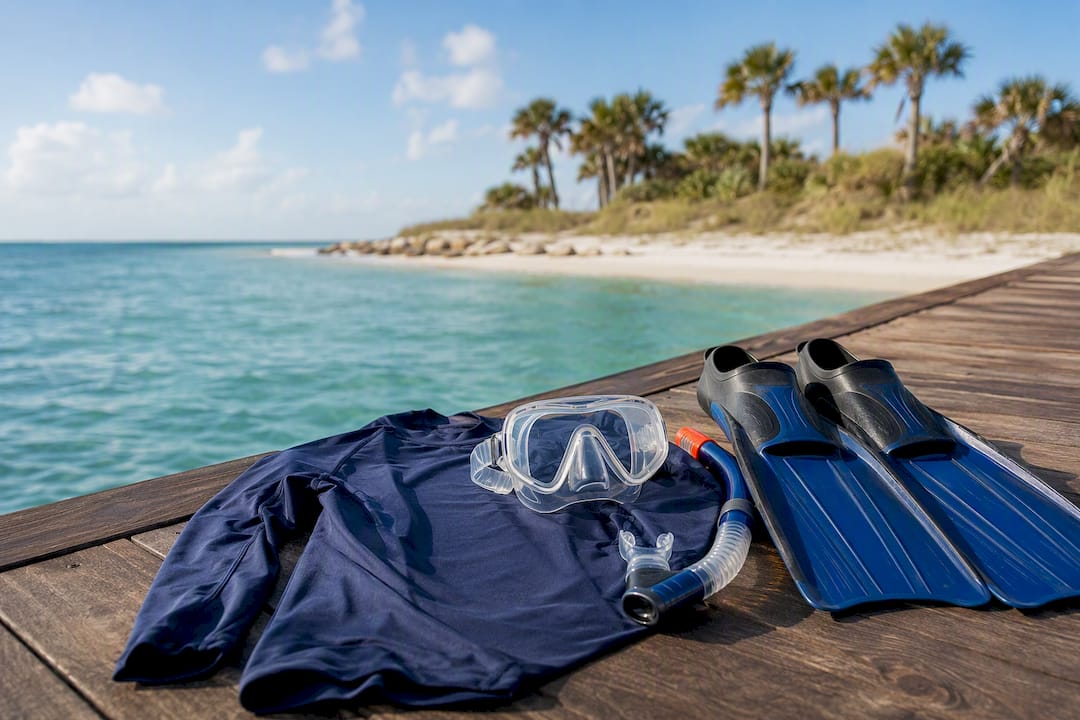
For most snorkels, the outfit is simple: mask, snorkel, and fins, plus a swimsuit and a long-sleeve UPF 50+ rash guard in warm water. Drop below about 77°F (25°C) and you’ll want a 2 to 3mm shorty or a 3/2mm full wetsuit instead. Add reef-safe mineral sunscreen on any skin the rash guard doesn’t cover, water shoes if you’re entering over rocks, and a snorkel vest if you’re not a strong swimmer.
Mask + snorkel + fins (bring your own mask if you can)
Swimsuit + long-sleeve UPF 50+ rash guard for water 77°F/25°C and up
2 to 3mm shorty or 3/2mm full wetsuit for cooler water
Reef-safe mineral sunscreen on exposed skin
Water shoes or reef booties for rocky or shell-covered entries
Snorkel vest if you want extra buoyancy confidence
Skip cotton entirely and steer clear of full-face snorkel masks. Both create real problems once you’re actually in the water, which the next sections explain in detail.
Key Takeaways
The right snorkeling outfit matches water temperature and sun exposure, with UPF 50+ rash guards and reef-safe mineral sunscreen forming the baseline for almost every trip.
Point | Details |
Match outfit to temperature | Swimsuit and rash guard above 77°F (25°C); shorty or full wetsuit below that threshold. |
Test your mask before boarding | Inhale through your nose with no strap; it should suction and hold on its own. |
Choose mineral sunscreen | Pick zinc oxide or titanium dioxide formulas and skip oxybenzone and octinoxate for reef safety. |
Match footwear to entry type | Full-foot fins for boat ladders; booties and open-heel fins for rocky shore entries. |
Book a private, gear-included tour | Pcbprestige fits mask and fins for each guest and includes equipment on every private charter. |
Table of Contents
Essential Snorkel Gear: Mask, Snorkel, and Fins
A mask that leaks ruins a snorkel trip faster than any wardrobe mistake. The fix takes ten seconds: hold the mask against your face with no strap, inhale gently through your nose, and let go. If it stays suctioned on its own, you have a seal. If it slides or lets in air, try a different size or shape before you get anywhere near the water. Face shapes vary enough that the same mask model can fit one person perfectly and fail the next.
Look for a silicone skirt rather than rubber. It seals better against skin and holds up longer. Tempered glass lenses resist scratching, and a low-profile design cuts down on the water pocket in front of your eyes. Fogging is the other constant annoyance. A quick scrub with a dab of toothpaste before your first use breaks down the factory coating that causes fog, and a spit-and-rinse defog before each dive keeps it clear after that. Store the mask in a soft pouch, not loose in a bag, since scratched lenses fog faster and never quite clear up again.
Snorkels are less complicated than they look. A basic J-tube works fine for calm reef snorkeling. Dry-top models add a valve that closes when a wave splashes over the top, which is nice in choppy water but not essential in a protected bay. A purge valve at the bottom lets you clear water with a short exhale instead of a full blow, and a soft silicone mouthpiece matters more for comfort than any other single feature.
Fins come down to two choices. Full-foot fins slip on like a shoe and pack small, which makes them the practical pick for boat-based snorkeling where you’re not walking on rough ground. Open-heel fins pair with booties and suit shore entries over rock or coral rubble. Medium-length blades give you enough propulsion for surface swimming without the leg fatigue that longer freediving fins cause.
Buying versus renting depends on frequency. If you snorkel more than once or twice a year, buying your own mask is worth it for the hygiene and the guaranteed fit. Rental fins and snorkels are fine for occasional trips, but check them the moment you get them. Rental quality varies a lot between operators, and a cracked purge valve or a stretched-out strap is easy to miss until you’re already offshore.
Pro Tip: Test your mask seal at home in front of a mirror before your trip, not for the first time standing on a dock with a captain waiting.
What to Wear by Water Temperature
Water temperature decides almost everything about your snorkeling outfit, more than sun, more than session length, more than personal preference. Get this call right and everything else falls into place.
Water Temperature | Recommended Outfit |
77°F (25°C) and above | Swimsuit + long-sleeve UPF 50+ rash guard |
roughly 77°F (25°C) | 2mm shorty wetsuit or 3/2mm full wetsuit |
Below roughly 77°F (25°C) | 3 to 5mm full wetsuit depending on exposure and session length |
Once the water drops under roughly 77°F, a wetsuit becomes the smarter call rather than an optional extra. A shorty covers your torso and upper legs while leaving arms and lower legs free, which works well for brief exposures in mildly cool water. A 3/2mm full suit trades some flexibility for a lot more warmth, and it’s the better pick once you plan to be face down for an hour or more.
Session length changes the math even at the same temperature. Thirty minutes in 74°F water feels manageable in a swimsuit. Two hours in the same water gets uncomfortable fast, and shivering makes you a less alert swimmer.
Layering solves a couple of real problems at once. Wearing a rash guard underneath a wetsuit stops the neoprene from chafing your neck and shoulders and adds a thin extra layer of warmth. On boat trips, some snorkelers prefer a two-piece rash guard and legging combo over a one-piece suit, mainly because it makes bathroom breaks far less of a production during a multi-stop day on the water.
Kids and anyone who runs cold should size up on coverage, not down
When in doubt between two thickness options, pick the thicker one and shorten your first session
A rash guard under a wetsuit reduces chafing on repeat entries
How Much Sun Protection Do You Actually Need?
A long-sleeve rash guard rated UPF 50+ blocks about 98% of UV radiation hitting your skin. That single number explains why experienced snorkelers treat a rash guard as sunscreen you never have to reapply, at least for whatever it covers.
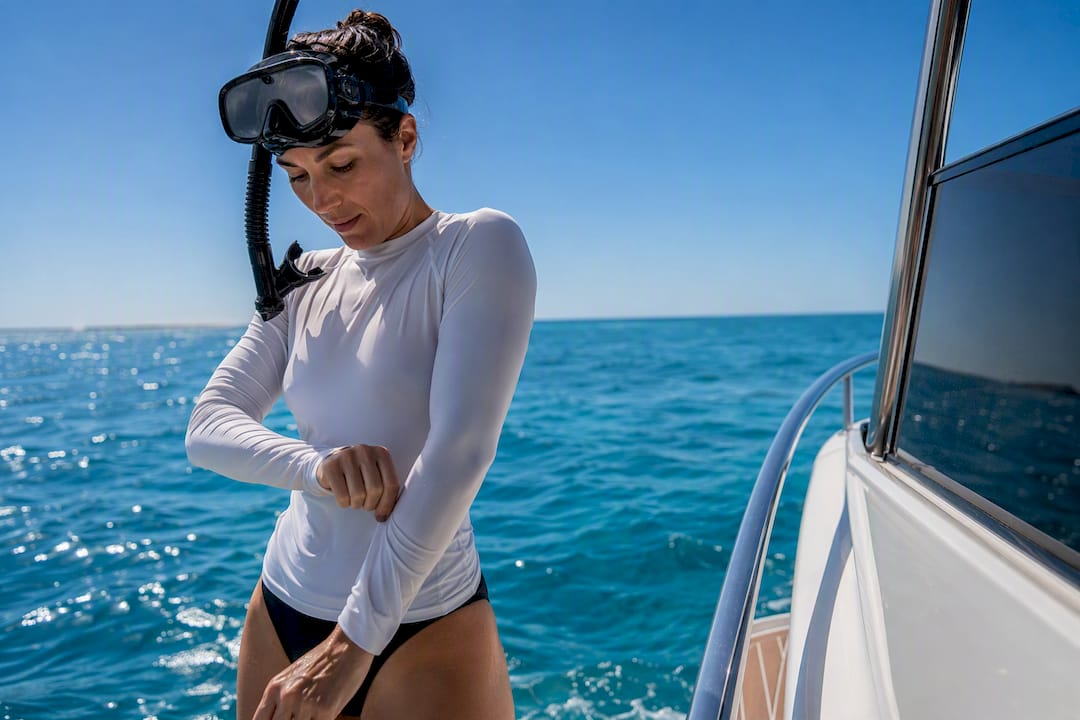
Your shoulders, upper back, and the backs of your arms take the worst of it during a snorkel session, since you’re face down with your back to the sun for long stretches. A rash guard eliminates that problem for good, and hooded versions with thumbhole cuffs push the coverage further, protecting your neck, ears, and the tops of your hands too.
Whatever skin stays uncovered still needs sunscreen, and the formula matters as much as the frequency. Reef-safe sunscreen means mineral formulas built on zinc oxide or titanium dioxide, never chemical filters like oxybenzone or octinoxate. NOAA’s research on coral impacts is part of why so many boat operators and marine parks now require mineral formulas outright.
Timing matters too. Apply sunscreen at least 15 minutes before you get in the water so it has time to bind to skin instead of washing off immediately. Reapply between snorkel stops on any exposed skin, since a couple hours of saltwater and sun will wear through even a good mineral formula.
Statistic: UPF 50+ fabric blocks roughly 98% of UV rays, making a rash guard one of the most reliable, zero-maintenance forms of sun protection you can wear in the water.
On deck between snorkel sessions, throw on a cover-up, wear a hat, and put on polarized sunglasses. That surface interval is when a lot of sunburn actually happens, not underwater. Pcbprestige guests can check the reef-safe sunscreen guide for specific product picks, and the zinc versus titanium breakdown if you want to know which mineral filter suits your skin better.
Pro Tip: Apply sunscreen at home before you leave for the dock. It gives the formula time to set and saves you from doing it hastily on a moving boat.
Footwear and Fin Choices for Different Entries
Entry type decides your footwear more than personal preference does. Boat entries and shore entries call for almost opposite setups.
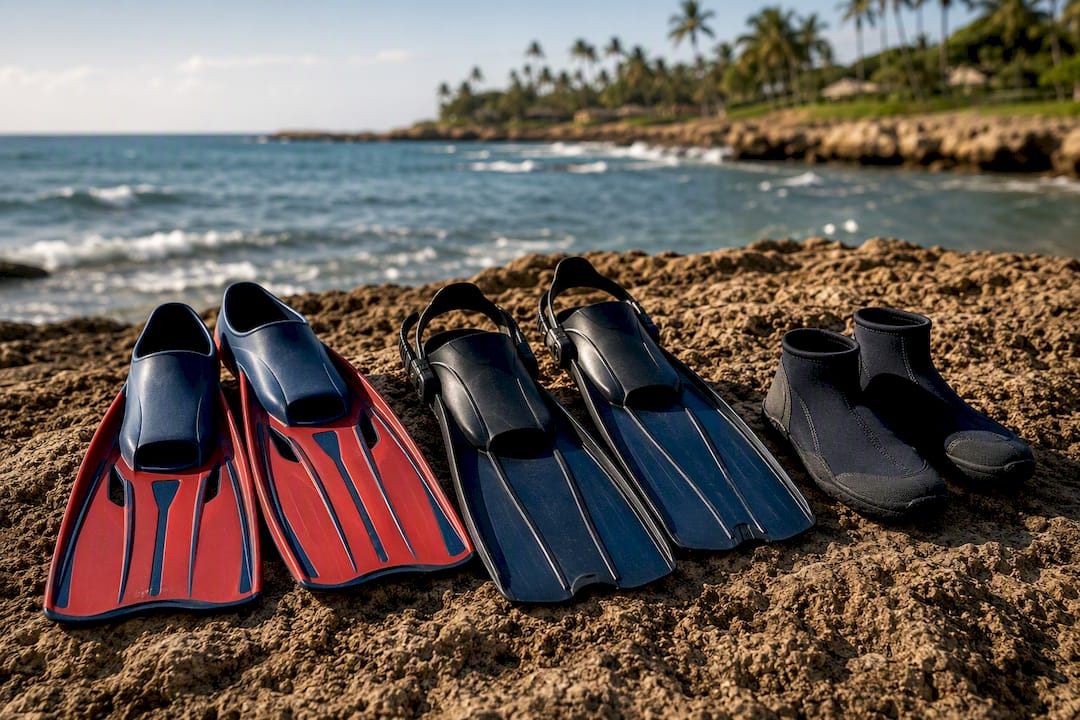
Stepping off a boat ladder into open water, skip footwear entirely and go with full-foot fins. They slip on easily, pack flat in a bag, and there’s no rocky bottom underfoot to worry about. Shore and rock entries flip that logic. Open-heel fins paired with reef booties or water shoes protect your feet from urchins, sharp coral rubble, and barnacle-covered rocks while you wade out to swimming depth.
Barefoot is fine on sand. It’s a bad idea on anything else, since a single step on a hidden urchin can end a trip before it starts.
Boat ladder entry: no footwear, full-foot fins
Shore or rocky entry: reef booties or water shoes, open-heel fins
Fin fit check: they should feel snug but never pinch, with no gap that lets your heel slide
What to Avoid and a Pre-Trip Checklist
A few wardrobe choices consistently ruin snorkel trips, and they’re easy to avoid once you know what to look for.
Cotton is the biggest offender. It soaks up water and gets heavy fast, clinging to your skin and pulling at you while you swim, and it never really dries during a half-day trip. Loose jewelry catches on gear and can snag on coral or rope. Heavy cotton board shorts have the same waterlogging problem as any other cotton garment. And full-face snorkel masks get flagged by naturalists and dive professionals for a real reason: they’re harder to remove quickly in a panic situation, and some designs allow carbon dioxide to build up inside the mask.
Run through this before you leave for the dock:
Swimsuit and rash guard on or packed
Mask stored in its soft pouch
Fins packed, or your rental reserved
Reef-safe sunscreen applied
Dry bag packed with a towel and phone pouch
Water bottle filled
ID and keys secured somewhere waterproof
Snorkel vest, if you want one
Ask your operator ahead of time what gear they provide and whether you’re looking at a boat entry or a shore entry. That one question changes your footwear and fin choice completely.
Packing and Gear Care After Your Trip
A half-day snorkel trip packs down small. A 10 to 20 liter dry bag holds your rash guard, sunscreen, a light towel, phone, and car keys with room left over. Leave your wallet, extra cash, and anything you don’t need at your hotel room or locked in the car.
Rinsing gear in fresh water right after your trip keeps salt from breaking down silicone and neoprene over time. A little mild soap on the mask skirt clears off sunscreen residue and body oil that plain water misses. Air-dry everything out of direct sunlight, since UV breaks down silicone and neoprene faster than saltwater does on its own. Hang wetsuits by the waist rather than the shoulders so they keep their shape instead of stretching out.
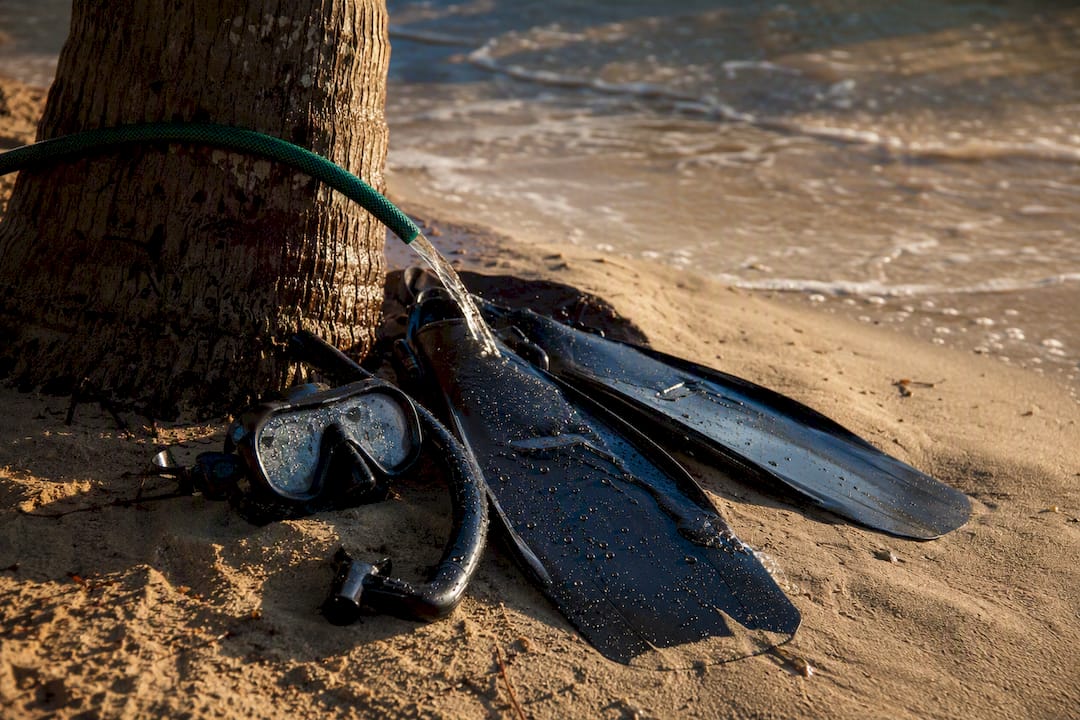
Store your mask in its soft pouch, and never leave gear sitting in a hot car. A cracked strap or a torn mouthpiece is usually a cheap fix. Neoprene glue handles small wetsuit tears, and replacement straps are sold separately for almost every mask brand. For a full walkthrough, Pcbprestige guests can check the gear-cleaning routine for a step-by-step rinse and dry process.
On-Boat Tips From PCB Prestige
Private tours change the gear equation. Pcbprestige includes snorkel equipment on every trip, and the licensed captain runs a safety and fit check with each guest before anyone gets in the water. Small group sizes mean nobody’s rushed through a mask fitting, and wildlife interactions follow ethical distance guidelines so dolphins and marine life aren’t disturbed.
Ask your captain about current conditions and expected entry type before you gear up. A five-minute conversation on the boat prevents almost every fit or comfort problem people run into once they’re already in the water.
If you wear prescription glasses, ask about a prescription mask insert ahead of time rather than trying to snorkel without correction. And if you’re pregnant, the pregnancy-specific snorkeling guidance covers what to adjust before you book.
Staying Comfortable Through a Long Snorkel Session
An hour or two face down in the water tests your gear differently than a quick 20-minute swim. Chafing shows up at the neck and underarms where a rash guard seam rubs against wet skin, and a poorly fitted mask strap that felt fine at minute five can leave a headache by minute ninety.
Hydration matters more than most people expect for a water activity. Sun, salt air, and physical exertion pull moisture out of your body even though you’re surrounded by water the entire time, so drink before you get in and again during any surface break. A two-piece rash guard and legging setup makes bathroom breaks on longer boat trips far simpler than wrestling out of a one-piece suit.
Fit matters as much as coverage for extended wear. A mask strap that’s slightly too tight will feel fine for the first ten minutes and turn into a real headache by the end of a long session, so recheck the strap tension once you’re actually in the water and warmed up. Fins that pinch even slightly at the start will produce a blister by the halfway mark. Take short breaks floating on your back between active swimming stretches. It gives your neck a rest from holding the snorkel angle and lets you reset before the next stretch of reef.
Snack timing matters too if your trip spans several hours. A light meal beforehand, rather than a heavy one, keeps you comfortable face down in the water without any stomach discomfort working against you.
Snorkeling Gear for Tropical, Temperate, and Cold Water
Tropical water, generally 80°F (27°C) and warmer, calls for the lightest setup: swimsuit, UPF rash guard, reef-safe sunscreen on any exposed skin, and standard fins. Comfort and sun exposure are the main concerns here, not warmth, since the water itself poses almost no cold risk.
Temperate water in the 65 to 77°F (18 to 25°C) range is where gear choices split the most. A 2mm shorty handles the warmer end of that range for shorter sessions, while a 3/2mm full suit is the better call once you’re approaching 65°F or planning to stay in for more than an hour. Layering a rash guard underneath either wetsuit style adds a small but noticeable amount of extra warmth.
Cold water, generally under 65°F (18°C), moves snorkeling into more serious gear territory: 5mm full suits, hoods, and often gloves and boots. Sessions also need to run shorter, since cold saps energy and focus fast even for strong swimmers. Most vacation snorkeling in places like Panama City Beach falls into the tropical-to-warm-temperate range for most of the year, which keeps gear choices simple for the majority of visitors.
Whatever the water temperature, matching your outfit to actual conditions rather than guessing beats trying to power through discomfort halfway through a trip.
A Note on Fit and Sun Protection From the Water
Guests notice the difference between gear that fits and gear that’s just “close enough” within minutes of getting in the water. A mask that seals properly and a rash guard that actually covers your shoulders change the whole experience, and they protect the reef too by cutting down on how much sunscreen ends up in the water.
Ask questions before you book, or right on the boat before we push off. We’d rather spend five extra minutes getting your gear right than have you cut a trip short over a leaking mask or a sunburned back.
— Justin
Book a Private Snorkeling Tour With PCB Prestige
Skip the guesswork on rental gear and crowded group boats. Pcbprestige runs private, captain-guided snorkeling and dolphin tours out of Panama City Beach on a 26-foot powerboat, with snorkel equipment included and fitted for your group before you ever leave the dock.

Every trip includes a licensed local captain, a small private group capped at your party, a bathroom on board, and flexible stops built around calm, marine-life-rich water near Shell Island. The captain checks mask seals and fin fit with each guest and keeps wildlife encounters ethical and unhurried, so you’re not jockeying for space with strangers or rushing past dolphins for someone else’s photo. Explore the full range of private tours available, or head straight to book your trip online and pick a date that works for your group.
Sources
Recommended
Comments