Snorkeling with Glasses: Clear Vision Guide for PCB
- PCB Prestige

- 21 hours ago
- 7 min read
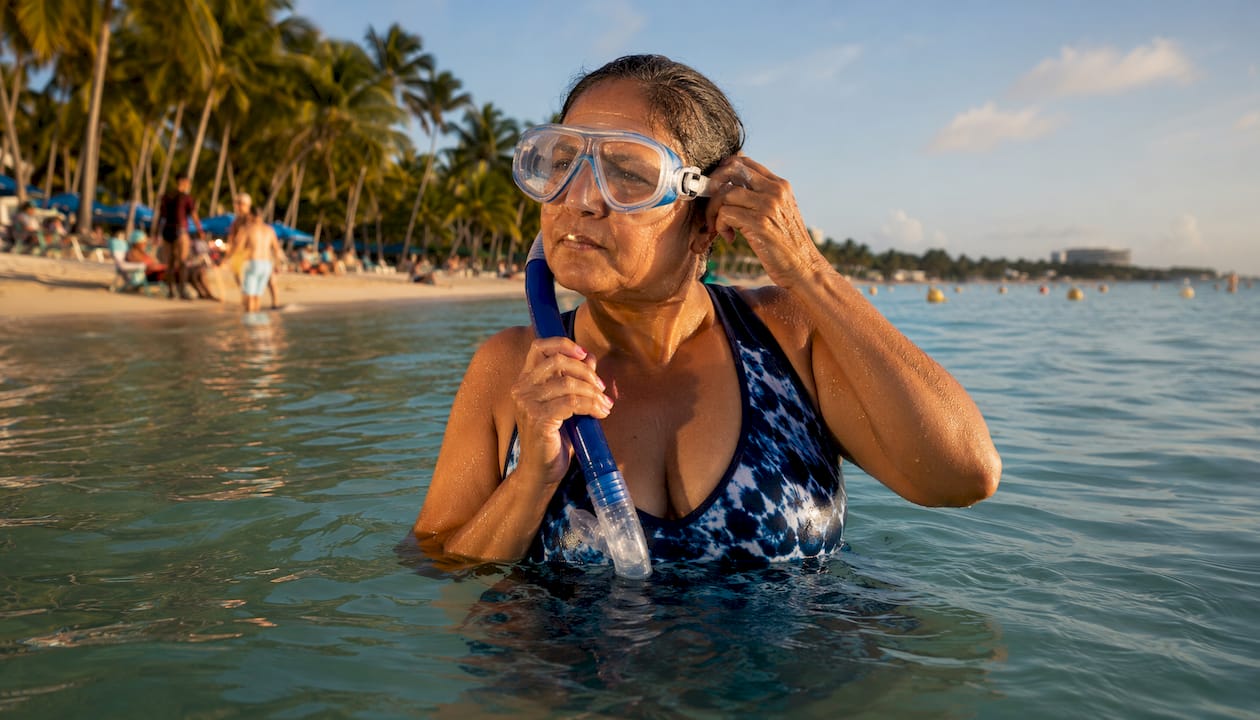
Can you snorkel with glasses? Here’s the straight answer
Yes, you can snorkel with glasses — just not with regular eyeglasses stuffed inside a mask. That approach breaks the watertight seal instantly, floods the mask, and creates painful pressure points where the frames dig into the silicone skirt. The good news is that three practical solutions actually work:
Prescription snorkel masks with corrective lenses built into the frame — the safest, clearest long-term option
Modular optical inserts that snap behind the main lens — flexible and budget-friendly
Soft daily disposable contact lenses worn under a perfectly sealed mask — workable for occasional use with strict aftercare
Board-certified ophthalmologists, including Dr. Saya Nagori, recommend prescription masks over contacts for both safety and comfort. If contacts are your only option, soft daily disposables with a leak-free seal are the minimum standard. Water’s natural refraction magnifies objects 25–30% underwater, so mild prescriptions sometimes need no correction at all.
Table of Contents
Why regular glasses don’t work with snorkel masks
The physics here are unforgiving. A snorkel mask works by pressing a soft silicone skirt flush against your face, creating an airtight, watertight chamber. Eyeglass frames sit right in the path of that seal.
Broken seal: Even thin frames create gaps where water seeps in immediately
Pressure points: The arms of your glasses press into your temples and nose bridge under the mask strap, causing real discomfort within minutes
Double-surface fogging: Two separate lens surfaces trap warm, humid air between them, fogging far worse than a standard mask
Distorted vision: Water entering the mask refracts light unpredictably, making already-blurry vision worse
Wearing regular prescription eyeglasses inside a snorkel mask causes leaks and impaired vision — there is no workaround that fixes this. The silicone skirt simply cannot conform around a rigid frame.
Prescription snorkel masks: the clearest long-term solution
For anyone who snorkels regularly or who has a moderate-to-strong prescription, a dedicated prescription snorkel mask is the right call. These masks replace the standard tempered glass lens with corrective lenses ground to your prescription, exactly like your everyday glasses.
Built-in corrective lenses matched to your specific diopter — no contacts, no inserts, no fuss
Wide, natural field of view without the fogging that plagues dual-surface setups
No infection risk from water contacting your eyes through contact lenses
Modular optical inserts on many models let you swap lenses when your prescription changes, without buying a new mask
Ordering process: You provide your prescription; the mask arrives ready to use. Try it in a bathtub before your trip to confirm fit and clarity
Strong prescription wearers and families with kids who wear glasses will find this option pays for itself after one trip. The snorkeling spots around Shell Island are clear and calm enough that a well-fitted prescription mask delivers genuinely sharp underwater vision.
What you need to know about snorkeling with contact lenses
The FDA and CDC both advise against wearing any contact lenses in water due to the risk of Acanthamoeba keratitis, a serious eye infection that can cause permanent vision loss. That warning covers oceans, lakes, pools, and yes, snorkeling in the Gulf.
Soft daily disposables are the safest choice if you decide to wear contacts — discard them immediately after any water exposure according to expert guidelines.
Hard and gas-permeable lenses are off the table: increased water pressure can cause them to stick to the cornea or scratch it, making them unsuitable for snorkeling.
Colored contacts carry the same risks as clear soft lenses, with the added problem that a dislodged colored lens is simply gone
If water contacts your lenses, remove them as soon as you exit the water; the American Optometric Association recommends disposing of daily lenses immediately after any seawater exposure
Never rub your eyes if water gets in — blink repeatedly or surface and address it calmly
The critical rule: If water enters your mask while wearing contacts, treat those lenses as contaminated. Remove and discard them the moment you’re back on the boat.
How to choose the right vision correction for your snorkeling trip
Matching the solution to your actual situation saves money and frustration. Here’s a practical framework:
Mild prescription + occasional trip: Try snorkeling without correction first. Water’s 25–30% magnification effect often makes mild impairments manageable in clear, shallow water
Moderate prescription + traveling once or twice a year: Daily disposable contacts under a well-sealed mask is a reasonable, low-gear option
Strong prescription or frequent snorkeler: A prescription snorkel mask is worth every dollar — comfort and clarity are in a different category
Prescription that changes often: Modular optical inserts are the smart play; swap the lenses without replacing the whole mask
Budget consideration: Inserts cost less upfront than full custom masks, but custom masks eliminate the contact lens supply chain entirely
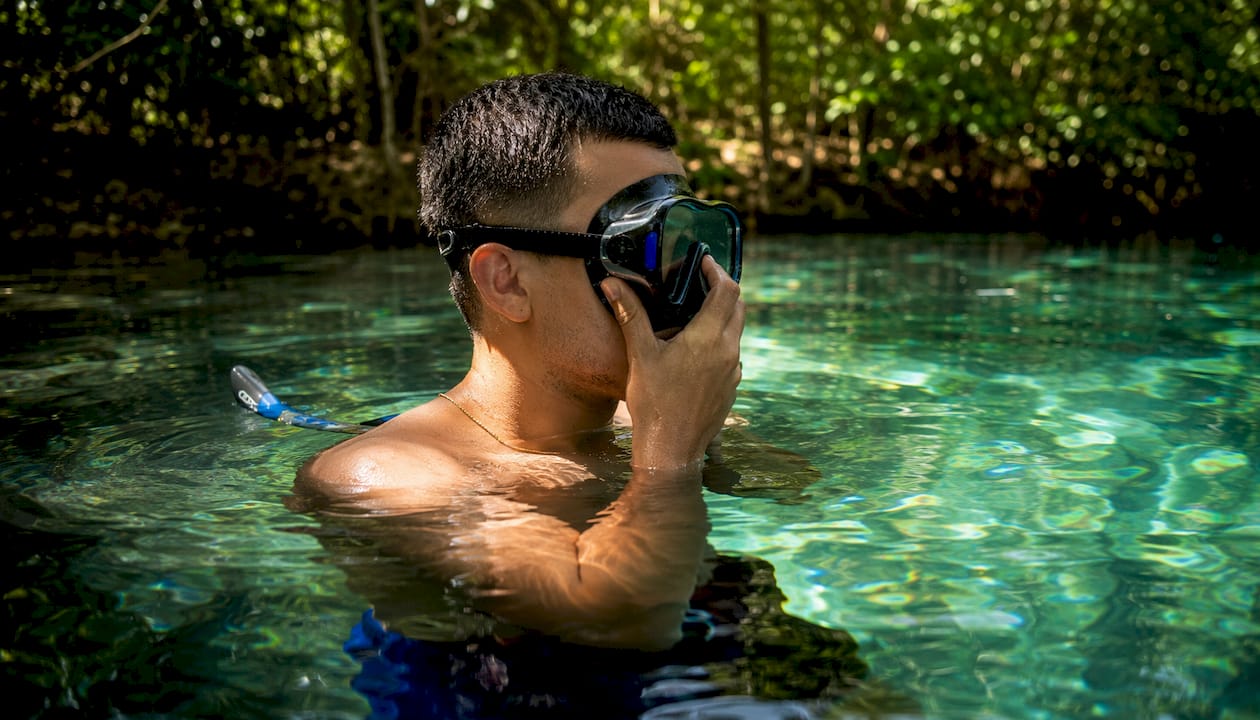
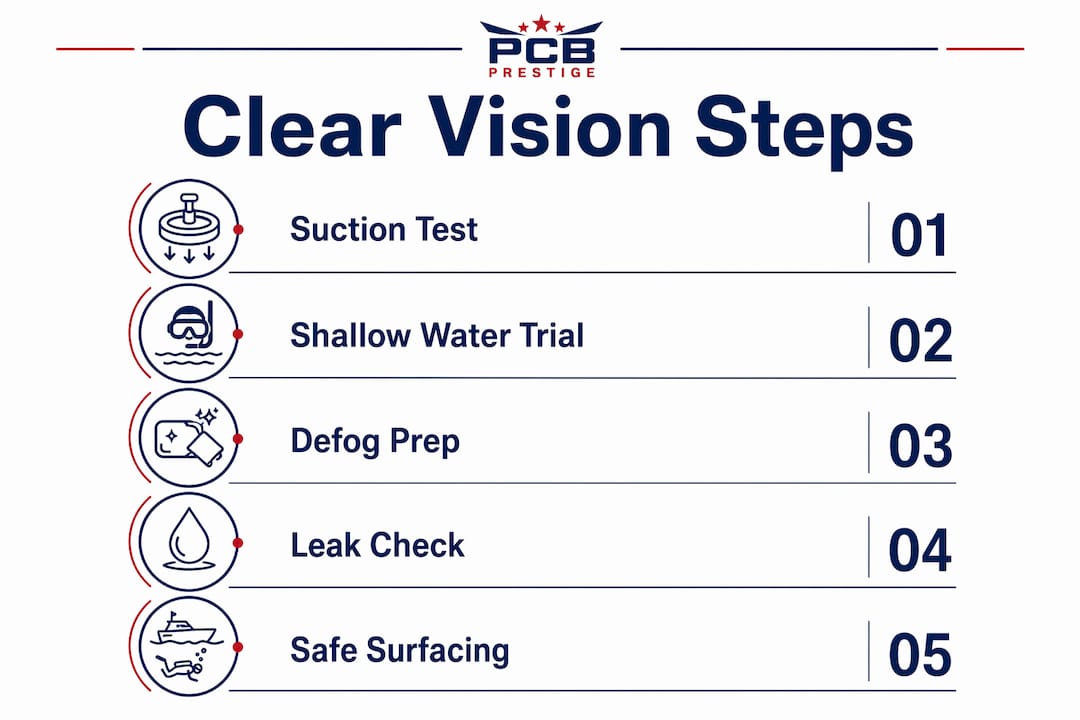
Pro Tip: Before entering the water, run the suction test: place the mask on your face without the strap, breathe in gently through your nose, and let go. If the mask stays put on its own, the seal is good. If it drops, try a different size or style before you ever hit the water.
Testing in shallow water first — not mid-snorkel in open Gulf — is how you catch fit problems before they ruin the experience.
How Pcbprestige supports guests with vision correction needs
Pcbprestige runs private snorkeling tours out of Panama City Beach on a 26-foot powerboat, with all snorkel equipment included. For guests who wear glasses or contacts, that setup matters more than it might seem.
All equipment supplied: No scrambling to find a prescription mask rental at the last minute
Private, small-group format: The captain can spend real time adjusting your mask fit before you enter the water — something impossible on a crowded group tour
Calm, shallow snorkeling sites: The Gulf waters near Shell Island are ideal for first-timers working with prescription eyewear for the first time
Intake form: Guests can specify vision correction needs before the tour so the crew prepares accordingly
Expert local guidance: A licensed captain who knows these waters can position the boat to maximize visibility, which matters when you’re already managing a new optical setup
Safety and comfort: what to keep in mind
A few principles apply regardless of which vision solution you choose. First, a mask that leaks is the root cause of almost every problem — fogging, lens displacement, eye irritation. Getting the fit right before you enter the water is not optional.
Avoid touching your eyes while in the water. If something feels off with your vision or your mask, surface calmly and fix it on the boat. Snorkeling with a buddy is standard practice, and it matters more when you’re managing prescription eyewear for the first time.
How to care for prescription masks and optical inserts
Rinse your mask in fresh water immediately after every use — saltwater left to dry on lenses causes mineral deposits that scratch the surface over time. Store the mask in its case, away from direct sunlight, which degrades silicone skirts faster than most people expect.
For optical inserts, remove them before rinsing and clean each piece separately. Never use abrasive cloths on corrective lenses; a soft microfiber cloth only. Check the insert clips periodically — a loose insert mid-dive is a fixable problem that becomes annoying fast.
Dealing with fog on prescription snorkel masks
Fogging is the most common complaint, and it’s almost always preventable. Apply a commercial defog solution or a small drop of baby shampoo to the inside of the lens, rub gently, and rinse lightly before use. The old saliva method works in a pinch.
Proper defogging before entering the water and managing any leaks calmly with clearing techniques are the two habits that separate a frustrating snorkel from a great one. Never skip the defog step, especially with prescription lenses where any distortion compounds the problem.
First-time tips for snorkelers wearing prescription eyewear
Run the suction test on dry land. Then test the mask in knee-deep water before committing to open water. Breathe slowly and steadily through your mouth — panic breathing fogs masks faster and increases the chance of water entry.
Bring your glasses onto the boat in a hard case. The moment you remove your prescription mask, you need something to see with. Pack spare contact lenses if that’s your chosen method, and carry a small bottle of preservative-free saline drops for rinsing. Panama City Beach vacation planning resources can help you think through what to pack for a full day on the water.
Key Takeaways
Prescription snorkel masks are the safest, clearest solution for glasses wearers, and the right mask fit prevents nearly every common problem.
Point | Details |
Regular glasses don’t work | Frames break the mask seal immediately, causing leaks and discomfort. |
Prescription masks are best | Built-in corrective lenses offer clear, fog-free vision with no infection risk. |
Contacts require strict care | Use soft daily disposables only; discard immediately after any water exposure. |
Seal test before every dive | The suction test confirms a leak-proof fit before you enter the water. |
Pcbprestige supplies all gear | Private tours include equipment and personalized mask-fitting support for vision correction needs. |
Private snorkeling in Panama City Beach, vision correction included
Sorting out prescription eyewear for a snorkel trip is genuinely the hardest part — and Pcbprestige removes it from the equation. Every private snorkeling tour includes full equipment, and the small-group format means your captain actually has time to fit your mask correctly before you hit the water. No crowded boat, no rushed gear check, no hoping the rental mask seals properly.

The calm, clear waters around Shell Island are about as forgiving as Gulf snorkeling gets — ideal for families trying prescription setups for the first time. Fill out the guest intake form before your tour to flag any vision correction needs, and the crew will be ready when you arrive. That’s the difference between a private charter and everything else.
Recommended
Comments