Snorkel Mask Defog: Quick Routine for Clear Vision
- PCB Prestige

- Aug 14
- 10 min read

The fastest reliable way to stop snorkel mask fogging is a short pre-snorkel ritual: clean the lens, apply a reef-safe defog, fit the mask correctly, and do it every single time. Skip any one of those steps and you’re back to squinting at blurry fish.
Before you hit the water, run through this checklist in under two minutes:
Rinse the lens with fresh water to remove loose debris.
Apply a small amount of defogger (or a drop of baby shampoo) to the dry inner lens.
Spread it evenly with a fingertip, let it sit briefly, then swirl with a small splash of water and shake out the excess. Don’t rinse it clean.
Pull the mask on, adjust the strap so the seal is snug but not tight, and submerge.
If fog keeps coming back after this routine, the lens likely has residue buildup or a coating issue that needs a deeper clean, or the mask may need replacing.
Key Takeaways
A clean lens plus a reef-safe defog applied to a mostly dry surface, followed by a light rinse, is the single most reliable routine for fog-free snorkeling every session.
Point | Details |
Clean before you defog | Residue from oils, sunscreen, and factory film blocks any anti-fog treatment from bonding to the lens. |
Light rinse only | Over-rinsing strips the defog film; swirl and shake out excess rather than rinsing under running water. |
Choose reef-safe formulas | Biodegradable, alcohol-free defoggers protect coral and seagrass in the snorkel areas you’re visiting. |
Fit determines fog rate | A leaking mask seal overwhelms any defog treatment; do the suction test before every session. |
Pcbprestige handles it for you | Every private tour includes cleaned, defog-treated gear maintained with reef-safe products before each trip. |
Table of Contents
What’s the best pre-snorkel defog routine?
A four-step sequence, done in the right order, is what separates a fog-free dive from a frustrating one. Seaview 180 confirms that a consistent clean-then-defogging ritual is the most reliable way to prevent recurring fogging.
Step 1: Rinse. A quick fresh-water rinse removes salt, sand, and surface oils that would otherwise trap under your defog layer.
Step 2: Dry the inner lens. Not bone dry, but mostly dry. A wet lens dilutes the defog before it can form a film. Shake out the water and let it air for 30 seconds.
Step 3: Apply defog. One small drop or a pea-sized squeeze covers the entire inner surface. Spread it with a clean fingertip in slow circular motions.
Step 4: Light rinse, then wear. Swirl a small amount of water inside the mask and shake it out. The goal is to remove excess product, not strip the film. Put the mask on immediately.
Pro Tip: Keep your defog bottle in a small mesh bag clipped to your gear. Applying it in the shade rather than direct sun gives the film more time to bond before you enter the water.
Why does your snorkel mask fog up?
Fogging is a physics problem with a chemistry twist. When warm, humid air from your breath hits the cooler lens surface, water vapor condenses into tiny droplets. On a perfectly clean lens, those droplets sheet outward and stay mostly transparent. On a contaminated lens, they bead up into hundreds of tiny spheres that scatter light and turn your view milky white.
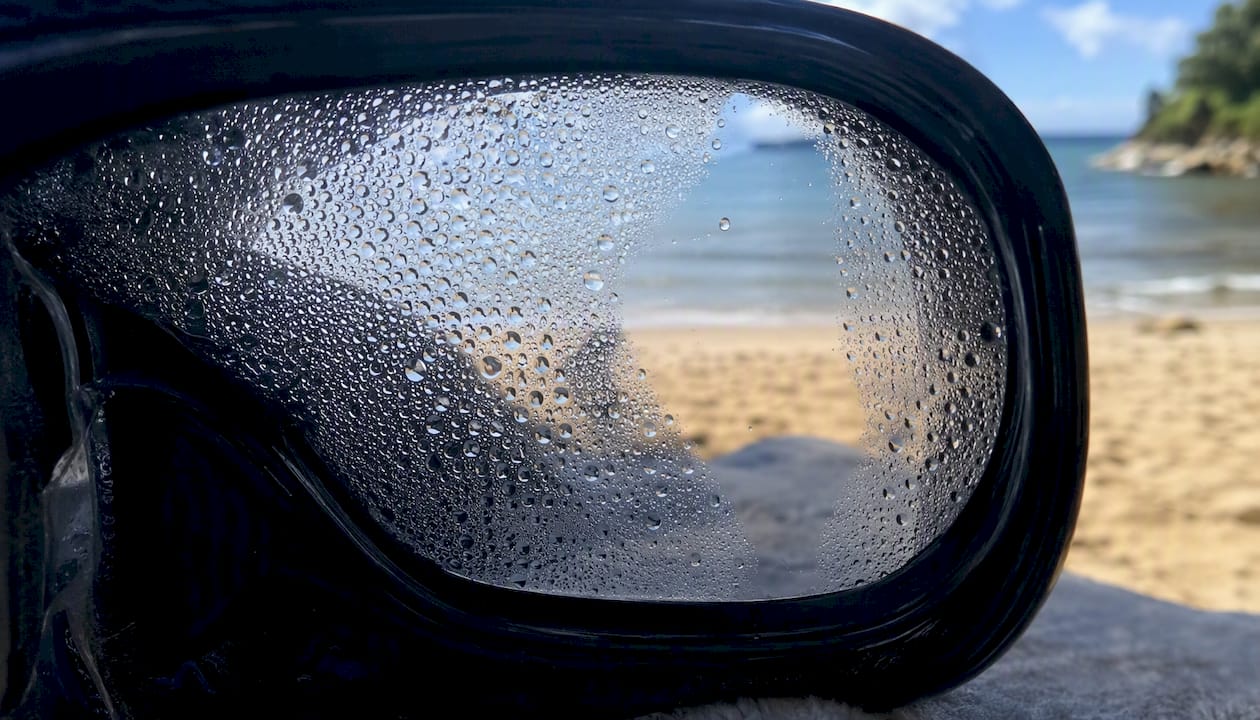
The contamination is almost always residue: the factory silicone film left on new masks, skin oils, sunscreen, or makeup. Lancaster Scuba notes that sunscreen and skin oils are among the most common and overlooked causes of persistent fogging. Even a thin invisible layer is enough to make droplets bead instead of sheet, which is why a mask that worked fine last month can suddenly start fogging after a beach day where you applied sunscreen near your face.
A clean lens is the single most important factor for any anti-fog treatment to work. The defog product is secondary.
How do you safely clean a new mask or remove stubborn oils?
New masks almost always have a factory silicone release film on the inner lens. Anti-fog treatments won’t stick to it, so the first thing you do with a new mask is remove that coating.
Squeeze a small amount of plain, non-gel white toothpaste onto a soft cloth or your fingertip.
Rub it in gentle circular motions across the entire inner lens surface for about 60 seconds.
Rinse thoroughly with warm water.
Repeat two or three times until the lens passes the “squeak test”: run a wet fingertip across the glass and listen for a clean squeak, not a sticky drag.
Enriching Pursuits recommends toothpaste for new masks as a proven method, but flags an important caution: never use toothpaste on a pre-treated or anti-reflective coated lens. The mild abrasive that makes toothpaste effective on plain glass will scratch or strip specialty coatings. If your mask came with an anti-fog coating from the manufacturer, check the manual before scrubbing anything.
For coated lenses or routine deep cleans, mild dish soap (a single drop, no degreasers) or a dedicated mask cleaner is safer. Work it in with a soft cloth, rinse completely, and do the squeak test again.
Pro Tip: After cleaning a new mask, apply your defog and let it cure overnight before your first session. The film bonds better to a fully clean, dry lens.
Which anti-fog method actually works best?
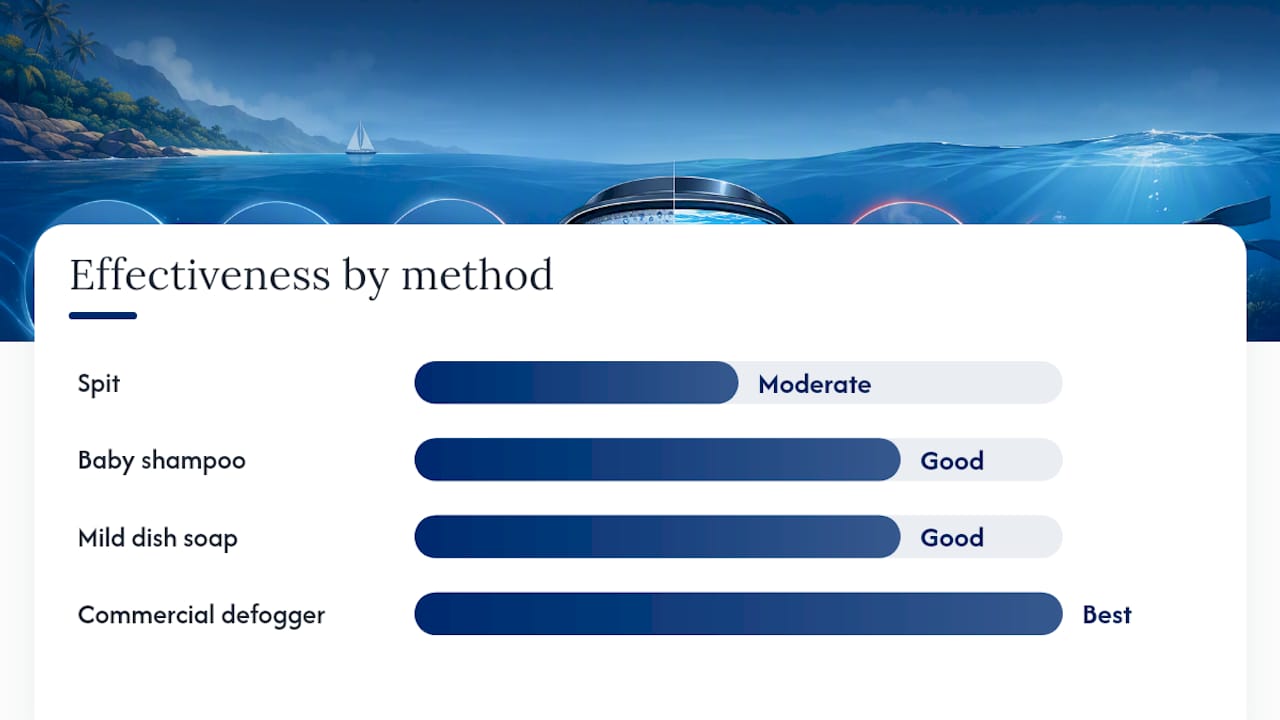
There’s no single answer, because the right choice depends on your priorities. Here’s how the main options stack up:
Spit: Free, always available, and works in a pinch. The proteins in saliva create a thin film that reduces beading. The downsides are real though: it streaks, it’s less effective than commercial options, and it’s unhygienic, especially when sharing masks. Seaview 180 describes it as an in-a-pinch method, not a reliable long-term solution.
Baby shampoo: A drop diluted with water works well, costs almost nothing, and rinses cleanly. It’s a solid everyday option for recreational snorkelers.
Mild dish soap: Similar to baby shampoo. Use sparingly; too much leaves a soapy residue that can irritate eyes.
Commercial defoggers: The most consistent performers. Stream2Sea’s reef-safe formula is designed to create a thin sheeting film rather than a beading surface, and the manufacturer advises a light rinse to retain the effect rather than washing it away. Some plant-based brands like Defrogger claim their alcohol-free formulas are gentler on eyes and longer lasting than alcohol-based versions, though these are manufacturer claims.
Why reef-safe matters: Most snorkeling happens directly above coral reefs and seagrass beds. Alcohol-based defoggers, certain surfactants, and synthetic chemicals can wash off your mask and into the water column. Choosing a reef-safe formula, one that’s biodegradable and free of oxybenzone, octinoxate, and harsh alcohols, protects the ecosystem you came to see.
Method | Effectiveness | Hygiene | Reef Safety | Durability |
Spit | Moderate | Low | Neutral | Short |
Baby shampoo | Good | Good | Generally safe | Moderate |
Mild dish soap | Good | Good | Varies by brand | Moderate |
Commercial defogger | Best | High | Reef-safe options available | Longest |
How do you apply defogger so it actually lasts?
Application technique matters as much as product choice. A well-applied drop of baby shampoo will outlast a sloppily applied commercial defogger every time.
Before entering the water:
Apply to a mostly dry inner lens. A wet surface dilutes the product before it bonds.
Use one small drop or a pea-sized squeeze. More is not better; excess product just rinses off.
Spread evenly with a clean fingertip. Cover the full lens surface, including edges.
Let it sit for 20–30 seconds.
Swirl a small amount of water inside the mask and shake out the excess. Do not rinse under a running tap. Stream2Sea’s application guidance specifically warns that over-rinsing strips the protective film before you even enter the water.
Mid-session fixes:
If fog appears, surface, tilt the mask slightly, and let a small amount of seawater in to swirl around the lens. This often reactivates the film.
A small travel spray bottle with diluted baby shampoo on the boat is a fast fix. One spray, a quick swirl, shake out, and you’re back under.
Spit works here as a quick reset when nothing else is available.
What not to do:
Never touch the inner lens with sunscreen-coated fingers before applying defog.
Don’t scrub the lens dry with a rough towel after applying; pat gently or shake.
Avoid alcohol wipes on lenses unless the product label specifically says it’s safe.
Pro Tip: Carry a small silicone squeeze bottle with a 10:1 water-to-baby-shampoo mix in your dry bag. It weighs almost nothing and handles mid-tour fogging in under 30 seconds.
Does mask fit affect fogging?
Yes, more than most snorkelers realize. A mask that leaks air around the seal constantly introduces warm humid breath into the airspace, overwhelming any defog treatment within minutes.
Quick fit checklist:
Place the mask on your face without the strap. Inhale gently through your nose. The mask should hold for several seconds with no hands.
The skirt should contact your skin evenly all the way around, with no gaps at the nose bridge or temples.
Adjust the strap so it’s snug, not tight. Over-tightening distorts the skirt and actually creates gaps.
Face prep before masking up:
Apply sunscreen at least 15 minutes before putting on your mask, and keep it away from the area the skirt contacts. A reef-safe sunscreen applied to the forehead and cheeks well before the mask goes on reduces transfer significantly.
Remove makeup from the mask contact area. Foundation and moisturizer are among the worst offenders for residue buildup on lenses.
Pat your face dry before fitting the mask. Oils on wet skin transfer to the skirt and then to the lens.
Breathing habits in the water:
Breathe slowly and steadily through your mouth for the first few minutes. Rapid nasal exhalation pushes warm air directly onto the lens.
If you feel the mask fogging, resist the urge to exhale hard through your nose to clear it. That makes it worse.
What do you do when fogging keeps coming back?
Persistent fogging after a proper defog routine almost always has a diagnosable cause. Work through this in order:
Fog returns within a minute or two of entering the water. The lens has residue. Go back to the toothpaste or dish soap deep clean and repeat the squeak test before reapplying defog.
Fog appears in patches or streaks, not uniformly. The lens may be scratched. Scratches create micro-surfaces where droplets bead regardless of treatment. Hold the lens up to light and look for fine lines. A scratched lens won’t respond to any defog method.
Fog appears despite a clean lens and good defog application. Check the seal. Press the mask to your face in a dry room and inhale. If air leaks in around the skirt, the silicone has degraded or the fit is wrong for your face shape.
Everything checks out but fog persists. The mask may have a pre-treated coating that’s worn unevenly. Seaview 180’s troubleshooting guide recommends running a full diagnostic before giving up on a mask.
When to replace: If the skirt has visible cracks, the buckles are brittle, or the lens is deeply scratched, no amount of cleaning or defog will fix it. When shopping for a replacement, prioritize fit above everything else. A mask with a perfect seal and basic glass will outperform an expensive mask that leaks. Try it on in the store, do the suction test, and only then look at lens quality and materials.
Field-tested tips from Justin, the Pcbprestige captain
Running private snorkel tours at Shell Island means dealing with mask fogging in real conditions, not a controlled pool. Here’s what actually works on the water:
Before every trip, Pcbprestige masks are cleaned with a mild dish soap solution, rinsed, and treated with a reef-safe defogger. They’re stored lens-down in a shaded, ventilated area so the film sets before guests use them.
The most common guest mistake is rinsing the mask too aggressively after applying defog. A quick shake is all it needs.
A small spray bottle of diluted baby shampoo stays on the boat for mid-tour fixes. Field operators across the industry recommend keeping one on board for exactly this reason.
Guests who apply sunscreen right before putting on their mask almost always fog up within the first five minutes. The fix is simple: sunscreen goes on early, mask goes on last.
For guests who wear glasses, a properly fitted mask solves most vision problems before fogging even becomes a factor. See the snorkeling with glasses guide for fit options.
Fogging is almost never a product problem. It’s a maintenance and habit problem. The guests who follow the pre-snorkel routine consistently have clear vision for the entire session.
The one thing most snorkelers get wrong about fog prevention
Most people treat fogging as a product problem. They buy a better defogger, try a new brand, ask around on forums. The product matters, but it’s the last variable, not the first.
The lens has to be clean before any treatment works. A $20 reef-safe commercial defogger applied to a lens coated in sunscreen residue will fog within two minutes. The same defogger on a properly cleaned lens lasts an entire session. That’s the gap between snorkelers who always have clear vision and those who spend half their time surfacing to clear their mask.
The second thing people underestimate is the rinse step. Over-rinsing is just as bad as not applying defog at all. The film is thin by design. Aggressive rinsing removes it before you even enter the water, which is why the “light swirl and shake” instruction on most commercial products isn’t a suggestion.
Reef-safe choices matter here too. The water around Shell Island and similar snorkel sites is a living system. Choosing biodegradable, coral-safe formulas isn’t just good ethics; it’s part of being a responsible guest in that environment.
Clear vision on every Pcbprestige tour, gear included
Every private snorkel tour with Pcbprestige includes fully maintained snorkel gear, cleaned and treated with reef-safe defogger before each trip. You don’t show up hoping the equipment works. You show up, the gear is ready, and Justin handles the rest from the captain’s seat of a 26-foot private powerboat.

That means no crowded rental counters, no mystery masks that haven’t been cleaned since last season, and no mid-session fogging because someone else’s sunscreen is still on the lens. Pcbprestige tours run for up to six guests, fully private, with flexible itineraries that include Shell Island snorkeling, dolphin watching, and sunset cruises. Book your private tour and arrive knowing the gear, the guide, and the water are all taken care of.
Sources
Recommended
Comments