Space First Small Boat Bathrooms for 26 Foot and Under Boats

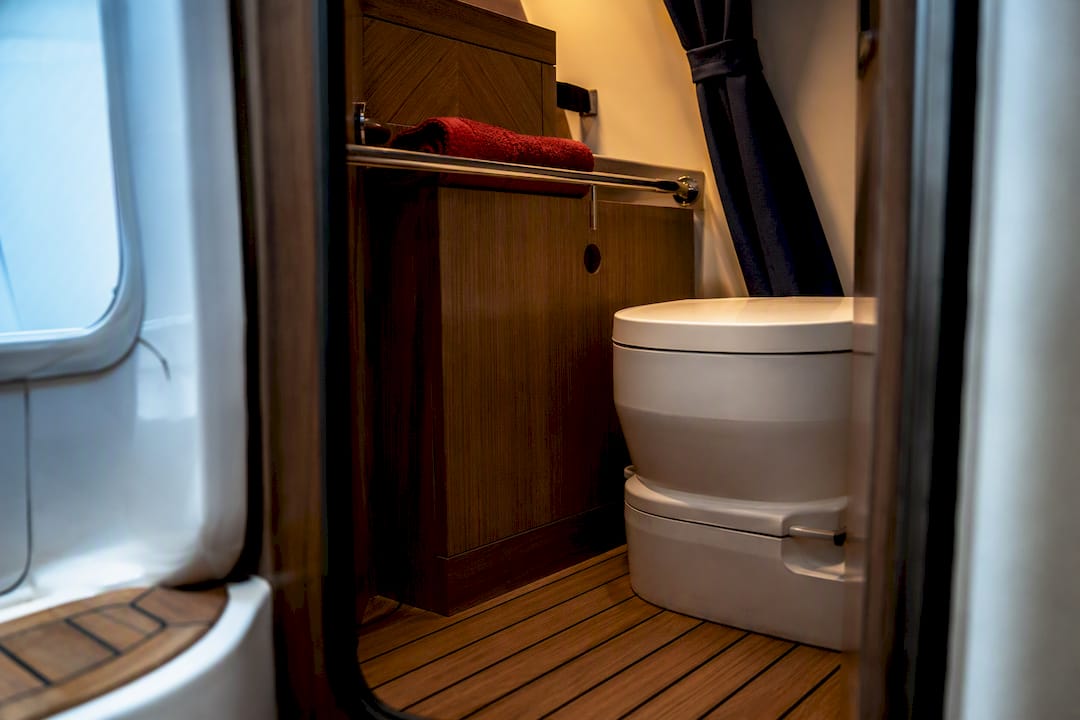
For dayboats and center consoles under 26 feet, a portable two-tank toilet or a waste-bag system like Cleanwaste’s is the practical answer. Pontoons and cuddy cabins with a dedicated head compartment can step up to a cassette toilet or a compact 12V electric unit. Anything with sleeping space at 26 feet or longer usually needs an installed head with a holding tank to stay compliant and comfortable.
TL;DR:
Portable two-tank or waste-bag systems suit boats under 26 feet for short trips, with no plumbing or licensed regulations required.
A cassette toilet is ideal for pontoon and deck boats with enclosed corner spaces, thanks to easier emptying and minimal installation.
Boats over 26 feet with sleeping quarters should have an installed head with a holding tank to comply with federal and state regulations.
Installing a head involves space measurements, venting, and routine maintenance of parts like joker valves, with electric heads being the most costly upfront.
Odor control benefits from proper venting, fans, and gels, and proper waste disposal involves dockside pump-outs or sealed bag system management.
Table of Contents
Types of Small Boat Bathrooms and Their Trade-Offs
Most small boat bathrooms fall into four camps, and picking the wrong one is the single most common regret owners report after a season on the water.
Portable two-tank toilets (the classic porta-potti design) hold fresh flush water in a top tank and waste in a bottom tank you detach and empty. No plumbing, no seacocks, minimal smell if your flush habits are right.
Cassette toilets work similarly but use a slide-out waste cassette instead of unscrewing the whole base, which speeds up emptying at a dock or marina bathroom.
Compact electric heads wire into 12V power and flush with a button, using raw water or fresh water depending on setup. They feel like home but need a proper vented loop and seacock, which adds installation complexity.
Waste-bag and composting systems skip water entirely. A folding frame holds a sealed bag with gelling agent for odor control, and you pack it out like backcountry camping gear.
The legal line matters here: portable units are not regulated as installed marine sanitation devices under EPA guidance, while anything plumbed and permanently mounted falls under federal MSD rules. That distinction alone drives a lot of buying decisions on boats under 30 feet.
Which Solution Fits Your Boat?
Boat size and how long you’re out determine the right category faster than any spec sheet.
Center console or bay boat, day trips only. A portable two-tank unit or a WAG Bag setup covers it. You don’t have a head compartment, so anything requiring plumbing is off the table.
Pontoon or deck boat with a small enclosure. A cassette toilet fits well here since you likely have a corner or cabinet to tuck it into, and slide-out emptying beats hauling a full base to the dock.
Cuddy cabin or pocket cruiser, weekend trips. A compact electric head makes sense if you already have a 12V system aboard and a real head compartment with headroom.
26 feet and up with sleeping quarters. Plan for an installed head and holding tank. Discover Boating notes that installed electric toilets become far more common once boats cross this threshold.
Pro Tip: Before you buy anything, tape off the actual footprint on your deck or in the head compartment with painter’s tape, then sit there for two minutes. Photos and spec sheets lie about how tight a space really feels.
Recommended Products and Compact Setups
The right pick depends less on brand and more on how much plumbing you’re willing to take on.
The Thetford Porta Potti 260 is the benchmark portable unit. Practical Sailor’s bench tests favor compact portables like this one for the balance between capacity and manageable emptying weight. The Thetford Porta Pottie MSD and Thetford Porta Potti Curve are close siblings, with the Curve offering a more ergonomic seat shape for boats where comfort matters more than shaving off an inch of width.
Dometic’s Runabout and Cruiser lines, along with its cassette models, give you a step up in build quality if you want a slightly larger tank without going electric. The Dometic Sanipottie is Dometic’s direct answer to the classic porta-potti format.
For boats with 12V power already run to the head compartment, the Jabsco 12V electric marine toilet and its compact bowl variant handle tight quarters on 22 to 30 foot boats, though you’ll need a vented loop and working seacock to run it safely.
The Cleanwaste GO Anywhere + WAG Bag system needs zero plumbing and uses NASA-developed gelling powder to lock down odor in a sealed bag. The Yeti Wild Stool and Seaflo Portable serve the same no-plumbing niche with slightly different bucket-and-bag designs, and the Trelino Evo L brings a composting-style separation toilet aboard for owners who want to avoid liquid waste tanks altogether. The Go Girl Feminine Urination Device solves a narrower problem: quick, discreet urination without undressing, useful as a backup on any boat regardless of which toilet you install.
Product | Type | Water Source | Weight When Full | User Effort | Price Range |
Thetford Porta Potti 260 | Portable two-tank | Fresh water flush | Moderate, hand-carried | Manual pump flush | $ |
Dometic Sanipottie | Portable two-tank | Fresh water flush | Moderate, hand-carried | Manual pump flush | $ |
Jabsco 12V electric marine toilet | Installed electric | Raw or fresh water | N/A (plumbed to tank) | Push-button, needs wiring | $$$ |
Cleanwaste GO Anywhere + WAG Bag | Waste-bag | None | Light, bagged | Manual, pack out | $ |
Trelino Evo L | Composting/separation | None | Light, solids only | Manual, empty solids/liquids separately | $$ |
Before buying, confirm the seat height clears your head compartment ceiling and order a spare joker valve and seal kit with any installed unit. Those parts fail long before the pump housing does, and marine chandleries in small coastal towns don’t always stock them.
Installation and Space Checklist
Getting the fit right takes more than measuring the floor space where the toilet will sit.
Measure footprint, then add clearance above and behind for lifting the seat and accessing the tank or hose fittings.
Check door swing or hatch clearance. A toilet that fits the compartment can still be impossible to slide in through a narrow door.
Confirm service access. You’ll need room to detach a waste tank or reach hose clamps without unbolting the unit first.
For installed heads, verify the seacock opens and closes freely and that a vented loop sits above the waterline to stop backflow.
Check hose diameter and routing. Standard marine sanitation hose runs larger than household plumbing, and tight bends are where clogs start.
For portable units, add a strap or bracket to stop the toilet from sliding in rough water, and consider a pop-up privacy tent if you don’t have an enclosed head.
Maintenance and Troubleshooting Basics
The joker valve is the single most common failure point in any marine toilet with a pump. It’s a rubber flap that keeps waste from flowing backward, and marine mechanics report it wears out faster than owners expect, especially with heavy use.
Inspect the joker valve every season and replace it at the first sign of a weak or reversing flush.
Check the holding tank vent line for blockages. A clogged vent causes slow draining and pressure buildup that smells far worse than normal use.
Use only marine-rated, fast-dissolving toilet paper. Household paper is the top cause of clogs in narrow discharge hoses.
If the pump feels sluggish, check the intake strainer before assuming the pump itself has failed.
Pro Tip: Keep a spare joker valve and a small tube of marine-safe lubricant in your ditch bag. A five-minute fix at the dock beats calling a mechanic mid-trip.
If backflow, persistent odor, or a pump that won’t prime survives a valve swap and a vent check, that’s the point to call a marine mechanic rather than keep guessing.
Legal Baseline and Pump-Out Rules
Federal law under the Clean Water Act regulates installed marine sanitation devices, not portable units, which is why so many small-boat owners default to a porta-potti to sidestep MSD certification entirely.
States layer their own rules on top. Florida requires a toilet, portable or installed, on any vessel 26 feet or longer with an enclosed cabin and sleeping space. Other states set their own thresholds, so check your state’s marine commission page before assuming your boat is exempt.
Never discharge holding-tank waste within federally designated No Discharge Zones, typically inside three miles of shore.
Use a pump-out station at any marina that offers one rather than discharging offshore out of convenience.
Confirm your state’s toilet requirement by boat length before buying, since a 25-foot boat and a 27-foot boat can face different rules.
Privacy and Enclosure Options for Open Boats
Most small boats without a dedicated cabin solve privacy with a temporary structure rather than a permanent build-out. A pop-up privacy tent, the kind sold for beach changing, sets up over a portable toilet in under a minute and folds flat into a storage locker when you’re done. One pontoon-focused guide points out that pairing a removable portable toilet with a pop-up tent gives the best mix of guest privacy and zero permanent modification, which matters if you don’t want to cut into a pontoon’s deck layout.
Bow-mounted or aft-corner placement works better than midship, since it keeps the enclosure away from foot traffic and gives you a flat surface to anchor the tent’s base. Some boaters bolt a simple curtain track to a T-top frame instead, running a marine-grade shower curtain around three sides for a faster, lower-profile setup than a full tent.
Storage matters as much as the enclosure itself. A portable toilet needs a dry, secured spot when it’s not in use, ideally in a dedicated locker rather than loose on deck where it can slide or tip in a wake. Cassette units and waste-bag systems store even smaller, often fitting in the same under-seat storage you’d use for life jackets. If you’re hosting guests regularly, keep a spare privacy tent folded and ready rather than assembling one for the first time with people waiting.
Waste Disposal and Pump-Out Procedures
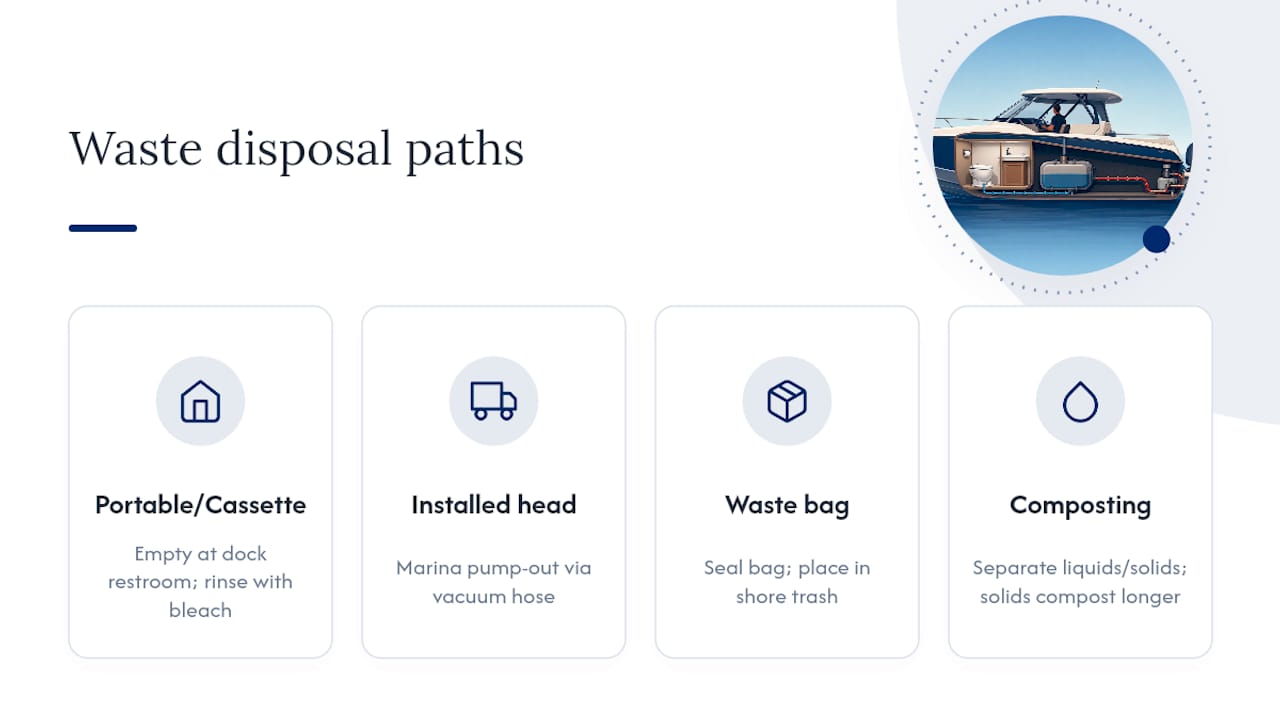
Portable toilets empty at any dockside restroom or dump station, which is the main reason they remain the default for boats under 30 feet. You disconnect the waste tank, carry it to a toilet, and empty it directly, then rinse with fresh water and a mild bleach solution before reattaching.
Installed heads with holding tanks require a pump-out station, and most marinas post their pump-out fees and hours near the fuel dock. The process involves connecting a vacuum hose to your tank’s deck fitting, running the pump until the tank reads empty, and closing the fitting before you leave. Some marinas offer free pump-outs as part of a state’s clean-marina incentive program, so it’s worth asking before assuming you’ll pay.
For waste-bag systems like the Cleanwaste GO Anywhere, disposal means sealing the bag after use and placing it in a standard trash receptacle on shore. This is the simplest disposal path of any system here, since it requires no dedicated dump station and no rinsing.
Composting units like the Trelino Evo L separate liquids from solids, so you’re emptying two smaller containers rather than one waste tank. Liquids typically get diluted and disposed of in a standard toilet or approved discharge point, while solids need longer composting time before disposal, which makes this system better suited to owners who use their boat frequently enough to justify the extra steps.
Whatever system you run, rinse tanks and cassettes with fresh water after every emptying. Residual waste is what causes the smell owners blame on the toilet itself, when the real cause is inadequate rinsing.
Cost Overview: Purchase, Installation, and Upkeep
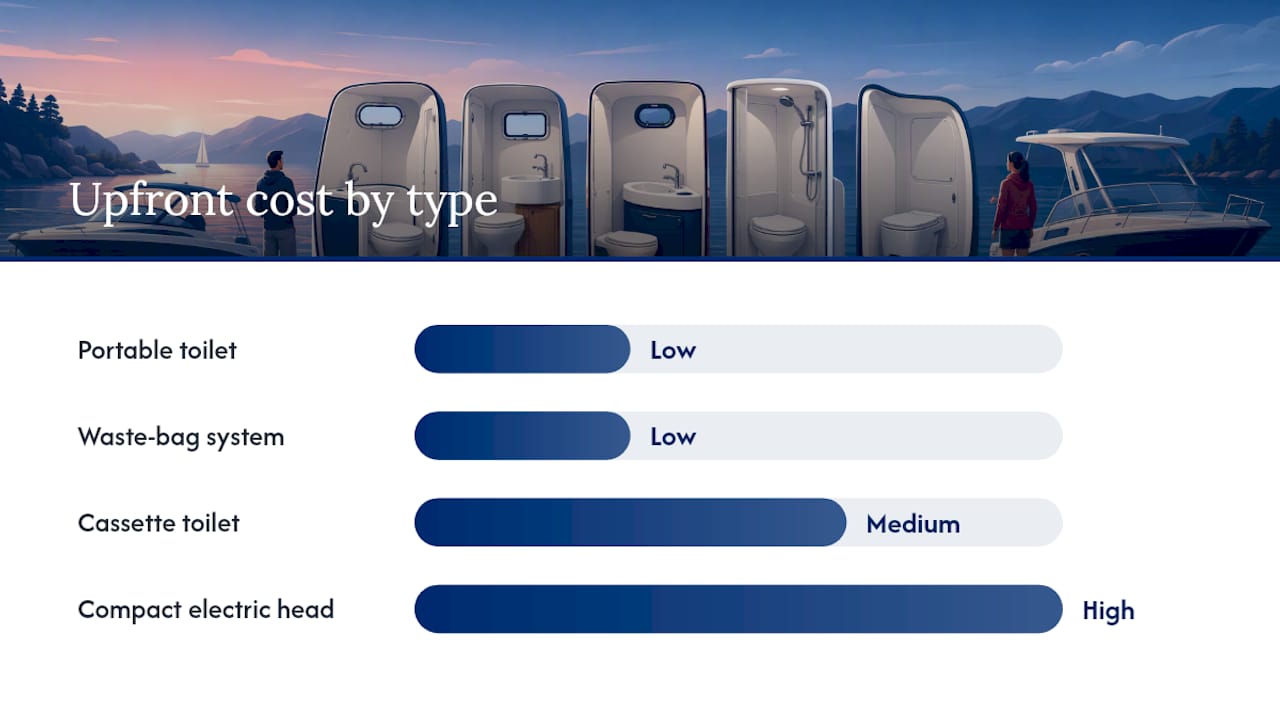
Portable toilets sit at the low end of the cost spectrum and need no installation labor, since you’re setting a self-contained unit into a compartment or bracket. Waste-bag systems land in a similar range, with the ongoing cost being replacement bags and gelling powder rather than any upfront installation.
Cassette toilets cost somewhat more than basic portables due to the sliding mechanism and larger tank capacity, but installation still means securing the unit rather than running plumbing.
Compact electric heads carry the highest upfront cost of the group once you factor in the unit itself, wiring to a 12V supply, hose, a seacock if one isn’t already in place, and a vented loop. Labor adds meaningfully to that total if you’re not doing the plumbing yourself, since running new hose through a tight hull space takes real time even for an experienced installer.
Ongoing maintenance costs are modest across the board but differ in kind. Portable and cassette units need occasional seal replacements and the odd joker valve, all inexpensive parts you can order ahead of a season. Electric heads add the possibility of pump or motor repairs down the line, plus the periodic seacock inspection any installed system requires. Waste-bag systems have no mechanical parts to maintain at all, trading a slightly higher per-use consumable cost for zero repair risk.
Ventilation and Odor Control Beyond Basic Venting
A holding tank vent line handles pressure, but it doesn’t do much for the smell that lingers in a small enclosed space after use. A compact 12V fan mounted near the head compartment, even a small computer-style fan wired to a switch, moves air out faster than passive venting alone and makes a real difference in a cuddy cabin or small cassette-toilet enclosure.
Charcoal filter vent caps are a cheap upgrade for installed holding tanks. They screw onto the existing vent fitting and absorb odor compounds before they escape, which matters most on boats that sit at a dock for days between uses.
For portable and waste-bag systems, odor control comes down to the product itself and how you use it. Gelling powders like the kind Cleanwaste uses lock liquid waste into a solid form, which cuts odor dramatically compared to a plain bag. Adding a capful of marine-safe holding tank deodorant to a portable toilet’s waste tank after each emptying keeps smell from building between uses, and it’s a five-second habit that most owners skip until the smell forces the issue.
Keep the head compartment door or curtain closed when not in use, even with a fan running. Airflow control matters as much as the odor-control product itself, since an open compartment just spreads any smell into the rest of the cabin.
A Publisher’s Take on Bathroom Reliability for Guests
Guests notice a bathroom that works and forget one that doesn’t, making a thorough bathroom staging and cleanliness checklist for rentals essential for charter hosts who want to ensure guest comfort. On a private charter, that means checking tank levels and vent lines before every trip, stocking spare supplies, and giving guests a one-line explanation of how to use the head before they need it. Reliability beats features every time when someone else is depending on it.
— Justin
Consider a Private Charter Instead of Retrofitting Your Own Boat
Installing or maintaining a head on your own boat takes money, plumbing know how, and a season of trial and error before it actually works right. A 26-foot private charter can come with an onboard bathroom already built in, tested, and ready before every trip, so you and your group never have to think about tank levels or joker valves while you’re watching dolphins off Shell Island.

Every charter can be private and run by a licensed local captain who knows the water and the boat well. If you’ve got questions about onboard amenities before you book, our intake form is the fastest way to get a straight answer. Otherwise, head straight to our booking page and pick a date. It beats spending a weekend under the deck with a wrench.
Sources
FAQ
What is a good portable bathroom for a boat?
The Thetford Porta Potti 260 is a strong default for most small boats because of its compact footprint and simple two-tank design, and the Cleanwaste GO Anywhere + WAG Bag system works well when you want zero plumbing and easy pack-out disposal.
How do you go to the bathroom on a small boat?
Most small boats without an installed head rely on a portable two-tank toilet, a cassette toilet, or a waste-bag system set up in a corner of the deck or a small enclosure, often paired with a pop-up privacy tent.
Are there bathrooms on small boats?
Many boats under 26 feet don’t have a built-in bathroom, but owners commonly add a portable or cassette toilet, and Pcbprestige’s 26-foot private charter includes a proper onboard bathroom for guest comfort during tours.
What type of toilet is best for a narrow boat?
A compact portable unit like the Thetford Porta Potti 260 or Dometic Sanipottie fits narrow spaces best, since neither requires plumbing or the extra clearance an installed electric head needs.
Do I need a permit to install a marine toilet?
No permit is required, but installed devices must meet federal MSD standards, while portable units avoid that certification entirely, which is why they remain the simplest legal option for most small boats.
Recommended
Comments