How to Spot Dolphins: Cues, Timing, and Scanning Tips
- PCB Prestige

- Aug 26
- 8 min read
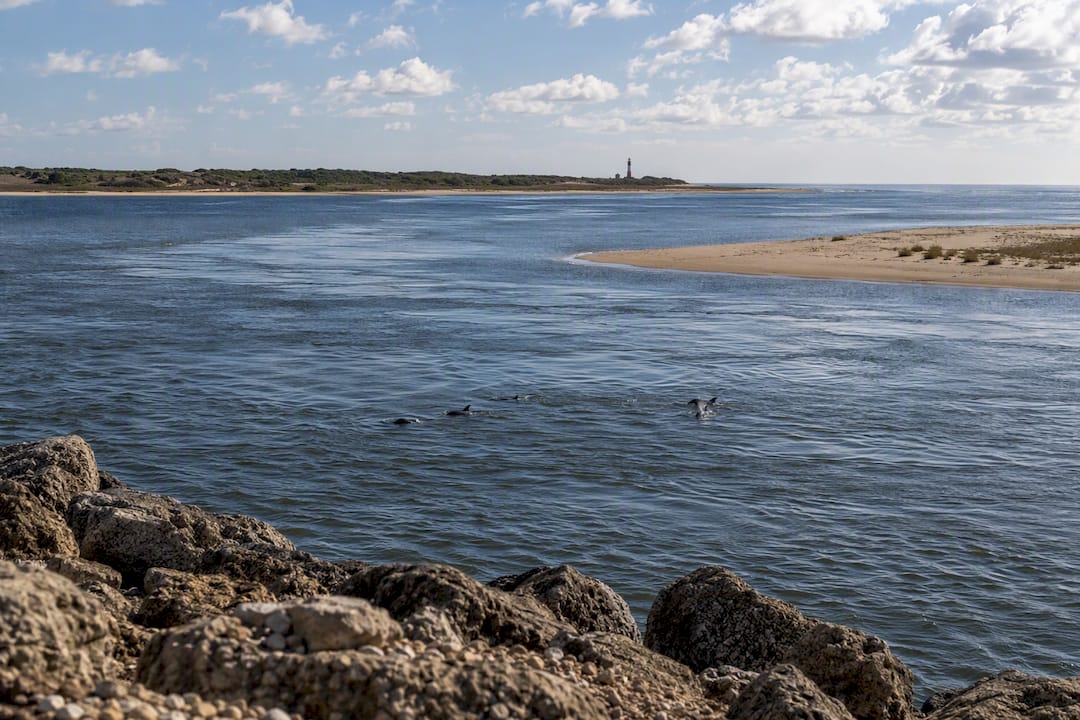
Look for a rolling surfacing pattern, a small dorsal fin arcing above the water right after a quiet splash, and scan the middle distance in slow left to right sweeps. That single habit produces more sightings than staring at one spot waiting for something to jump. Add clustered splashes, a narrow moving wake, or gulls diving over a patch of water, and you have the classic dolphin signature.
Shore watching works, but captain-guided boat tours use local knowledge of tides and depth to put you closer to active pods, which shortens the wait considerably.
Before you head out, lock these into memory:
A dorsal fin that rises, rolls, and disappears in a smooth arc, not a stationary triangle
Diving birds, tight splash clusters, or a fin cutting a straight wake line
Key Takeaways
Spotting dolphins reliably comes down to scanning the middle distance in sweeps, timing your outing for calm early or late light, and reading surface cues like wake, splash clusters, and bird activity together rather than in isolation.
Point | Details |
Scan, don’t stare | Sweep the middle distance left to right instead of fixing your eyes on one spot. |
Time it right | Early morning and late afternoon offer calmer seas and more feeding activity. |
Read the whole picture | Birds diving, jumping fish, and clustered splashes often appear before a fin does. |
Respect the distance | Never swim with, chase, or feed wild dolphins, per NOAA guidance. |
Book local expertise | Pcbprestige’s private charters use captain knowledge of tides and depth to raise sighting odds beyond shore watching. |
Table of Contents
How to Spot Dolphins From Shore or a Boat
Vantage point matters more than most people realize. From land, headlands, fishing piers, and the mouths of estuaries give you elevation and a wide field of view over water where fish naturally funnel. Sandbar edges work too, since dolphins often push baitfish against the shallows to trap them.
From a boat, you get proximity that shore can’t match, especially near channel edges and drop offs where depth changes concentrate prey. Position yourself near the bow, watch the wake line trailing behind, and keep an eye on the horizon rather than just the water beside the hull.
A few habits that pay off before you even leave the dock:
Check a tide chart. Incoming and outgoing tides move baitfish and pull dolphins with them.
Ask a local bait shop, crabber, or charter captain if they’ve seen dolphins that morning. They usually know.
East Coast locations show up repeatedly in U.S. sighting data as reliable spots, so regional reputation is worth factoring in.
What Signs Mean a Dolphin Is Nearby?
The giveaway is the surfacing sequence itself. A dolphin rises, exhales through its blowhole, and rolls forward in one continuous motion, fin first, back second, gone in two or three seconds. A shark fin, by contrast, tends to sit higher and more static, slicing a straighter line without that rolling dip. Floating debris doesn’t move against the current at all, which is the easiest tell once you’ve seen the real thing a few times.
Here’s how to read the water around a possible sighting:
Watch for repeated splashes clustered in one area rather than a single random plop. Dolphins often surface in twos or threes.
Follow narrow, fast-moving wakes that don’t match wind or boat traffic patterns.
Scan for diving pelicans, terns, or gulls. Birds crashing into the same patch of water usually means baitfish are being pushed toward the surface, and dolphins are frequently the ones doing the pushing.
Notice jumping fish. Panicked schools breaking the surface are a strong secondary cue even before you see a fin.
Guided tours have a real edge here. Captains who track tides, water depth, and seasonal movement patterns significantly increase the odds of a sighting compared to scanning blind from a fixed shore position.
When Is the Best Time to See Dolphins?
Early morning and the last two hours before sunset consistently produce the most activity. Seas tend to be calmer during those windows, glare is lower, and dolphins are often actively feeding rather than resting in deeper water.
Flat, low-wind conditions matter almost as much as timing. A choppy surface hides everything except the biggest splashes, while glassy water reveals even a subtle fin roll from a distance. Tide state plays a role too. Incoming or outgoing tides concentrate baitfish near inlets and sandbars, dragging predators along with them.
A few planning notes worth keeping in your back pocket:
Dawn and dusk beat midday for both visibility and activity.
Calm, low-wind days beat choppy ones every time.
Resident populations stick around a region year round, while other groups shift with seasonal prey movement, so local knowledge of migration timing helps.
What Gear Helps You Spot Dolphins Faster?
You don’t need much, but the right gear removes a lot of frustration. Binoculars in the 7x to 10x range give enough magnification without shaking too much in your hands. Scan in short, deliberate sweeps rather than holding them fixed on one spot, since a rolling fin appears and vanishes fast. Polarized sunglasses cut surface glare dramatically, which matters more than most people expect on a sunny afternoon.
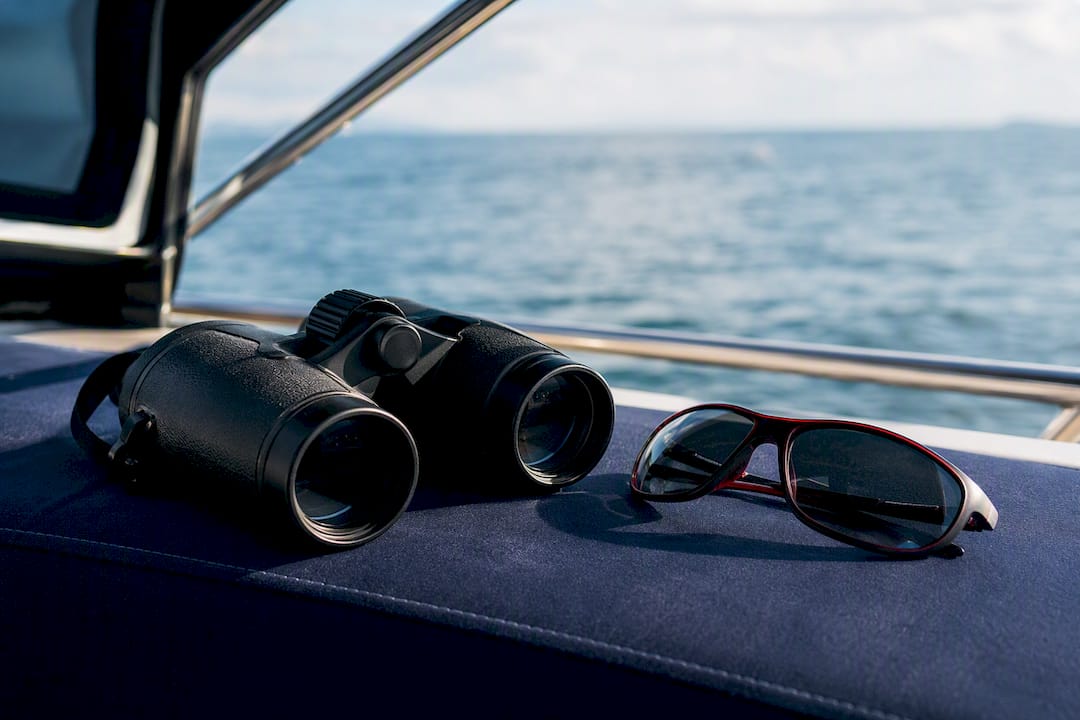
For photos, a lens around 200mm or longer with a fast shutter speed freezes the motion of a surfacing fin. Scan with your eyes first, though. Raising a camera too early means missing the wider pattern of splashes and wake that tips you off to where the pod actually is.
On a boat, brace against something solid before raising binoculars or a camera, and don’t be afraid to put the gear down entirely for a minute if the water’s active. Naked-eye scanning often catches movement faster than anything viewed through a lens.
Pro Tip: Pre-focus your camera on the general distance where fins have been surfacing, and switch to continuous shooting mode. A dolphin’s full surfacing window rarely lasts more than a second or two, so burst shots beat single frames almost every time.
Understanding Dolphin Behavior Patterns
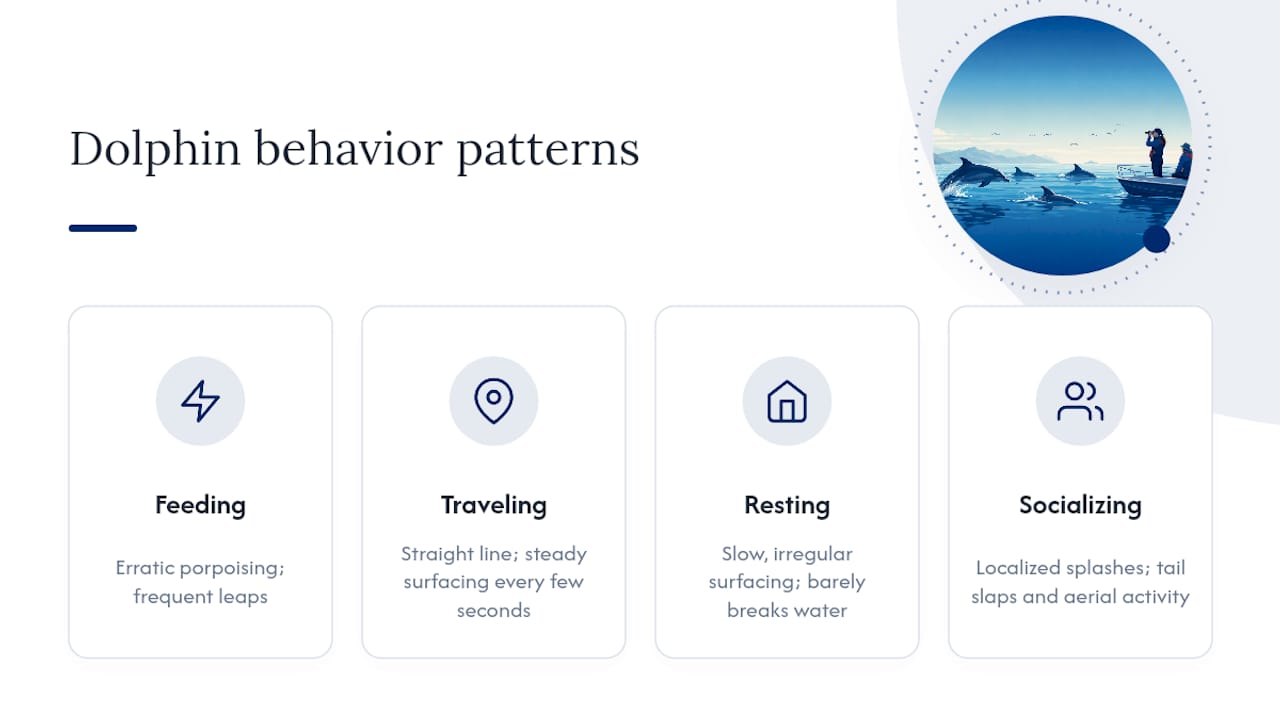
Behavior changes the surfacing rhythm, and reading that rhythm helps you predict where the next fin will appear. Feeding dolphins surface erratically and often “porpoise,” leaping clear of the water in quick succession as they chase fish. Traveling pods move in a straight line with steady, predictable surfacing every few seconds. Resting dolphins surface slowly and irregularly, sometimes barely breaking the water. Socializing groups tend to splash more, with tail slaps and aerial activity clustered in one spot.
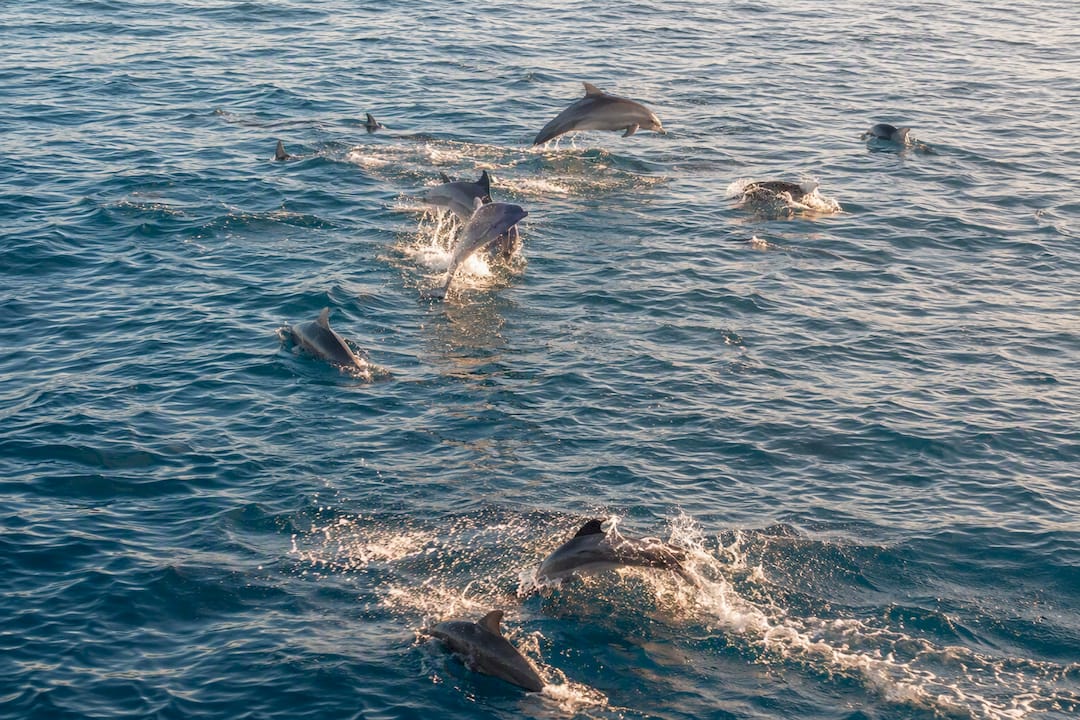
Once you clock the pattern, follow the direction the pod is heading rather than watching where they just were. A traveling group especially rewards this, since their path stays consistent for minutes at a time.
If you want to go a step further, photo-ID relies on capturing clear, side-profile shots of the dorsal fin, since notches and scars are as individual as a fingerprint. Our field guide to dolphin identification walks through how researchers use those markings to track individual animals over years.
Is It Safe to Get Close to Wild Dolphins?
Keep your distance and never chase, feed, or attempt to swim with wild dolphins. NOAA Fisheries advises against close interactions, citing both safety risks and disturbance to natural feeding and resting behavior. Ethical viewing groups echo this: let the animals approach on their own terms rather than forcing an encounter, a principle covered in more depth in our dolphin safety guide.
Stand on stable footing when watching from piers, jetties, or cliffs.
On a boat, stay seated during acceleration and never lean over the rail for a closer look.
A Step-by-Step Routine for Your Next Outing
Follow this sequence and you’ll cut your search time down considerably:
Pick your time and vantage point. Early morning or late afternoon, calm seas, and a headland, pier, or boat near a channel edge.
Pack light but right. Binoculars, polarized sunglasses, a charged camera with a long lens.
Run the scan routine. Sweep the middle distance left to right, watch for birds and wake lines, and don’t fixate on one spot.
When you spot one, stay calm and quiet. Point it out to your group with a low voice and a steady hand, not a shout.
If patience isn’t working, book a guide. A captain who watches these waters daily reads conditions faster than a first-time visitor ever will.
Pro Tip: Listen as much as you look. A dolphin’s exhale through its blowhole makes a short, sharp huff that carries surprisingly far over calm water, often before you catch the fin visually.
If seas are choppy, shift your focus closer to shore where wave action is dampened. If waters are crowded with boat traffic, widen your scan radius since dolphins tend to avoid the busiest lanes. In flat, low light, polarized lenses become nonnegotiable.
Can You Hear Dolphins Before You See Them?
Dolphins communicate through clicks, whistles, and burst pulse sounds, and while most of that range sits above what the human ear easily picks up, a few audible cues do reach the surface. The exhale sound at each breath is the most reliable one, a short, sharp huff that travels well over flat water and often arrives a beat before you spot the fin.
On calm days, especially near shore or from a quiet boat with the engine idling, you can sometimes catch faint whistling or chattering if a pod is socializing nearby. Feeding groups tend to be noisier overall, since coordinated hunting behavior involves more vocal activity between individuals working together to herd fish. A sudden increase in splashing paired with audible chatter is often a sign that a pod is actively feeding rather than simply passing through.
None of this replaces visual scanning as your primary method, but treating your ears as a secondary sensor adds real value, particularly in situations where glare or chop makes visual detection harder. If you’re on a boat, ask the captain to occasionally cut the engine for thirty seconds. That quiet window is often when you’ll catch the first exhale that tips you off to a pod working the area just out of sight.
A Field Note From Justin
I’ve spent enough mornings on the water to know that patience beats intensity every time. The pods that show up on a photo-ID sheet later usually got noticed first because someone stopped staring at one wave and started sweeping the horizon. Ethical viewing isn’t a constraint on good spotting. It’s the reason dolphins keep coming back to the same waters season after season.
— Justin
See These Cues Up Close on a Private Charter
Reading the water from a crowded tour boat or a public dock only gets you so far. Pcbprestige runs private, captain-led charters on a 26-foot powerboat around Panama City Beach, which means the whole boat is positioned around finding dolphins for your group, not competing for rail space with forty other people. Our captains know which channel edges and depth changes hold feeding pods on any given tide, the same local knowledge that makes guided sightings more reliable than shore-only searching

Every trip includes snorkel gear, an onboard bathroom, and room for up to six guests, with flexible timing built around the early morning or late afternoon windows covered above. If you’re ready to put these scanning tactics to work with someone who already knows where the fins usually surface, check availability and book a private tour.
Sources
Recommended
Comments