Parents: 7 Questions to Verify Dolphin Tour Age Limits and Safety
- PCB Prestige

- 5 hours ago
- 8 min read
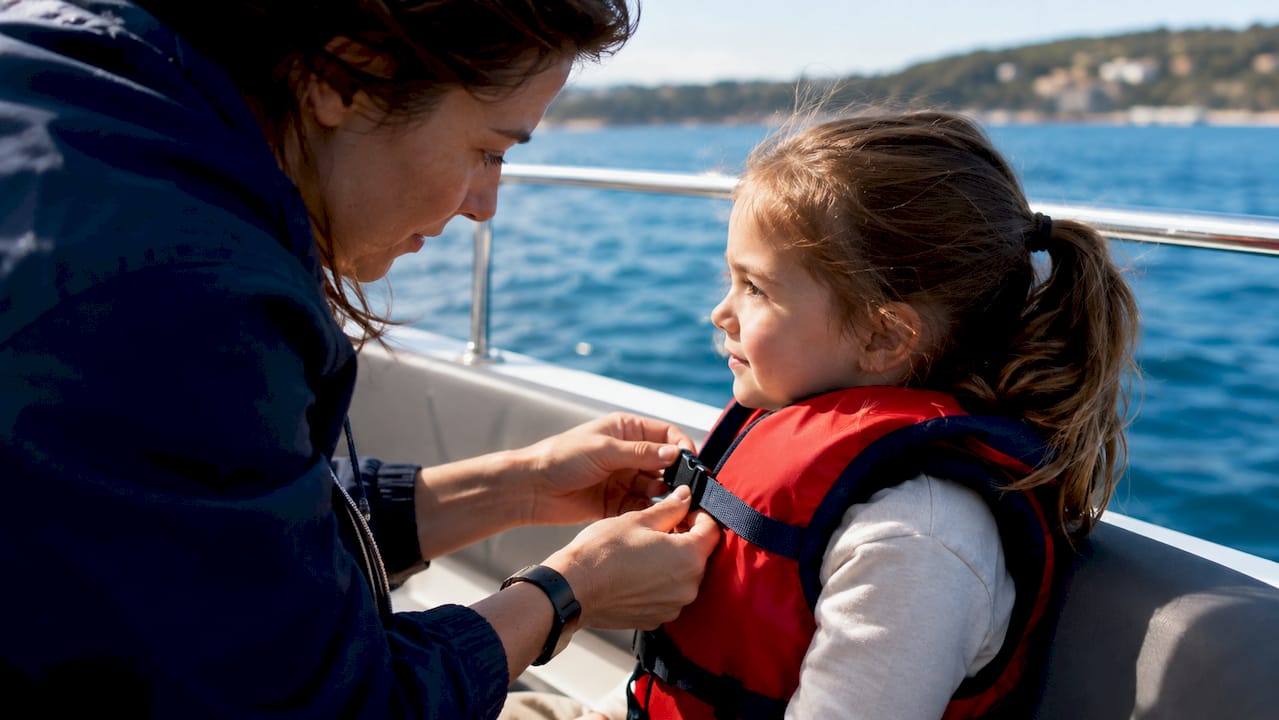
There is no universal age limit for dolphin tours. Rules depend entirely on the operator and the type of experience you book. Swim-with programs at controlled facilities commonly set a minimum age around 6 to 8, while boat-based wildlife-watching tours often welcome infants. Your fastest move: call the operator and ask directly, or book a private charter if you’re traveling with a baby or toddler.
TL;DR:
Most dolphin tour operators do not have a universal age limit; policies vary significantly based on whether the experience is a wildlife cruise or a swim program.
Wildlife-watching boat tours generally have no minimum age, provided children wear properly fitted life jackets, while swim-with programs often set minimum ages between 6 and 8 years due to liability concerns.
Essential safety considerations include bringing appropriately sized life jackets with crotch straps, choosing stable boats with shaded seating and onboard restrooms, and verifying that the captain is licensed and experienced.
Private charters offer greater flexibility, allowing families with infants or toddlers to set their own pace, control timing, and avoid crowded, rigid schedules.
Confirm all policies—such as age limits, life jacket availability, restroom access, and route flexibility—in writing before booking to ensure suitability for young children and non-swimmers.
Table of Contents
Dolphin Tour Age Limit Rules Operators Actually Use
Ask ten operators about age restrictions and you’ll get ten different answers, because “dolphin tour” covers two very different products. One is a boat ride where dolphins might surface nearby in open water. The other is a supervised swim in a controlled pool or lagoon with trained animals. Age policy tracks which category you’re booking, not some industry-wide standard.
Wildlife-watching cruises tend to have the loosest rules. Because guests stay seated on the boat and never enter the water with the animals, many operators advertise no age restrictions at all. Even very young infants and older adults can attend the same cruise, assuming both have a properly fitted life jacket.
Swim-with programs are a different animal, literally. These facilities carry more liability, because guests are in the water with a large marine mammal, sometimes touching or feeding it. That’s why minimum ages of 6 to 8 years old are common at controlled swim facilities, and some add height or weight minimums on top of the age floor.
Common policies include all-ages wildlife-watching tours with appropriate life jackets, swim programs with minimum age and size requirements, equipment weight limits, and flexible private-charter schedules.
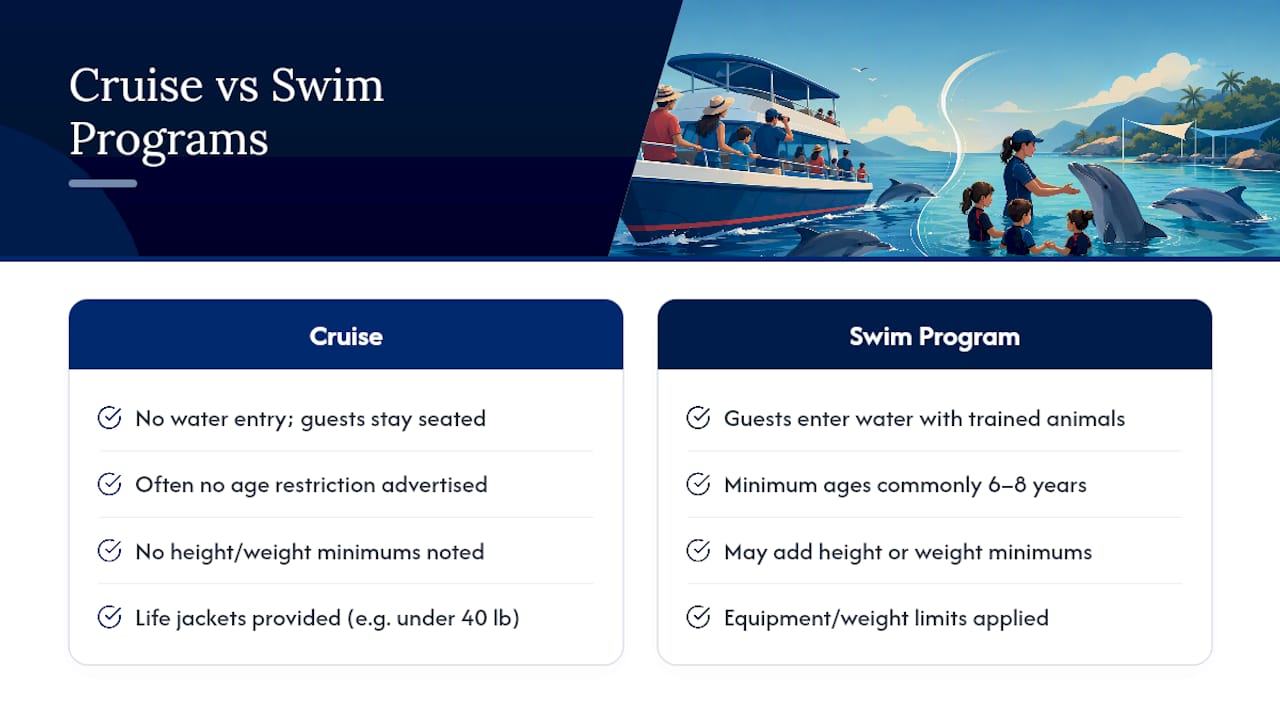
When you’re reading an operator’s website, look for the actual policy language, not just marketing copy. “Family-friendly” means nothing on its own. “No minimum age for our dolphin-watching cruise; life jackets provided for children under 40 pounds” tells you something you can act on.
Life Jacket Rules and Boat Safety Standards for Kids
Every legitimate operator running a boat with children aboard follows some version of Coast Guard-informed practice on flotation devices, even when the exact rule varies by state and vessel type. The NOAA Fisheries marine-life viewing guidelines also shape how close a boat can approach wild dolphins, which indirectly affects how tours are structured for younger passengers who can’t be expected to sit still for long stretches at a distance.
Specific operator practices vary, but a pattern repeats across the industry. One well-documented example: some tour FAQs state that children age 6 and younger must wear a life preserver for the entire trip, with infants requiring an appropriately sized jacket, either supplied by the operator or brought by the parent.
Pro Tip: Bring your own infant life jacket if you have one that fits well. Rental fleets often stock only a couple of infant sizes, and a jacket that’s too loose can ride up over a baby’s face in rough water.
What actually matters when you’re checking a boat’s safety setup:
Properly sized life jackets in infant, child, and adult categories, not just one “kids” size that fits a six-year-old but swims on a toddler
A crotch strap on infant and toddler jackets, which stops the jacket from sliding up and off in the water
A stable hull design rather than a high-speed thrill boat, since young kids and unstable footing don’t mix
Shaded seating, since sun exposure adds up fast on a two-hour trip with no cover
A restroom on board, which sounds minor until you’re an hour out with a potty-training four-year-old
A licensed captain with real experience reading weather and water conditions before deciding whether a trip is even a good idea that day
Family-focused operators have leaned into shorter, calmer trip formats for exactly this reason. Tours running 1.5 to 2 hours with shaded seating and a restroom consistently score better with parents than longer, faster excursions built for thrill-seekers. Length and stability matter as much as any stated age policy, arguably more, since a technically “all ages welcome” boat with no shade and no bathroom is a rough afternoon with a toddler no matter what the age policy says.
Can Babies and Toddlers Go on a Dolphin Tour?
Yes, in most cases, if you’re booking a wildlife-watching tour rather than a swim-with program. Plenty of family-oriented operators state plainly that all ages are welcome and stock life jackets sized for infants. The bigger question isn’t whether your baby can come. It’s whether the specific boat, schedule, and pace will actually work for a baby.
Here’s what to sort out before you book:
Confirm infant life jacket availability and sizing. Ask for the weight range the operator’s smallest jacket covers, and don’t assume “infant size” covers a genuinely tiny newborn.
Ask about boarding logistics. Some docks require folding a stroller and carrying a baby down a ramp or ladder. Know this before you show up with a full diaper bag and a car seat.
Check non-swimmer policies. Most wildlife-watching boats never expect anyone in the water, but if snorkeling is part of the itinerary, confirm that non-swimmers and infants can stay dry on board without missing out.
Clarify supervision expectations. A responsible operator will state clearly that a parent or guardian is responsible for holding an infant and keeping a toddler seated, not the crew.
Pro Tip: A private charter solves most of the infant-logistics problem outright. You control pacing, you’re not squeezed onto a bench next to strangers, and the captain can adjust the route if your baby needs an early exit. Private charters are frequently recommended for families with infants or toddlers for exactly this reason.
Seasickness, Pregnancy, and Other Health Questions
Motion sickness hits kids differently than adults, and it usually shows up faster. A child who’s fine on a car ride can start feeling queasy within twenty minutes on choppy water. Book a morning departure when winds are typically calmer, feed kids a light meal beforehand rather than nothing at all, and ask the captain to seat your group toward the center of the boat, where motion is less pronounced than at the bow or stern. Pediatric motion-sickness medication exists, but talk to your child’s doctor before your trip, not the morning of.
Pregnancy is a different conversation entirely. If you’re pregnant and considering a swim-with program, talk to your doctor first. Most operators running active swim experiences advise caution for pregnant guests, particularly in later trimesters, given the physical exertion and unpredictable animal contact involved. A seated wildlife-watching cruise carries far less physical demand, but boat motion in rough seas is still worth discussing with your OB if you’re unsure.
Menstruation is rarely an issue on standard wildlife-watching tours. Most operators don’t ask and don’t care. Swim-with facilities sometimes have specific hygiene guidance, so if that’s the experience you’re booking, it’s worth a quick question to the operator rather than guessing.
Choose morning departures for calmer water and fewer seasickness complaints
Consult a doctor before any active swim program during pregnancy
Ask swim-with operators directly about hygiene policies rather than assuming a blanket restriction
What to Ask Before You Book a Family Dolphin Tour
A five-minute phone call before you book saves you a bad afternoon on the water. Ask these questions directly, and pay attention to how confidently the operator answers.
What’s the minimum age for participation, and does it differ for swimming versus watching from the boat?
Do you provide life jackets in infant and toddler sizes, and can I see the sizing chart?
Is there a restroom on board?
How long does the tour run, and is the route fixed or flexible?
What’s the maximum passenger count, and is this a private or shared charter?
What are the captain’s qualifications and experience?
Is a signed waiver required, and does a parent or guardian sign on behalf of a minor?
Confirm the age and safety policy in writing, not just verbally at the dock
Ask specifically about infant jacket sizing before assuming one is available
Decide between shared and private booking based on how much control you want over pacing
Watch for red flags: an operator who can’t answer the life-jacket question with specifics, or one that markets high-speed thrill rides to families with toddlers in the same breath as a “family-friendly” pitch. A private charter costs more than a shared seat on a group boat, but for families with infants, the trade-off usually favors control and safety over savings.
Why Private Charters Solve the Age-Limit Problem for Families
Most age-limit friction disappears once you’re not sharing a boat with forty strangers on a fixed schedule. A private charter lets you set the pace: nurse a baby without an audience, cut the trip short if a toddler melts down, or linger longer if the kids are having a blast watching dolphins surface off the bow.
Some operators run private tours on similar-sized boats with licensed local captains, life jackets across sizes, and ethical approaches to wildlife viewing that keep respectful distance from dolphins in their natural habitat. Families with non-swimmers or infants can stay dry and comfortable while still getting close enough to see dolphins in Shell Island’s waters. That flexibility, paired with a licensed captain’s judgment on when conditions are safe for young kids, is what makes a private booking worth the premium for many parents.
— Justin
Book a Private Dolphin Tour Built Around Your Family’s Pace
Some private tours offer an alternative to crowded group boats for families needing flexibility, providing private charters on boats of similar size with licensed captains, and itineraries that accommodate nap schedules, seasickness, and non-swimmers instead of fixed departures.

Many private tours include properly sized life jackets, restrooms on board, and ethical wildlife viewing practices to keep dolphins undisturbed in their natural habitat. Whether planning a two-hour sunset cruise or a longer snorkeling and dolphin tour, guests often have exclusive use of the boat. Check available dates and reserve your private charter through the online booking page, or fill out the trip planning form if you want help matching the right tour length to your family’s needs.
Sources
Check NOAA Fisheries’ marine-life viewing guidelines for responsible wildlife-viewing standards, and review individual operator FAQ pages for specific child and life jacket policies before booking.
This article is general information, not a substitute for advice from a qualified doctor. Consult a qualified healthcare professional about your own circumstances before acting on anything here.
Recommended
Comments